11 Countries For an Unforgettable European Trip
Planning the ultimate escape to Europe is an exciting adventure, but with so many diverse cultures, historic cities, and breathtaking landscapes, deciding where to go can be overwhelming. Whether you are dreaming of wandering through cobblestone medieval villages, lounging on sun-drenched Mediterranean beaches, or hiking rugged alpine peaks, choosing the right destinations is the key to creating a truly magical itinerary.
To help you plan the perfect getaway, we have rounded up 11 incredible countries for an unforgettable European trip. From iconic bucket-list favorites bursting with world-class landmarks to underrated hidden gems that offer a more authentic escape, these destinations promise rich history, mouthwatering cuisine, and memories that will last a lifetime.
Get ready to pack your bags and discover the very best that Europe has to offer!
1. Travel to Turkey: Where Conversations Steam — Tea as Culture, Time, and Welcome.
In Turkey, tea isn’t a beverage; it’s punctuation. Conversations open with steaming tulip glasses and close with the last ruby sip. Start in Istanbul’s backstreets where samovars hum and simit sellers lace the air with sesame. Take the ferry to Kadıköy; drink on the deck as gulls stitch white arcs over the Bosphorus.
In Rize, tea gardens terrace into the Black Sea haze — walk among glossy leaves, watch harvesters scissor through green, learn how rolling and firing give that brisk, honeyed bite. Pair breakfast börek with black çay; pair sunset meze with sage or apple. The ritual is never rushed: a saucer, two cubes, the clear clink of a spoon. By week’s end you’ll pack leaves like treasure, and you’ll understand why Turks use tea to welcome, to pause, to say “stay longer.”
Also read: Best things to do in Istanbul
2. Travel to Bosnia: Copper Pots, Slow Foam, and the Ritual of Resilience.
Bosnian coffee is theatre in copper: džezva on the fire, foam rising slow, cups the size of confidences. In Sarajevo, sit in Baščaršija beneath Ottoman eaves and order a set — cup, sugar, lokum, and a tiny spoon that keeps tempo with gossip. Locals will tell you to sip, not stir, and never rush the grounds. Wander to cafés where beans are still hand-roasted; inhale smoke, walnut, plum.
In Travnik, try coffee by the Lašva River, blue and cold, then climb to the fortress for a double shot of view. The city’s scars are visible; so is its resilience. Coffee here is a daily manifesto: sweet if you wish, strong as memory, always shared. You’ll leave with a copper pot wrapped in newspaper and the certainty that espresso is an intermission; this is the whole play.
3. Travel to Germany: Precision, Politeness, and the Beauty of Order.
Germany makes order feel like a service. Trains arrive when the minute hand clicks; bike lanes read like scripture; forest paths are waymarked with the calm of a librarian’s voice. In Munich, beer gardens operate on etiquette you learn in a single evening — self-serve, return the stein, share tables with grace. In Hamburg, traffic lights enforce patience and reward it with harbor light.
Drive the Romantic Road and watch villages appear on cue, flower boxes aligned like notes on a staff. Museums label everything clearly; cashiers make precise change; recycling stations hum like satisfied beehives. Yet rules here aren’t a scold — they create space for play: safe city cycling, midnight trains, lakes so clean you can read your reflection. You’ll come home with a newfound affection for timetables and a suitcase that closes on the first try.
4. Travel to Albania: Unscripted Roads and the Warmth of Spontaneity.
Albania feels like a window thrown open. The Riviera unspools in coves where you decide the day: swim, nap, repeat. In Tirana, color riots down façades; cafés spill onto pavements with no hurry to reclaim the chairs. Drive the SH75 into the mountains — hairpins, cliff-edge vistas, shepherds waving from switchbacks.
The rules here are looser, yes, but kindness stands in for fences: a roadside peach pressed into your hand; a fisherman pointing you to a hidden beach near Himarë; a homestay where dinner multiplies until you laugh. Hike to stone villages in Gjirokastër, then eat by the river in Përmet where trout is silver and lemon-bright. Freedom tastes like hot bread, tomatoes that remember the sun, and a road that keeps saying, “A little farther.” Bring curiosity; it’s the only map you need.
5. Travel to Finland: Silence, Snow, and the Soft Science of Calm.
Silence in Finland isn’t empty; it’s plush. Slip into a lakeside sauna where steam whispers off cedar, plunge into water black as ink, then stand under pines listening to snow reorganize the air. Helsinki is gentle even at rush hour: wide sidewalks, calm voices, design that edits out noise. North in Lapland, winter lays down a soft law — footsteps hush, auroras whisper green sentences across the sky, reindeer bell a slow metronome.
Summer turns everything to silver light: midnight swims, cabins with docks, coffee on the steps while loons write ellipses on the water. Peace here is protected by competence: punctual buses, safe cities, trail markers like breadcrumbs. You’ll learn the word “sisu,” but you’ll also learn to nap. And when you leave, the world will seem too loud until you find a small sauna and start again.
Also read: 10 cool places to stay in Finland
6. Travel to Spain: Laughter, Tapas, Midnight Drums — Joy at Full Volume.
Spain conducts a joyful racket. Madrid’s Gran Vía throws neon against midnight; tapas bars clatter with plates, shouts, laughter, a language of elbows and smiles. In Seville, Semana Santa drums thunder through orange-scented streets; in Barcelona’s Boqueria, fishmongers auction the sea one splash at a time. Sidle up to a crowded bar, accept whatever the cook is shouting over the fryer, and learn that dinner begins when conversation does.
Festivals multiply — fireworks in Valencia, tamborradas, feria rides — each louder than the last and none asking for apology. Yet there’s choreography in the chaos: siesta’s pause, sobremesa’s linger, the late-night stroll that resets the heart. You’ll go home with ringing ears, shining eyes, and a sudden need to eat dinner at 10 p.m., standing, talking with your hands.
Also read: Head to Spain for the BEST Family Vacation
7. Travel to Portugal: Ease, Ocean Light, and the Art of Doing Nothing Beautifully.
Portugal is prescription-strength ease. Lisbon tilts toward the Atlantic like a recliner; trams ding, pastéis de nata crack, and the Tagus makes everything taste of salt and sun. In Alentejo, cork forests roll like quilts; whitewashed villages nap under bougainvillea. The Algarve offers beaches that write the word “rest” in limestone and foam — choose a cove, read one page, wake up two hours later.
Porto pours tawny evenings into small glasses; the Douro Valley teaches you to sit and watch vines exhale. Food is comfort dressed well: caldo verde, grilled sardines, olive oil so green it glows. Relaxation here isn’t idleness; it’s rhythm — slow trams, long lunches, blue-tiled stations where even waiting feels curated. Pack light, walk downhill, and practice saying “mais um” to both coffee and sunsets.
Also read: Lisbon and Porto For Backpackers
8. Travel to Serbia: Music, Heat, and the Pulse of Being Present.
Serbia moves at heart rate. In Belgrade, the confluence roars; splavovi (river clubs) throb until the sky inks to lilac. Kafanas trade punctuality for permanence — musicians circle your table, rakija warms the sternest resolve, and suddenly you’re singing in a language you met yesterday. Hike the Đerdap Gorge where the Danube claps against cliffs; drive to Zlatibor for meadows that shine like brass.
History is on the surface — fortresses, murals, scars — and so is humor. Street food bites back (pljeskavica, urnebes), and strangers insist you sit, eat more, stay longer. Feeling alive isn’t about risk here; it’s about temperature — louder, closer, warmer. You’ll sleep late, speak freely, and find yourself promising to return for reasons you can’t quite translate, except to say: it felt like meeting an old friend with new stories.
9. Travel to Poland: Sincerity Served Warm — Heritage Without Filters.
Poland keeps its truth on the table. Kraków’s Old Town charms, yes, but step into Kazimierz for synagogues turned music halls and cafés layered with history. Warszawa rebuilds itself daily — glass towers reflecting the Palace of Culture, murals declaring small revolutions. Eat pierogi shaped by hands you can see, zurek sour and generous, poppy-seed cakes that taste like Sunday.
In the Tatras, wooden churches ring like bells across snow; in Gdańsk, shipyards tell a story bigger than the sea. “Real” here means hospitality without advertising: a grandmother correcting your dumpling fold, a barista insisting you try the rye bread with butter and salt, a guide who refuses to smooth the edges. You’ll leave with more questions than souvenirs, which is how you know you met a country rather than a brochure.
Also read: Plan Your Next Krakow City Break
10. Travel to Italy: Masterpieces in Motion — From Frescoes to Food.
Italy hangs masterpieces like laundry — everywhere, and with devotion. Florence teaches the grammar: marble, light, proportion. Rome edits nothing; Caravaggio lurks in side chapels while scooters rhyme outside. Venice is the slow burn — Tiepolo on ceilings, Tintoretto in shadows, Biennale pavilions that argue like cousins. But art happens at the table, too: a bowl of cacio e pepe plated like a theorem, a gelato color that breaks your heart, an espresso pulled with the concentration of a sculptor.
Even the small towns curate: Parma’s theatre, Matera’s caves, Palermo’s mosaics that glitter like promises. The country’s secret? Access. Museums open late, churches unlock side doors, artisans let you touch the leather, the paper, the gold leaf. You’ll come for masterpieces and stay for the frames — the light, the voices, the way a piazza composes a life.
Also read: Italy Bucket List: 10 Unmissable Experiences & Places
11. Travel to Switzerland: Precision Meets Panorama — The Architecture of Awe.
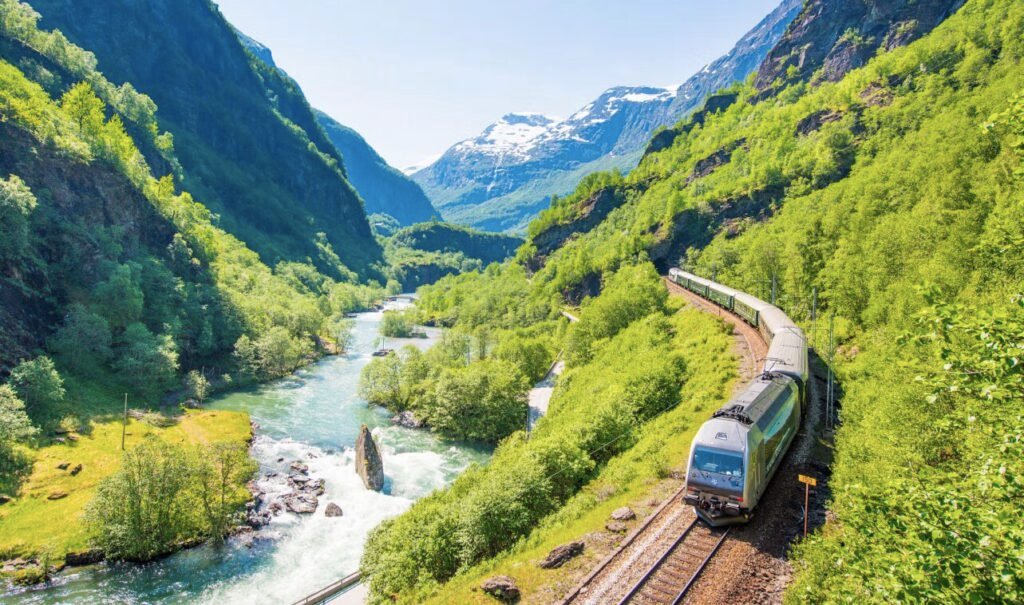
Switzerland engineers awe. Trains glide into clouds on time; funiculars tilt you from pasture to glacier with a wink. In Zermatt, the Matterhorn slices the sky; in Lauterbrunnen, waterfalls write exclamation marks into the valley. Hike a blue trail that smells of clover, or clip into a ridge where silence booms. Chalets promise order — hot showers, perfect bread, a window framing a peak like a postcard you somehow own.
Summer offers wildflower meadows and cowbells; winter answers with powder that squeaks underfoot. The miracle is frictionless grandeur: luggage whisked, tickets synced, viewpoints so well placed they feel inevitable. You’ll learn to layer, to breathe thinner air, to say “Grüezi” as if it were a spell. And when a glacier creaks, you’ll understand how beauty can be both ancient and very, very awake.
Also read: The Best Things to do in Switzerland
Head West: Sunsets, Sea Air, and the Ceremony of Leaving.
With a day, choose appetite over acreage. Go west toward the edge of your map — a coastal town where wind salts your hair and bakeries open at dawn. Take the first train that hugs an ocean: eat something fried in paper, walk the pier, learn three local names. West is shorthand for sunsets and conclusions; it tidies loose ends.
Tour one gallery, one market, one bar where the bartender remembers travelers. Stand at water’s edge when the light goes gold and let the sun make a ceremony of leaving. A day won’t change your life, but west can change its temperature.
Head East: Patience, Layers, and the Slow Bloom of Understanding.
With a month, choose layers, not headlines. Go east, where distances invite patience and flavors stack — sour, smoke, dill, citrus. Take trains that lull, buses that gossip, ferries that think in currents. Start with capitals, then peel back to villages where grandmothers sell herbs and teenagers remix tradition.
Learn an alphabet; learn a toast. Let markets teach you verbs and monasteries teach you verbs slower. The gift of a month is permission: to get it wrong, to try again, to stay another night because the light in this city at 7 p.m. is exactly your color. East doesn’t rush to impress; it expands. So will you. ◼