You’re in the right place – a lot of guests on our New Zealand small group tours have already seen plenty of the world, so as well as the big-name sights they’re really keen on those quieter, more local moments – a little museum in a tiny village, a hidden hot pool you reach by boat, or volunteer-run conservation projects most travellers just drive straight past.
Kia ora, we’re MoaTrek. We’ve been showing travellers around New Zealand on our small group tours since 1971. Here’s our list of favourite “off-the-beaten-track” spots in New Zealand, places we’ve been visiting for years, and our guests tell us they love.
Places like the Okarito Lagoon on the West Coast, with such interesting historical and natural stories; Mou Waho Island on Lake Wanaka, where you can stand beside a lake on an island in a lake (I promise it makes sense when you see it!); and the Lake Rotoiti Hot Pools, which you can only reach by boat and are perfect for a long, lazy soak. These are the moments our travellers tell us make their trip.
In this article we’ll walk you through our favourite off-the-tourist-trail stops from our 21-day Kakapo New Zealand tour, so you can see how easy it is to enjoy both the “must-sees” and those special places you’ll be telling friends about long after you get home.
Our favourite New Zealand off the beaten track experiences – Quick Links
 Northland’s Hidden Gems
 Northland’s Hidden Gems
 Central North Island’s Secret Spots
 Central North Island’s Secret Spots
 Meet the Locals (and the Hobbits) on the Mainland
 Meet the Locals (and the Hobbits) on the Mainland
 Off the Tourist Trail in the Southern Lakes & West Coast
 Off the Tourist Trail in the Southern Lakes & West Coast
- Mou Waho Island – Lake Wanaka
- Ship Creek – West Coast
- Okarito Lagoon – West Coast
- Nile River Caves – West Coast
Find the places most visitors miss on your New Zealand trip
Whangarei Native Bird Recovery Centre – Northland
After lunch on our first day together, as we continue north towards the Bay of Islands, we pull into Whangarei for a special stop at the Native Bird Recovery Centre. Tucked in beside the Kiwi North heritage park, this is where injured and sick birds from all over Northland are brought to recover.
We meet the team, hear about their work and, if we’re lucky, say hello to local celebrities like Sparky the one-legged kiwi – it’s always a real ‘only in New Zealand’ moment.
What really stays with people here is the mix of heart and hard work. This isn’t a crowded tourist attraction – it’s a small, not-for-profit centre where founders Robert and Robyn Webb and their volunteers have been quietly caring for everything from tiny wax-eyes to albatrosses since 1992, releasing more than half of their patients back into the wild.
What makes the Whangarei Native Bird Recovery Centre different?
- You’ll get a close-up look at kiwi and other native birds in a non-profit, volunteer-run centre, not a big commercial attraction.
- The team here has been rescuing and releasing injured birds for decades, so we’re hearing conservation stories straight from the people doing the work.
- It’s a small, friendly place most big tours never include, which makes our visit feel even more special and a real local experience.
Where is the Whangarei Native Bird Recovery Centre and how to visit?
- The centre is in Whangarei, right beside Kiwi North heritage park, just to the left as you arrive. See the Native Bird Recovery Centre on Google Maps here.
- On our 21-day Kakapo New Zealand tour we visit on Day 1, just after lunch, as a relaxed and inspiring stop that really brings New Zealand’s wildlife story to life.
What did our travellers think of the Whangarei Native Bird Recovery Centre?
“It was lovely to be able to escape from the main tourist drag and to experience the real New Zealand by using local and small businesses owned by New Zealanders. I wasn’t really sure what to expect from the itinerary as some of the activities seemed a bit left of centre, but little did I know how touching it would be to meet Rob at the wild bird rescue centre, an amazing character who introduced us to Sparky the Kiwi and his rescued blue penguin, kingfisher and gannet! ”
Kim, UK. Kakapo 21-day tour, January 2025
 Back to top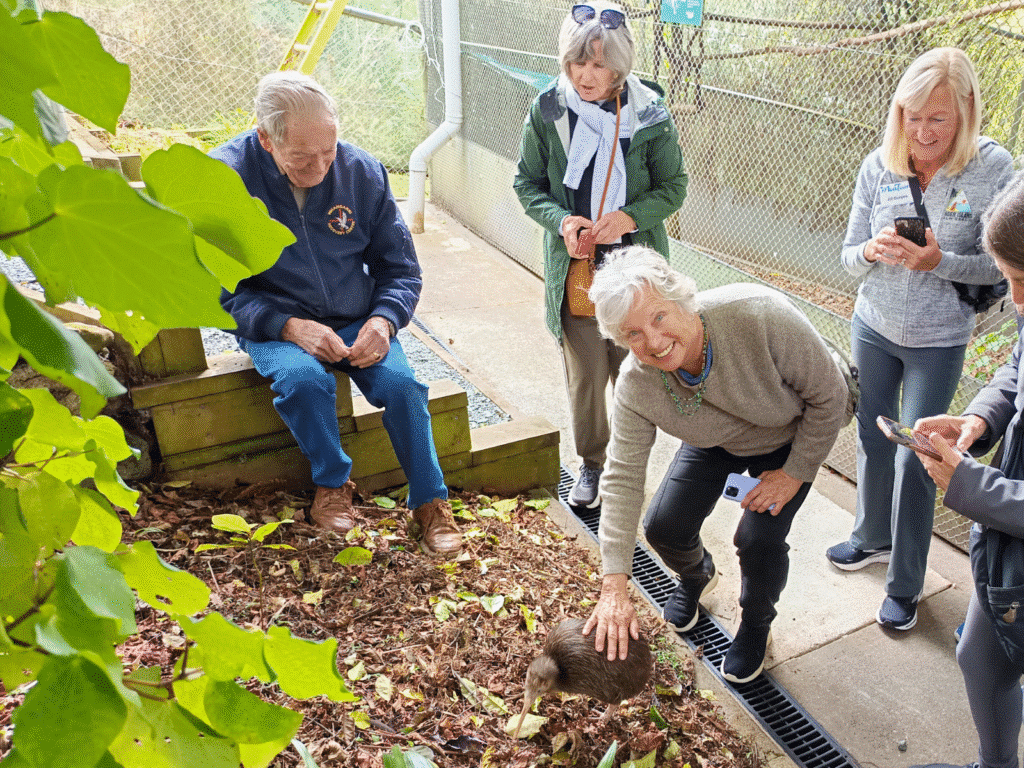
Kawiti Glowworm Caves – Northland
On our second day in the Bay of Islands, we leave the coast behind for a little while and head inland to the quiet Waiomio Valley, home of the Kawiti Glowworm Caves. It’s only a short drive from Paihia, but it feels like a different world – a small car park in the bush, a warm welcome from our local Maori hosts, then we follow them into the limestone caves along a wooden boardwalk.
As your eyes adjust to the darkness, the ceiling slowly fills with thousands of tiny lights until it looks like a night sky underground.
What people really love here is that it feels personal. The caves are still owned and run by descendants of the great chief Kawiti, a prominent warrior and peace maker. Chief Kawiti’s great-grandson, Tawai Kawiti, first opened the caves to visitors in the 1950s. Your guide weaves in stories of local history, the family, the valley and how the glowworms live.
There are no huge crowds or flashing cameras, just a small group, soft voices, and the quiet drip of water as we walk beneath stalactites and glowing “galaxies” of titiwai (glowworms). It’s a beautiful mix of nature, culture, and story – and a special way to experience glowworms, especially if it’s your first time in New Zealand.
Why we love Kawiti Glowworm Caves
- The caves are Maori-owned and family-run, so we’re welcomed and guided by descendants of Chief Kawiti, who’ve been showing visitors through for decades.
- The tours are small and unhurried, which makes the glowworm displays feel much more intimate than in some of the bigger, more commercial caves.
- The walk itself is short and easy on a boardwalk with handrails, so everyone can enjoy the experience without needing to be especially fit or adventurous.
Where are the Kawiti Glowworm Caves and how to visit?
- The caves sit in the Waiomio Valley, just a few kilometres south of Kawakawa in Northland, an easy drive from the Bay of Islands. See Kawiti Caves on Google Maps here.
- On our 21-day Kakapo New Zealand tour we visit on Day 2 from the Bay of Islands, before heading on to the Waitangi Treaty Grounds, so you get both a magical underground glowworm experience and a deep dive into New Zealand’s history in the same day.
What did our travellers think of the Kawiti Glowworm Caves?
“Loved this entire tour. Favourites were the glowworm cave, the flight over the fiord, the food and wine tasting and the zip lining with Canopy Tours. Dermot was a terrific and knowledgeable guide. Highly recommend!!”
Kim, USA. Kakapo 21-day tour, October 2024
Manupirua Hot Springs – Lake Rotoiti
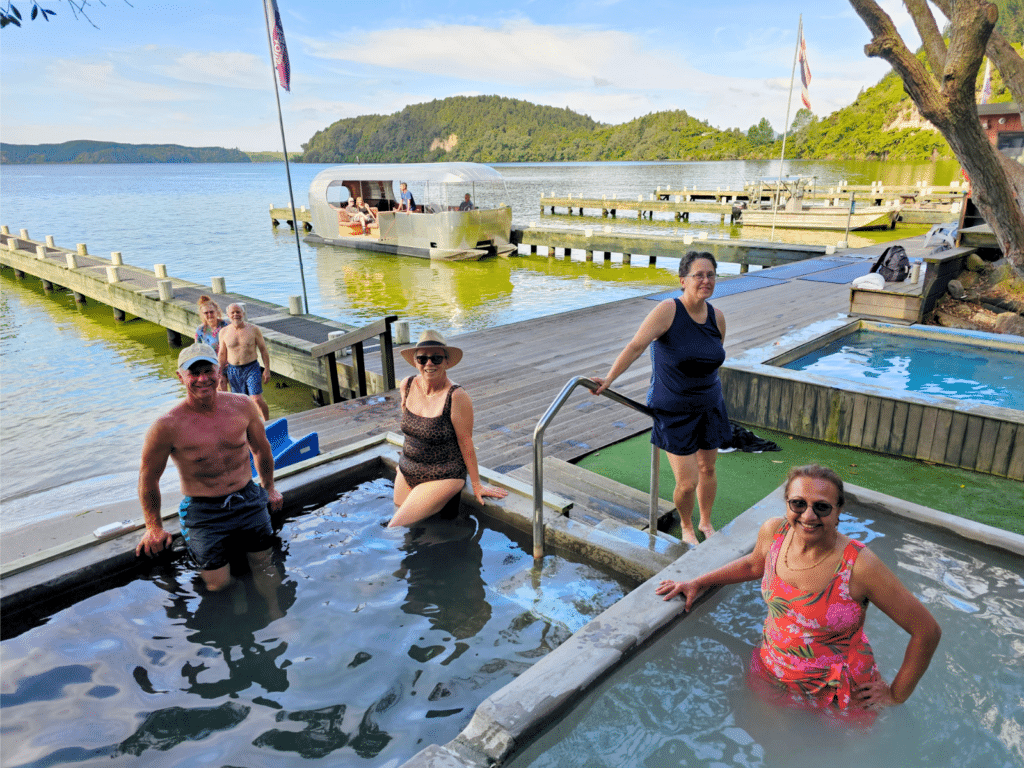
On the secluded shores of Lake Rotoiti, near Rotorua, there’s a unique New Zealand experience waiting to be discovered. Mother Nature has created soothing warm water to bathe in at the natural Manupirua Hot Springs.
These hot pools are so out of the way they can only be reached by boat, which is exactly how we arrive on tour – gliding across the lake, stepping ashore, and slipping straight into the steaming pools with the forest all around us.
We’ve got time here to do things properly. Most of us try a few different pools, all at slightly different temperatures, and if we get too hot, we cool down by jumping off the jetty into the lake for a quick dip before hopping back into the pools.
It’s relaxed, fun and very social – a great chance to chat with your fellow travellers (and locals), enjoy the scenery and enjoy a spot most visitors to Rotorua never even hear about.
What makes Lake Rotoiti Hot Pools so awesome?
- You can only get here by boat, you’ll see the locals over there too, which makes the whole outing feel genuine, not just a regular tourist stop.
- There are several natural pools at different temperatures, so everyone finds their perfect spot to soak and enjoy the lake views.
- We love the simple pleasure of heating up in the pools, then cooling off with a quick dip in the lake – it’s a real Kiwi summer holiday experience.
Where are the Manupirua Springs and how to visit?
- The hot pools are in Manupirua Bay, right on the edge of Lake Rotoiti. The only way to get there is by floatplane or boat. See Manupirua Springs on Google Maps here.
- On our 21-day Kakapo New Zealand tour we visit the springs on our way into Rotorua, with plenty of time to enjoy the boat trip, a long soak, and a refreshing swim.
What did our travellers think of Lake Rotoiti Hot Pools?
“The 21-day MoaTrek tour of New Zealand is a must-do! The itinerary didn’t disappoint as it covered both the North and South islands. I enjoyed the variety of activities, such as wine tasting, the boat trip to the hot springs on Lake Rotoiti, learning about the Maori history and culture and the personal attention that we received.”
Jane, USA. Kakapo 21-day tour, March 2025
The Gumboot Capital of the World – Taihape
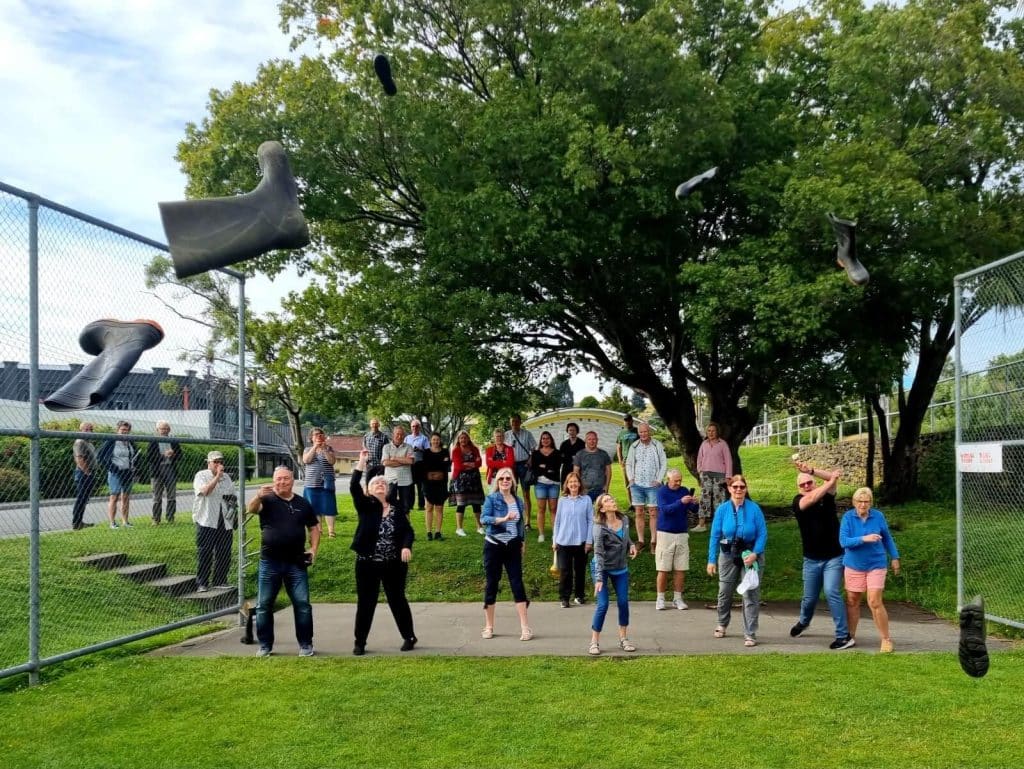
Driving down State Highway 1 through the central North Island, we pull into Taihape – proudly calling itself the ‘Gumboot Capital of the World’. There’s a giant gumboot on the edge of town and, just behind the main street, an official gumboot-throwing lane where locals practise for the annual Gumboot Day.
The whole thing grew out of a very Kiwi in-joke: gumboot-wearing farmer Fred Dagg, a much-loved fictional character whose “hometown” is Taihape, helped cement the town’s muddy, hard-working image in New Zealand culture.
For most overseas visitors, Taihape would just be another rural town on the map, but travelling with us it turns into one of those fun little memories. On Day 8 of our Kakapo tour we often stop in here, stretch our legs and have a friendly gumboot-throwing contest in the lane – nothing serious, just lots of laughs, a bit of good-natured rivalry and some creative throwing techniques.
It’s a very Kiwi thing to do, the sort of quirky local experience you’d never think of yourself, and our guests tell us it’s a fun break on the road.
What makes the Gumboot Capital of the World a special stop?
- Taihape has fully embraced its ‘Gumboot Capital of the World’ title, complete with a giant roadside gumboot statue and a proper gumboot-throwing alley.
- The whole gumboot theme comes from classic Kiwi humour – Fred Dagg and the idea of a hard-working rural hometown – so you’re stepping into a little slice of local culture, not just a roadside gimmick.
- Our stop here turns an ordinary highway break into a bit of fun, with a casual gumboot-throwing competition that always gets everyone laughing.
Where is Taihape and how to visit?
- Taihape is in the central North Island on State Highway 1 – a natural stopping point on the main road between Tongariro National Park and Wellington. See Taihape’s gumboot alley on Google Maps here. This spot is so far ‘off the beaten track’ that Google doesn’t even know its name, the link here just goes to the location, but if you check street view you can see the gumboot throwing lane!
- On our Kakapo 21-day New Zealand tour, we often stop in Taihape on Day 8, breaking our journey with coffee, a stroll and a few rounds of gumboot throwing – a light-hearted little break that adds some very Kiwi flavour.
What did our travellers think of visiting our favourite secret spots?
“Through MoaTrek we were able to have a lot of off-the-beaten-track but special experiences. We made frequent coffee stops in small towns, were introduced to steak and mushroom pies, some quirky local activities (Gumboot Throwing, anyone?), chatty local residents eager to share facts about their towns and the most architecturally stunning toilet facilities anywhere!”
Joan & Rich, USA. Kakapo 21-day tour, March 2025.
Get off the tourist trail in New Zealand with MoaTrek
Looking to discover those hidden gems that the big coach tours don’t go to? You’re in the right place – all these experiences (and more) are available on our small group tours.
Pelorus River – Marlborough
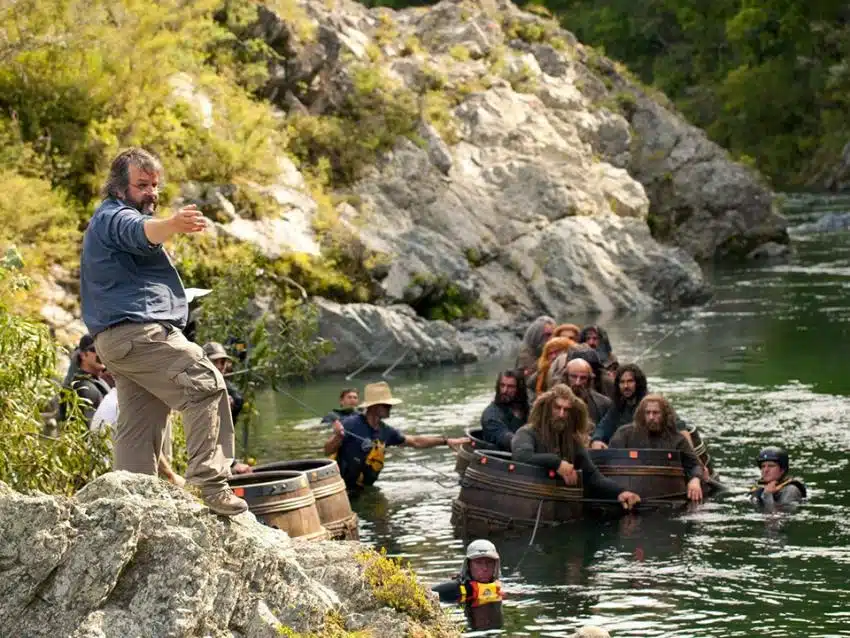
On our way to Nelson, we make a ‘stretch your legs’ stop at the Pelorus Bridge Scenic Reserve. What looks at first like a simple roadside stop quickly turns into a highlight – the emerald Pelorus River winding through a rocky gorge, native bush all around and easy tracks leading down to the water.
For Lord of the Rings fans, this is a treat, the very spot Peter Jackson filmed the ‘Barrel Run’ scene from The Hobbit movies.
We’ve got time here to wander along the short forest walks, take photos from the bridge, skim some stones and watch (or join) the hardy swimmers in the river pools. There’s a little store and picnic area, plenty of birdsong and that feeling of being somewhere most people just rush past.
Why we love stopping at the Pelorus River
- It protects one of the last stands of river flat forest in Marlborough, with tall trees and ferns growing right down to the water’s edge.
- This was the filming location for the Barrel Run scene in The Hobbit – you can imagine the Hobbits floating right past you in the river.
- It’s a perfect example of a place big buses just drive past, but on our small group tour we have time to stop, walk, and really enjoy it.
Where is the Pelorus River and how to visit?
- Pelorus Bridge Scenic Reserve is on State Highway 6, about 18 km / 11 miles west of Havelock, halfway between Blenheim and Nelson. See the Pelorus Bridge Scenic Reserve on Google Maps here.
- On our Kakapo 21-day New Zealand tour this is a relaxed stop on our way to Nelson, giving you a taste of Marlborough’s natural side after its famous wines.
Akaunui Homestead – Canterbury
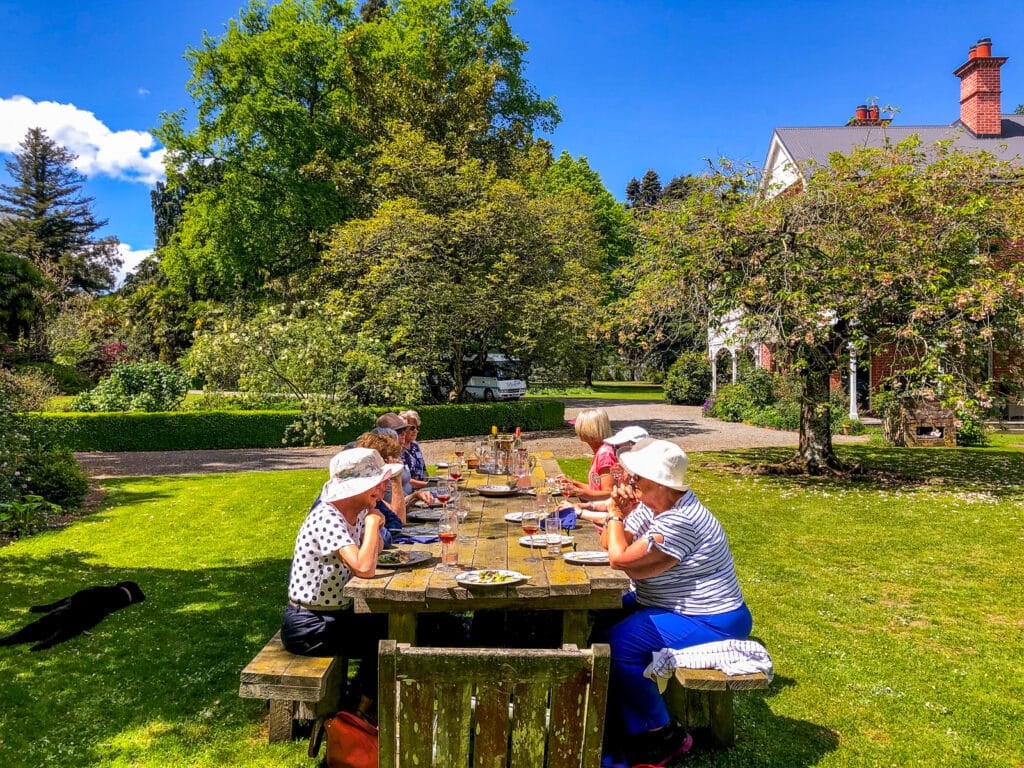
As we leave Christchurch and head south across the wide Canterbury Plains, the sky just seems to get bigger and bigger. Not far past Ashburton we slip off the main highway onto quiet country roads, and before long a red-brick homestead appears among green lawns, old trees, and flower-filled borders – Akaunui Homestead.
This is not a commercial tourist attraction, it’s not even open to the public, it’s a real family home on a working farm, and you can feel that straight away. Ian and Diana Mackenzie – often with the farm dogs leading the welcome – greet us like old friends, with birdsong in the background and the smell of something delicious coming from the kitchen.
We’ve been calling in here on our small group tours for years now, and it’s the day so many people remember most. We sit down together for a long, relaxed home-cooked lunch (usually with plenty from the veggie garden), swap stories around the table, then wander through the grounds, trees, and vegetable beds, chatting with our hosts about farm life and family history.
It’s simple goodness – great food, company, and a beautiful place – and that’s exactly why so many guests tell us that visiting Akaunui was one of the standouts of their whole New Zealand trip.
Why do so many of our guests love Akaunui Homestead?
- This is genuine Kiwi country hospitality – we’re in the family’s actual home, not a staged venue or a restaurant dressed up as a farmhouse.
- Lunch here is a true farm-to-table experience, home cooked by our hosts with produce from the garden and meat from the farm wherever possible.
- Akaunui isn’t open to the public – visits are by prior arrangement only, so coming here on a small group tour like ours feels special and personal.
Where is Akaunui Homestead and how to visit?
- Akaunui is near Ashburton in rural Canterbury, an easy detour for us off the main route between Christchurch and Mt Cook. But there’s no public access or signage and it’s not on Google Maps – you can only visit by special arrangement with the family.
- On our 21-day Kakapo New Zealand tour we visit Akaunui for a special hosted lunch and farm visit on our way to Mt Cook.
What did our travellers think of Akaunui Homestead?
“We have never explored an entire country before like this, and it was a trip of a lifetime. We loved our special lunch at Akaunui Farm Homestead with Di and Ian Mackenzie. They were such gracious hosts!”
Susan, USA. 21-Day Kakapo Tour, March 2025.
Mou Waho Island – Lake Wanaka
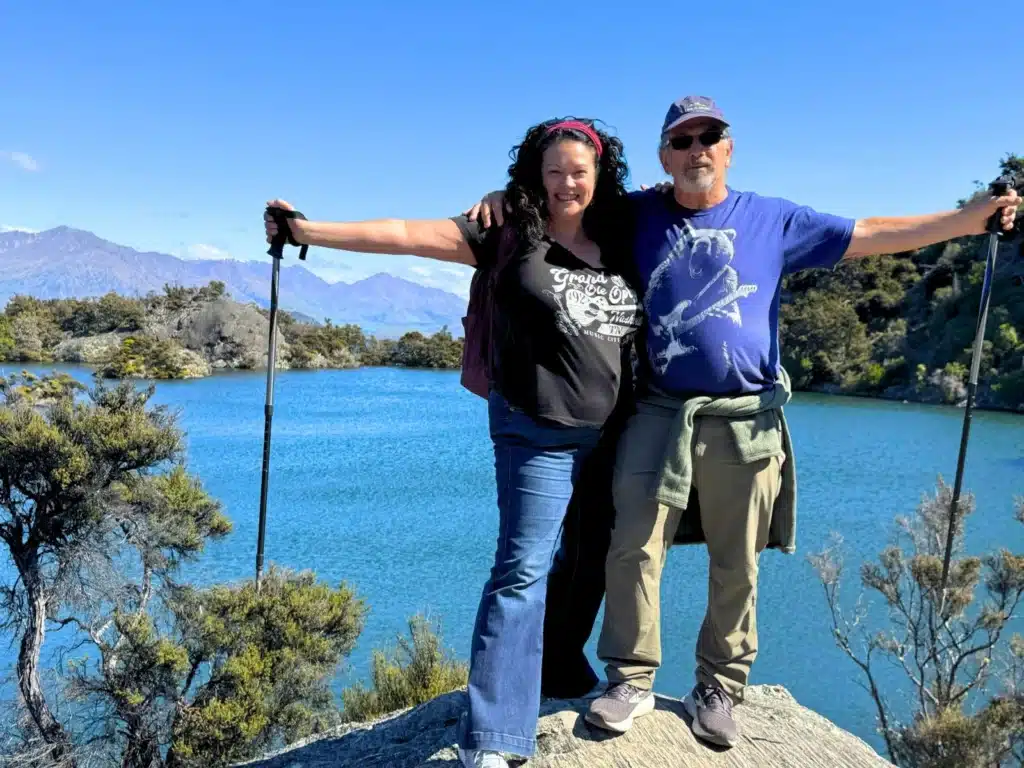
During our stay in Wanaka, we set aside the afternoon for optional tours, including one of our favourite outings on the whole tour – a boat trip out to Mou Waho Island.
We cruise across the lake with the mountains rising all around us, then step ashore on this predator-free island that feels a world away from town. From there we follow a gently climbing track through regenerating native bush to a lookout above Arethusa Pool, a small clear lake perched high on the island with sweeping views back over Lake Wanaka and the Southern Alps.
It’s that famous ‘lake on an island in a lake on an island’ view that everyone takes a photo of – and it really does live up to the reputation.
Because there are no predators here, the birdlife is wonderfully relaxed. Curious Weka wander right past us, and we join our local guide to plant a native tree to help keep the island thriving. We walk at an easy pace with plenty of stops to catch our breath and enjoy the views, and there’s time at the top just to sit, soak it all in and feel lucky to be in a spot most visitors to Wanaka will never see.
What makes Mou Waho Island memorable?
- That incredible ‘lake on an island in a lake on an island’ view – it’s one of those classic New Zealand moments that really sticks in your memory.
- The island is predator-free, so we see native birds like Weka up close and hear plenty of birdsong as we walk.
- Guided trips include a small conservation element, like planting a native tree, so we’re not just sightseeing – we’re helping look after the place too.
Where is Mou Waho Island and how to get there?
- Mou Waho sits deep in Lake Wanaka, not visible from town and only reachable by water taxi or boat – you can’t just drive to it. See Mou Waho Island on Google Maps here.
- On our 21-day Kakapo New Zealand tour we offer the guided Mou Waho Island half-day lake cruise and nature walk as an optional tour during our Wanaka stay.
What did our travellers think of Mou Waho Island?
“We thoroughly enjoyed our tour through beautiful New Zealand! Our guide Brian was the perfect ambassador to travel with & our group of 18 travelled together as one big family. We enjoyed the boat cruises in the Bay of Islands, Abel Tasman, Milford Sound and Lake Wanaka.”
— Sudha, Kakapo 21-day tour, January 2025
Discover more in New Zealand with MoaTrek
Want to find those real little Kiwi gems that the big coach tours tend to breeze past? All these hidden gems – and plenty more we haven’t even talked about yet – are part of our New Zealand small group tours, so you can just jump on board and enjoy all those ‘only in New Zealand’ moments with us.
Find out more about our 21-day Kakapo New Zealand small group tour here.
Ship Creek – West Coast
On our journey from Wanaka to Franz Josef, once we hit the West Coast, we pull over at a little sign that simply says, “Ship Creek.” It’s the kind of stop that starts as a leg-stretcher and ends up being one of the most talked-about moments of the day.
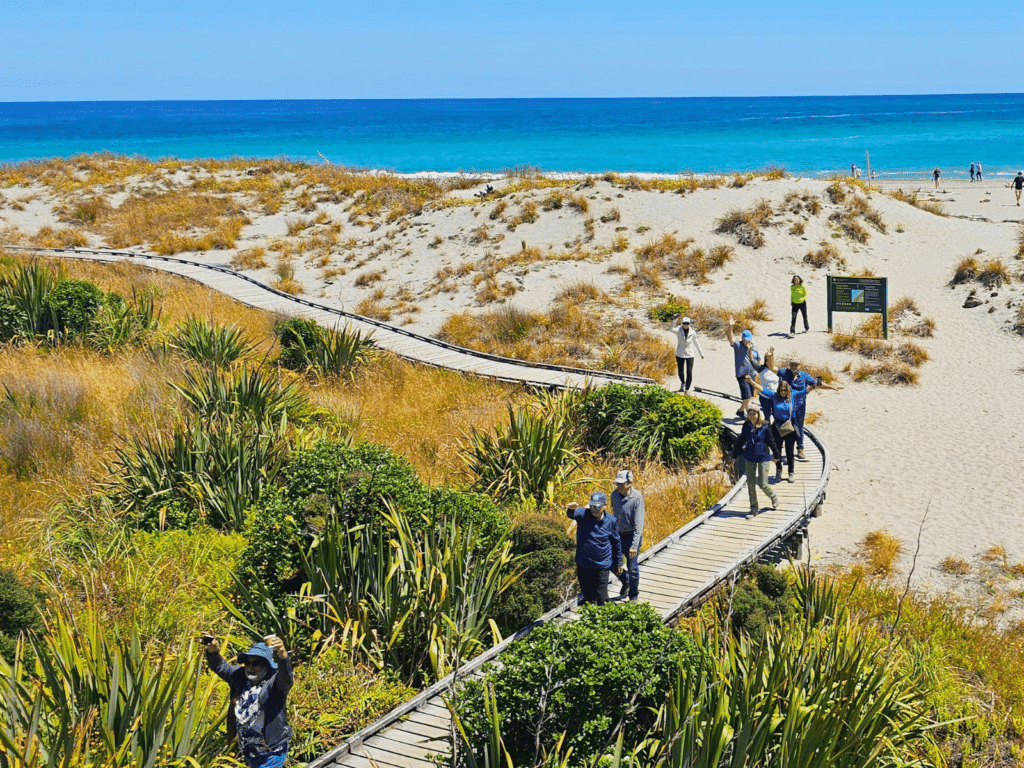
From the roadside car park, two short loop tracks take us into completely different worlds: one leads out to a wide, windswept beach with pounding surf and driftwood scattered along the sand; the other heads inland on a boardwalk through ancient kahikatea swamp forest, past a small dune lake hidden just behind the dunes.
The best part is how easy it is for everyone to enjoy. The tracks are short and well formed, with boardwalks, lookouts and even a small viewing tower over the beach, so you can go as far as you feel like and still get a real sense of the wild West Coast. We’ve even seen dolphins playing in the surf right off the beach – this is a feeding ground for them.
Some of us wander down to the beach for photos of the sweeping coastline and dramatic skies, others take the forest loop and listen to the wind in the trees – either way, you really feel that mix of ocean, forest, and the West Coast wildlife.
What makes Ship Creek our favourite roadside stop on the West Coast?
- It’s a true ‘wild West Coast’ experience that’s accessible to everyone, thanks to short, well-maintained tracks right off the highway.
- We get a rare chance to see ancient kahikatea swamp forest and a quiet dune lake sitting just behind the Tasman Sea surf.
- It’s a perfect photo stop, with sweeping coastline, driftwood-strewn beach and some dramatic West Coast clouds and light.
Where is Ship Creek and how to visit?
- Ship Creek is on the West Coast highway, about 17 km / 9 miles north of Haast – the walks start right from the roadside car park. See Ship Creek on Google Maps here.
- On our 21-day Kakapo New Zealand tour we visit Ship Creek as an easy leg-stretcher on our way from Wanaka to Franz Josef Glacier.
Okarito Lagoon – West Coast
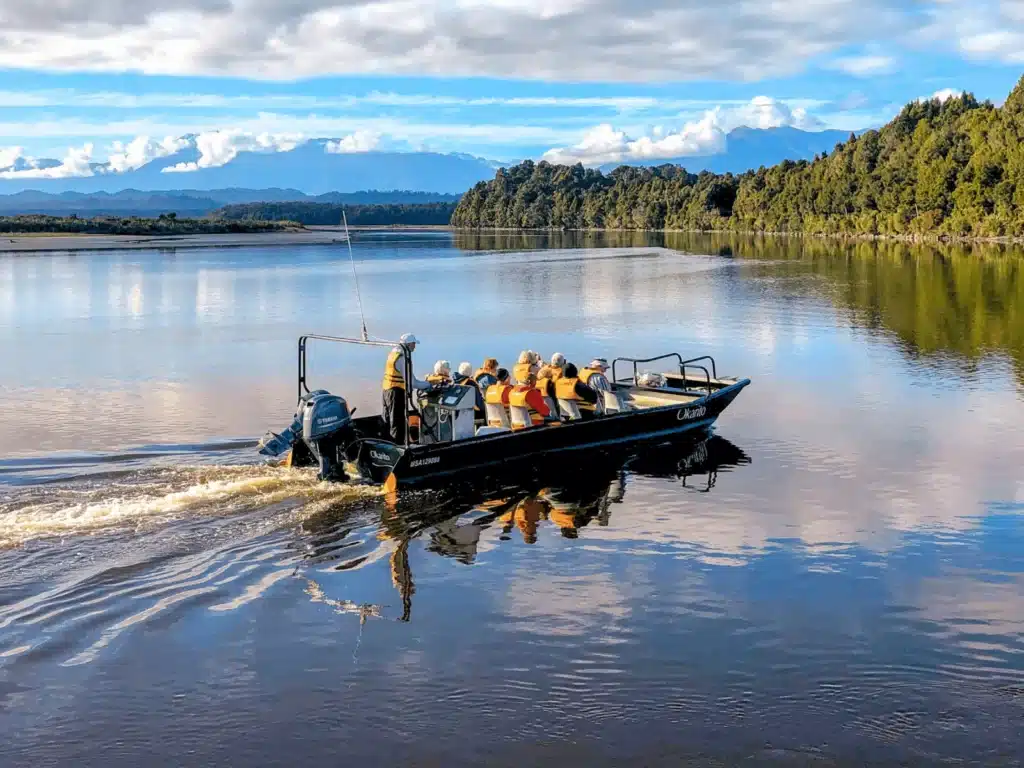
During our stay at Franz Josef Glacier, we love to slip away for a few hours and head out to the tiny settlement of Okarito. From the moment we arrive you can feel how quiet and peaceful it is – no shops, no service stations, just a handful of houses, wide-open spaces and the calm waters of Okarito Lagoon stretching out towards the mountains.
From here we explore the lagoon on a guided boat tour, gliding through winding tidal channels with bush and wetlands on either side and the Southern Alps rising in the distance. We keep an eye out for herons, shags and other birdlife in the shallows, listen to the calls from the bush and, on a sunny day, look back to see snow-capped peaks right above the lagoon.
The guides here are locals who know every corner of the wetland and love sharing its stories, from the early gold mining days to today’s conservation work. For many people it ends up feeling like the West Coast in miniature – sea, forest, mountains, and wildlife all in one very tranquil place.
What makes Okarito Lagoon worth a visit?
- It’s New Zealand’s largest unmodified coastal wetland, a rare, intact ecosystem where the landscape still looks and feels truly wild. It’s the only breeding ground of the rare kotuku (white heron), one of New Zealand’s rarest birds.
- Okarito itself is a genuine off-the-beaten-track village – no tourist strip, just a few homes and nature operators surrounded by ocean, lagoon, and bush.
- Local kayak and eco-boat trips are small, easy-going and very nature-focused, perfect if you’re more interested in birdlife, scenery, and good company than adrenaline.
Where is Okarito Lagoon and how to visit?
- Okarito is on the West Coast, about 20 minutes’ drive from Franz Josef Glacier, off the main road. See Okarito Lagoon on Google Maps here.
- On our 21-day Kakapo New Zealand tour we offer the Okarito Lagoon nature cruise as an optional tour during our Franz Josef Glacier stay – a peaceful few hours on the water with expert local guides.
What did our travellers think of Okarito Lagoon?
“We enjoyed the local guides and small boat tours of Bay of Islands, Pure Cruise, and the Okarito Boat ecotour. We appreciated these local programs who gave a shout out to MoaTrek for their support.”
— Marjorie, USA. Kakapo 21-day tour, November 2024
Nile River Caves – Paparoa National Park on the West Coast
During our stay in Punakaiki on the West Coast, we have the chance to head a little further up the coast to the tiny village of Charleston, for a real ‘underworld’ adventure in the Nile River Caves.
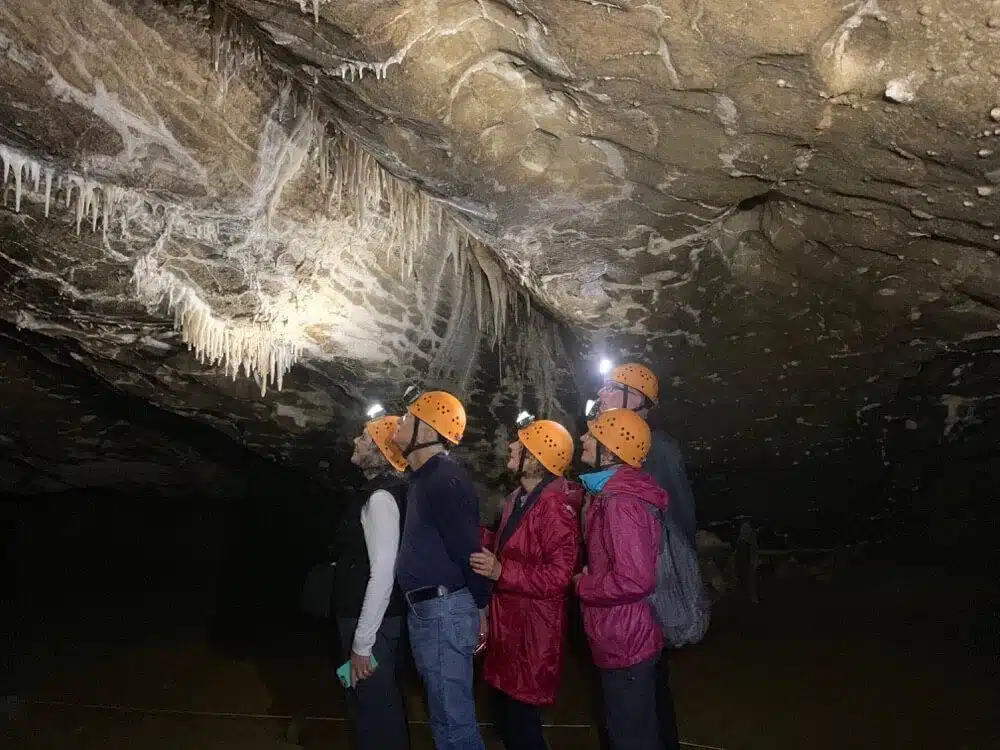
We start by boarding the little Rainforest Train and trundling up the lush Nile River valley, deep into Paparoa National Park. From the end of the line, we follow our guides through the forest to the cave entrance, then step into a spectacular limestone world of caverns, formations, and glowworms.
Once we’re underground, helmet lights pick out glittering stalactites and sculpted rock before we switch them off to see a true galaxy of glowworms overhead.
On the Underworld Rafting trip, you float through the glowworm caves on inner tubes and then along a calm section of the Nile River itself, surrounded by rainforest. It’s adventurous without being extreme, carefully guided and taken at a pace that lets you enjoy the scenery rather than rush through it.
Why is the Nile River different to any cave you’ve ever been in?
- You may have been to glowworm caves before, but have you ever floated through an underground cave with a galaxy of glowworms above you?
- The caves are kept in a natural, unmodified state with no concrete boardwalks, so the whole experience feels authentic and uncommercial compared with some of the larger cave complexes.
- The combination of rainforest train ride, guided cave walk, glowworms, and gentle river float makes it feel like several different adventures rolled into one fun-filled trip.
Where are the Nile River Caves and how to visit?
- The Nile River Caves are near the village of Charleston on the West Coast, between Westport and Punakaiki. See the Nile River Caves on Google Maps here.
- On our 21-day Kakapo tour we offer the Nile River Caves as an optional tour during our stay in Punakaiki, with different options available so you can choose the level that suits you best.
What did our travellers think of the Nile River Caves?
“Of the optional trips that we would recommend – the helicopter flight with snow landing, the Underworld glowworm cave tour, the Glenorchy Lord of the Rings tour/Dart River excursion, and the Wild Hills Off Road Safari. Each of these provided some of the most beautiful views we have ever seen.”
Donna, USA. Kakapo tour, April 2024
Get off the beaten track in New Zealand with MoaTrek
If you’ve been nodding along as we talk about meeting the locals, family farm lunches, remote islands, and quiet corners on the West Coast, that’s exactly the kind of New Zealand we love sharing with our guests.
On our New Zealand small group tours, special spots like the Native Bird Recovery Centre, Kawiti Caves, Lake Rotoiti Hot Pools, Akaunui Homestead, Mou Waho, Pelorus Bridge, Ship Creek, Okarito Lagoon and the Nile River Caves are all part of the journey, so you can simply come along and enjoy them without having to figure out the logistics yourself.
When you travel with MoaTrek, we take care of the details in the background – from lining up local guides, to arranging the transport and access to special places not open to the public. We know the people and the places, we know how long each stop really takes, and we build in time to wander, chat and take photos instead of rushing from one busy site to the next.
If this sounds like your kind of New Zealand holiday, have a look at our New Zealand small group tours here – download tour itineraries and check departure dates. If you’re not sure what will suit you best, or if you have any questions about your trip, just get in touch with the friendly team now.
We’re a small Kiwi team and we’re always happy to jump on a call or email and help you plan a trip that feels just right for you.