Most first-time visitors to Hangzhou head straight for West Lake—and for good reason. But if you have already seen the pagodas, gardens, and lakeside promenades, there is another side of Hangzhou that feels much quieter and more outdoorsy.
Qingshan Lake, located in Lin’an District on the western side of Hangzhou, is best known for its unusual water forest: rows of trees rising directly from the lake, with calm green water between them. The area has become especially popular for kayaking, cycling, and relaxed half-day escapes from the city.
See: [Green lake] One-day tour of Qingshan Lake water forest and Wensan future technology in Hangzhou
For travelers who want a nature-focused experience without going too far from Hangzhou, it is one of the city’s most interesting alternatives to the usual sightseeing circuit.
Why Visit Qingshan Lake?
The main appeal of Qingshan Lake is the contrast between water and forest.
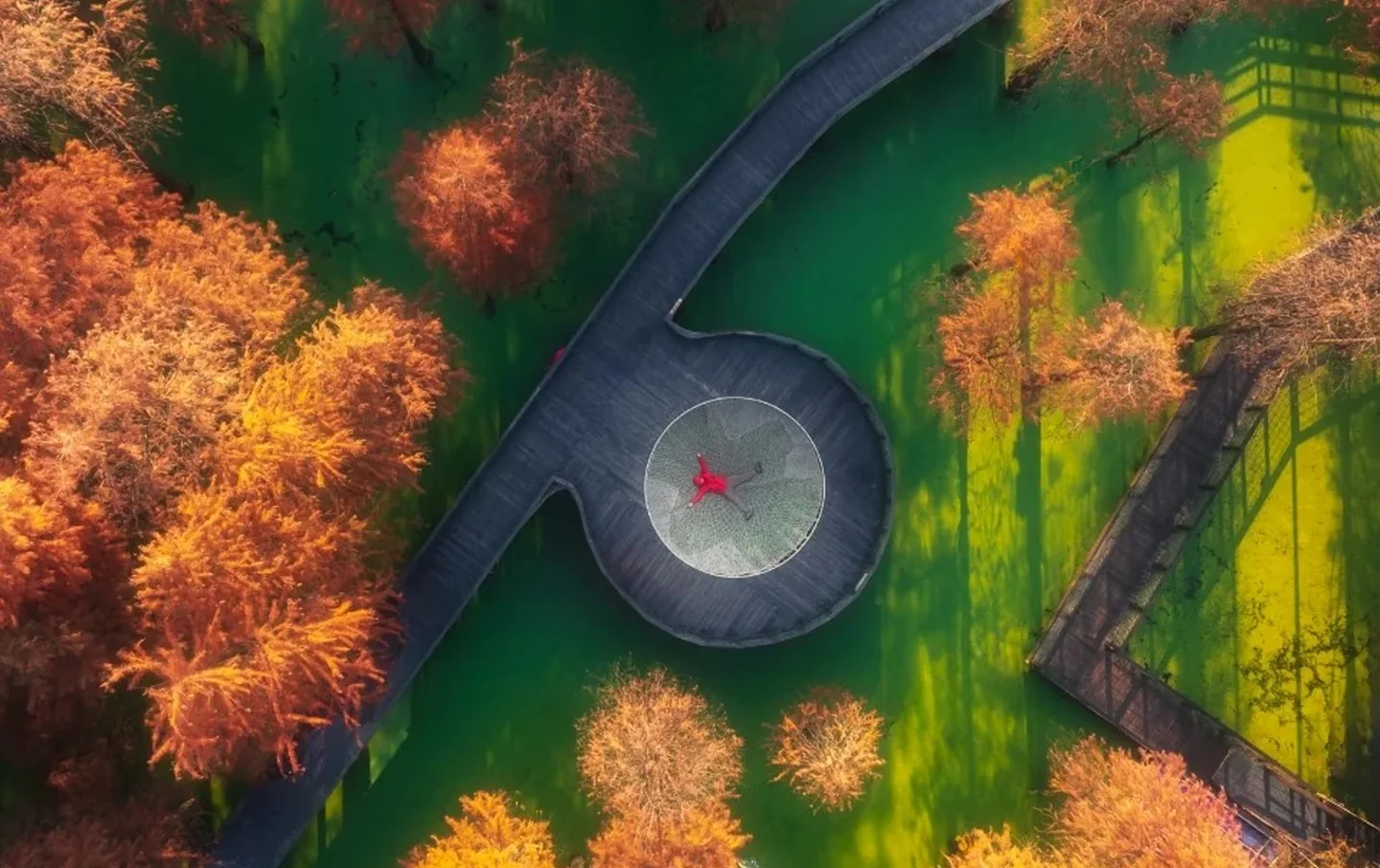
Instead of a traditional lakeside park, parts of the shoreline are covered with trees growing in shallow water. From a kayak, you can paddle between sections of the flooded forest and see the landscape from water level.
On land, cycling routes around the lake offer a different perspective, with stretches of woodland, open water, wetlands, and quieter suburban scenery.
It is not a place packed with major monuments. The experience is more about being outdoors, moving slowly, and seeing a less urban side of Hangzhou.
That makes Qingshan Lake particularly suitable for:
- couples looking for a relaxed outdoor activity;
- families with older children;
- travelers interested in photography;
- visitors who enjoy cycling or kayaking;
- anyone wanting a break from crowded central attractions.
Kayaking Through the Water Forest
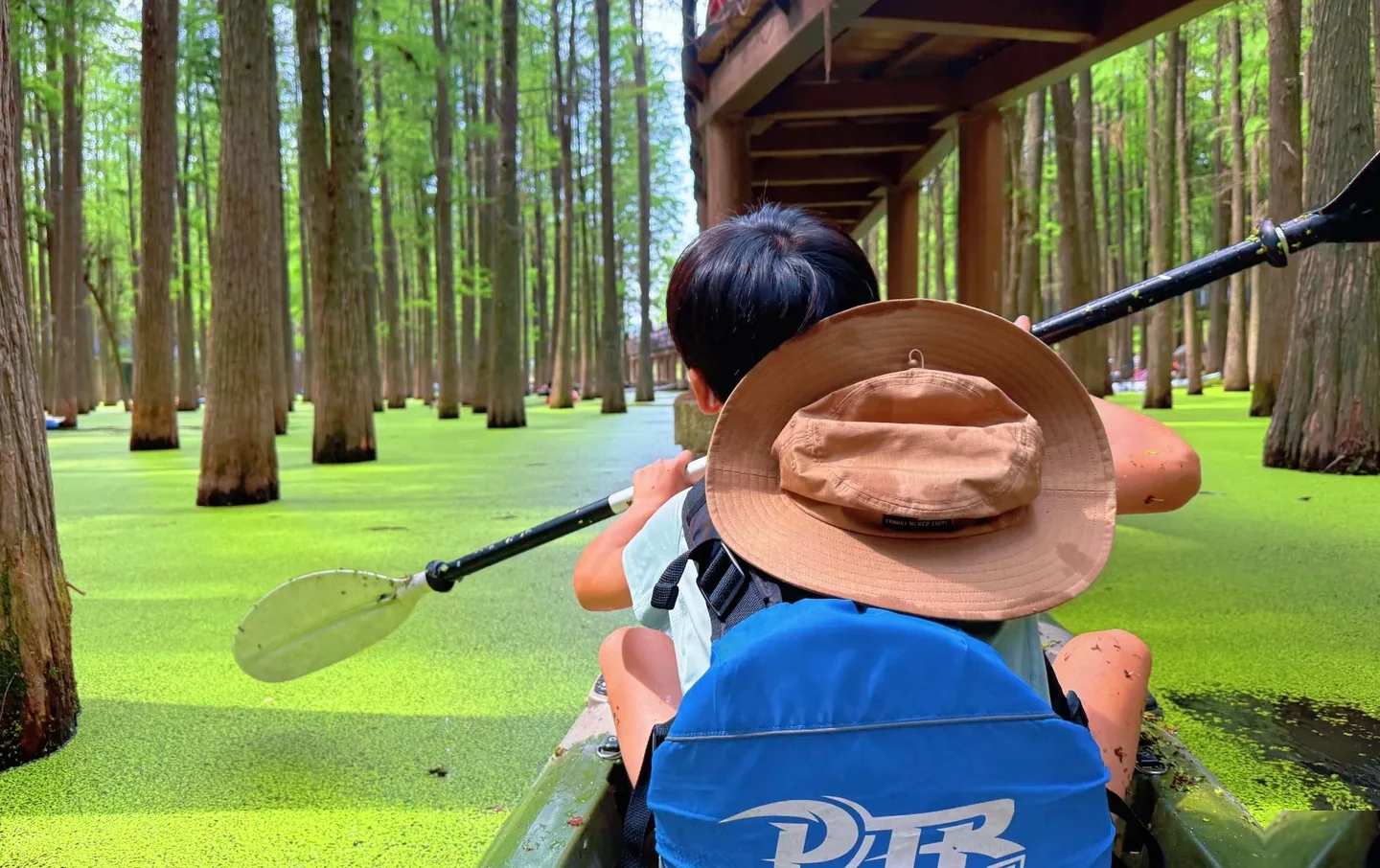
Kayaking is probably the most distinctive activity at Qingshan Lake.
The water is generally calm, so the experience is more about exploring than serious paddling. Once on the lake, you can move between trees, small open-water sections, and quieter corners of the forest.
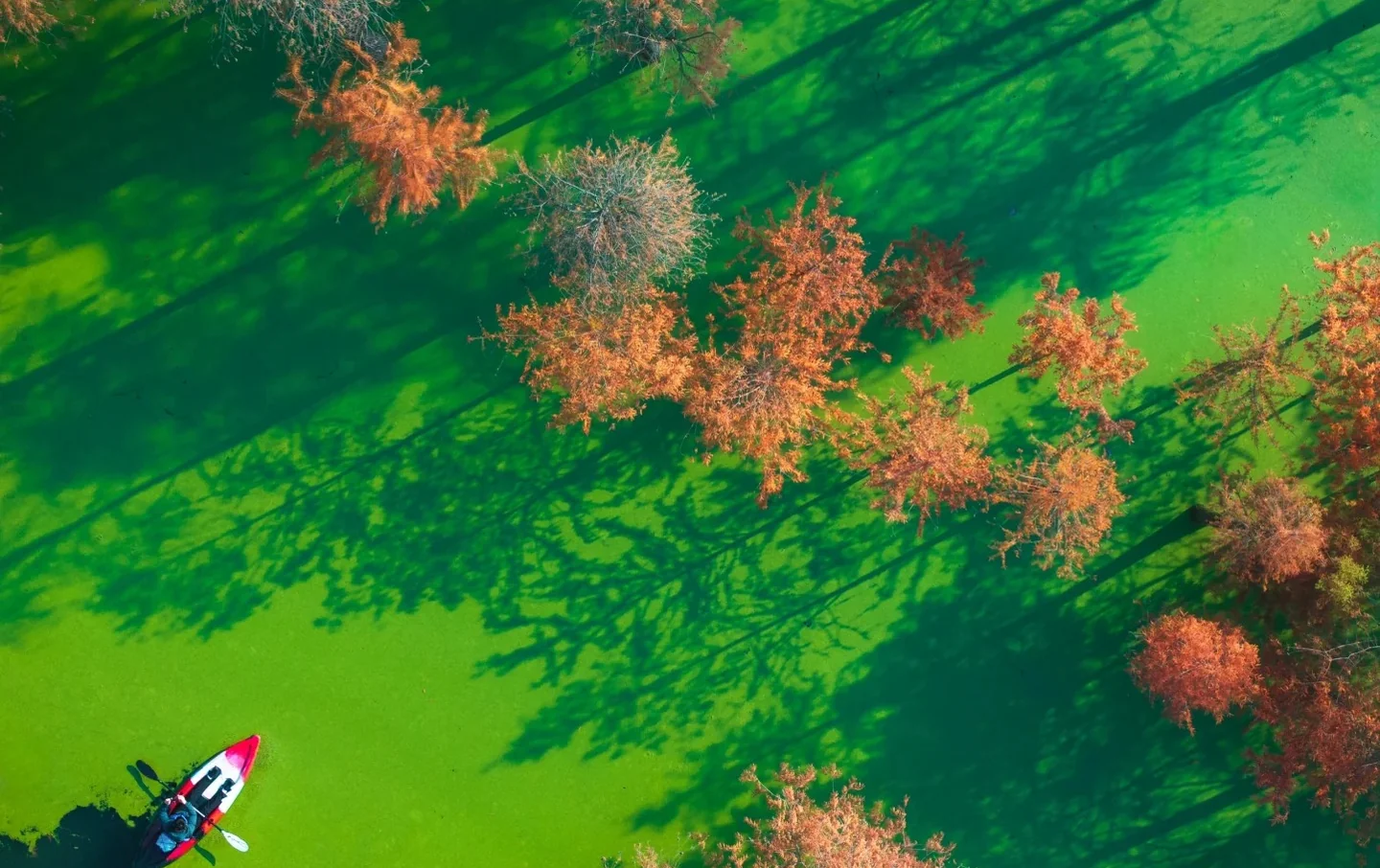
The atmosphere changes noticeably depending on the weather. On bright days, the green trees and reflections make the lake especially photogenic. Cloudier conditions can create a softer, almost misty landscape.
You do not need to be an experienced kayaker to enjoy the area, although conditions, operating zones, and rental availability can vary. Travelers should always follow the instructions of the local activity operator and check whether kayaking is available on the day of their visit.
If kayaking is your main reason for visiting, it is worth confirming operating conditions before traveling to Lin’an.
Cycling Around Qingshan Lake
Cycling is the easiest way to explore more of the lakeside area.
Rather than staying in one scenic zone, a bicycle allows you to move between forest sections, viewing points, local roads, and quieter stretches around the lake.
You can treat cycling as the main activity or combine it with kayaking for a half-day outdoor trip.
See: Into the “Matcha” Water Forest: Qingshan Lake Cycling & Nature Adventure
A typical visit might look something like this:
Arrive at Qingshan Lake in the morning, spend some time walking or cycling near the water forest, stop for photographs, and then join a kayaking session before heading back toward central Hangzhou.
The exact route depends on how much time you have and which parts of the lake are accessible during your visit.
When Is the Best Time to Go?
Spring and autumn are generally the most comfortable seasons for outdoor activities in Hangzhou.
From roughly April to May, temperatures are usually mild and vegetation around the lake becomes greener. Autumn, particularly October and November, is also suitable for cycling and walking because the weather is often cooler and less humid.
Summer can still be enjoyable, especially for kayaking, but Hangzhou can be hot and humid. Sun protection and drinking water are important.
Rain also affects the experience. Light rain can create an atmospheric landscape, but heavy rain, strong winds, storms, or other unsafe conditions may affect kayaking and outdoor activities.
If possible, check the weather forecast shortly before your visit.
See: Qingshan Lake Water Forest Travel Guide & Travel Experiences
How Much Time Should You Allow?
For most travelers, half a day is enough.
If you only want to see the water forest and take photographs, the visit can be relatively short. If you want to combine kayaking, cycling, and a relaxed walk around the lake, allowing four to six hours gives you more flexibility.
Travel time from central Hangzhou also needs to be considered, as Qingshan Lake is in Lin’an rather than the downtown West Lake area.
Because of this, it works particularly well as a standalone half-day excursion instead of being squeezed between several central Hangzhou attractions.

Qingshan Lake vs. West Lake
Qingshan Lake is not a replacement for West Lake.
For a first visit to Hangzhou, West Lake remains the essential destination because of its history, gardens, temples, pagodas, and cultural significance.
Qingshan Lake offers something different.
West Lake is primarily a cultural and sightseeing destination. Qingshan Lake is better suited to outdoor recreation.
At West Lake, you might walk along Su Causeway, visit Lingyin Temple, take a boat ride, or explore historic sites.
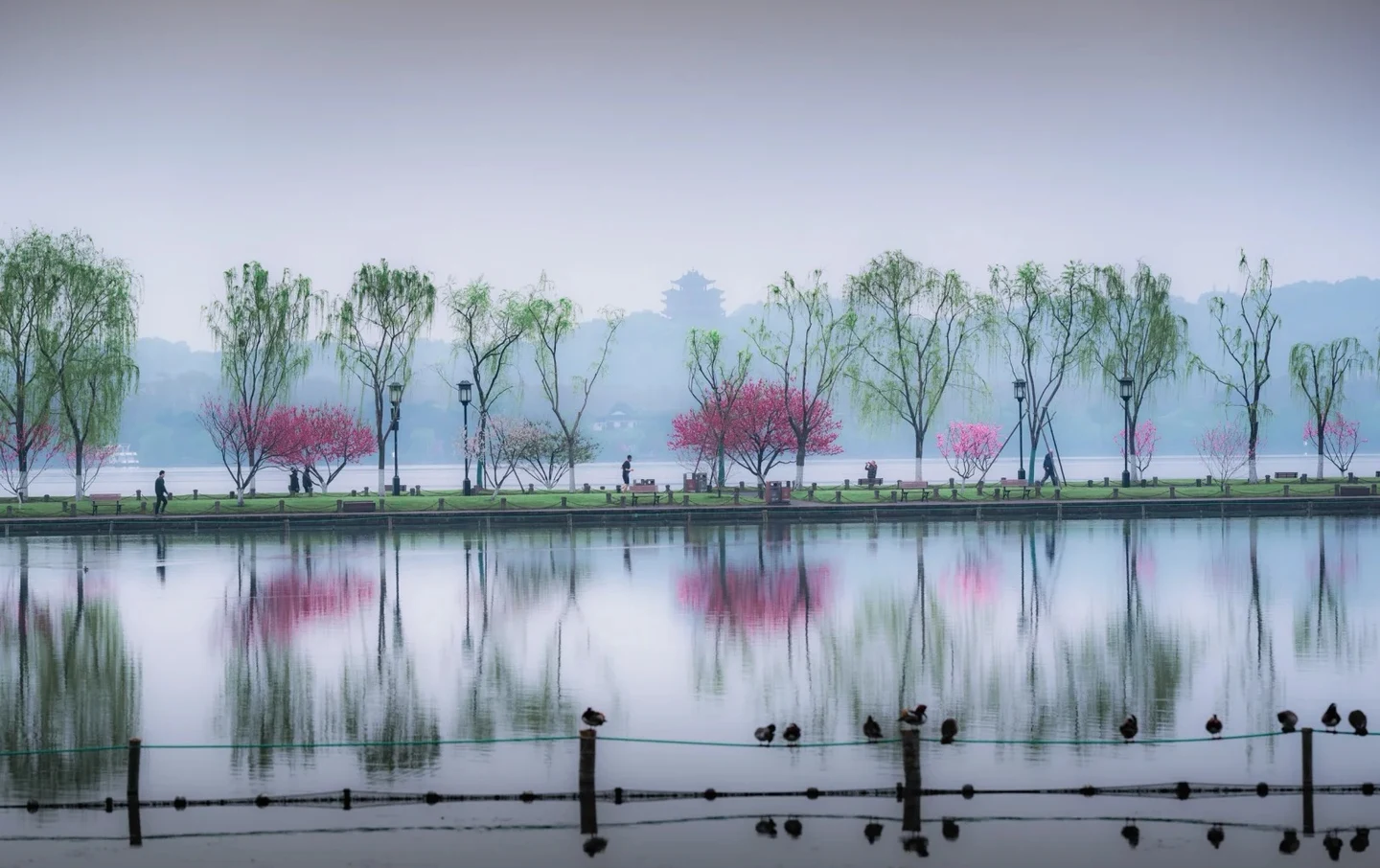
At Qingshan Lake, the focus is more likely to be kayaking, cycling, photography, and spending time in nature.
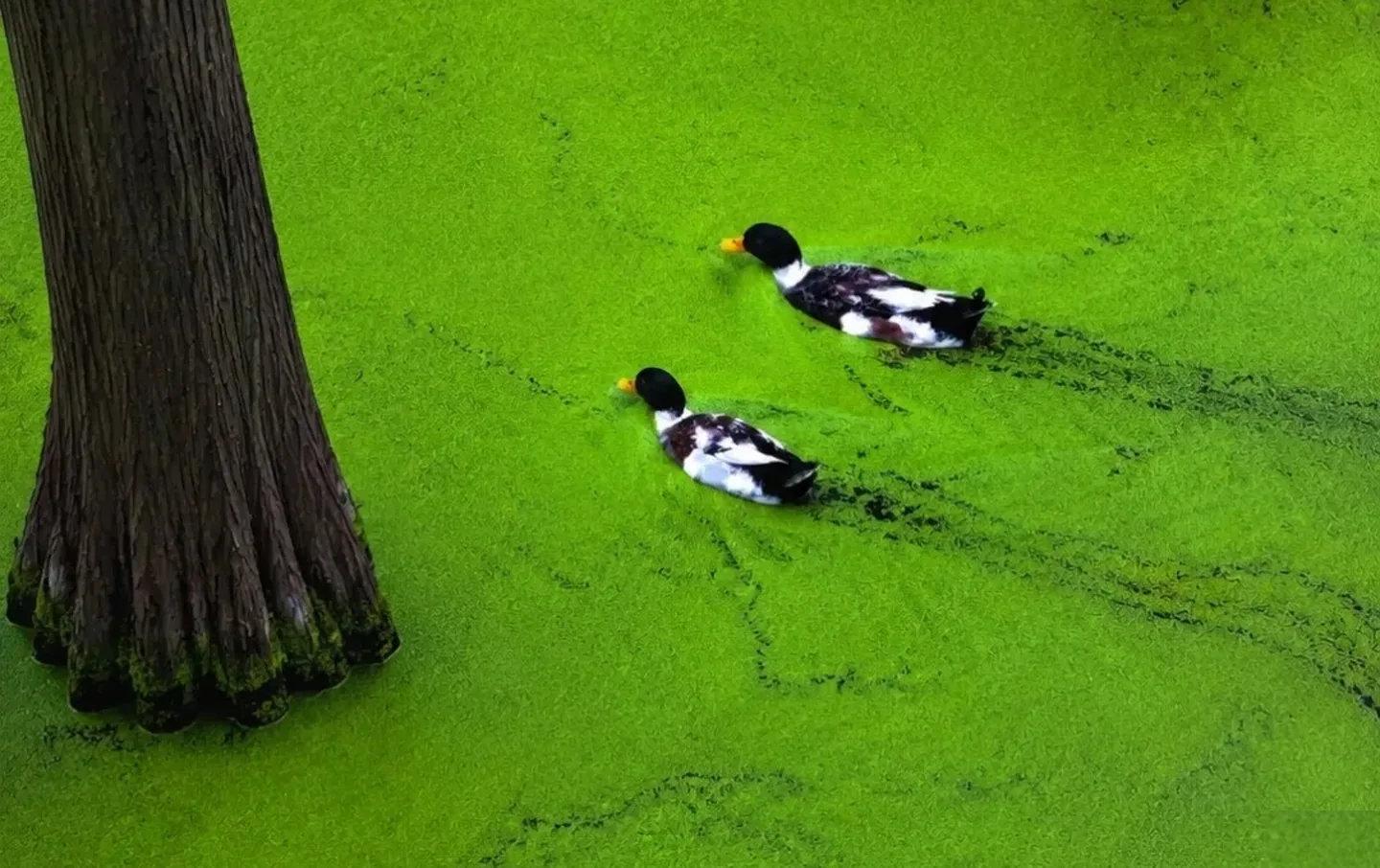
For travelers staying in Hangzhou for several days, the two experiences complement each other well.
A Good Choice for a Second or Third Day in Hangzhou
Qingshan Lake works best for travelers who have enough time to look beyond Hangzhou’s most famous attractions.
If you only have one day in the city, West Lake and the historic center should usually come first.
But with two, three, or more days, adding an outdoor excursion can make the itinerary much more varied.
One day might focus on West Lake and temples, another on tea villages or historic neighborhoods, and another half-day on Qingshan Lake.
This gives visitors a broader impression of Hangzhou—not only as a classical Chinese city, but also as a destination surrounded by forests, lakes, tea fields, and outdoor spaces.
Practical Tips
Wear comfortable shoes even if you plan to kayak, as some walking is usually involved around the lake.
Bring sun protection during warmer months and consider quick-drying clothing if you are joining water activities.
Kayaking and other outdoor services may be affected by weather, water conditions, maintenance, or seasonal operating arrangements, so availability should not be assumed.
Because Lin’an is farther from the city center, plan your transportation in advance rather than treating Qingshan Lake as a spontaneous stop between downtown attractions.
For detailed transportation options, activity planning, seasonal advice, and practical information, see our complete Qingshan Lake Water Forest guide on China Insight Travel.
Final Thoughts
Hangzhou is often associated with classical gardens, tea culture, and West Lake, but Qingshan Lake shows a very different side of the city.
There are no grand palaces or famous temples here. Instead, the experience is about paddling between trees, cycling beside the lake, and slowing down for a few hours.
For travelers who enjoy nature and want to explore beyond Hangzhou’s best-known attractions, Qingshan Lake is an easy place to add something more active—and more unexpected—to the trip.