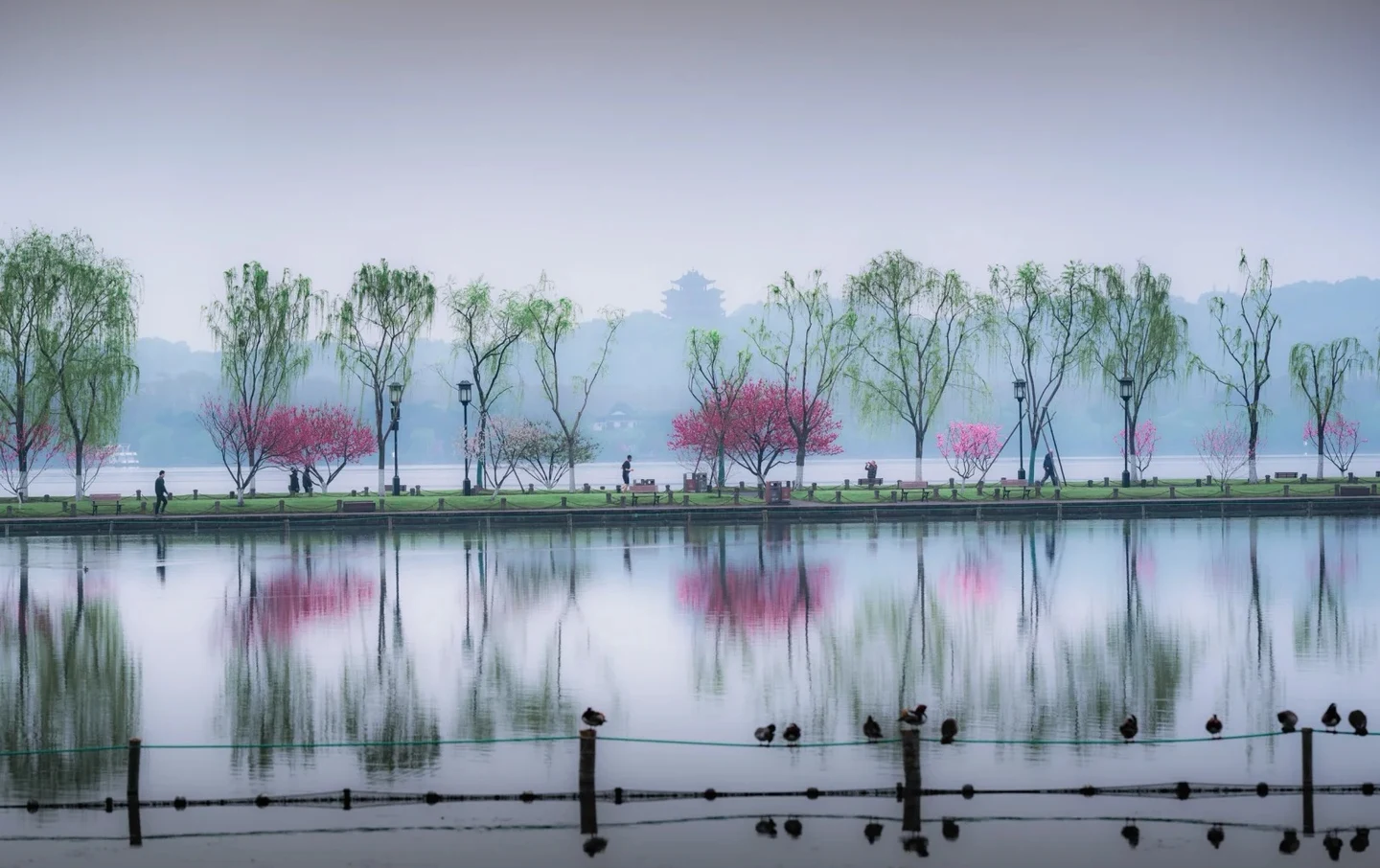
Elegance by Invitation: Artisans, Ancestry & After-Hours Access
There are cities that you pass through, and there are cities that pass through you. In Vietnam, the latter happens when access meets care — when doors open quietly, a chair is pulled out in a private courtyard, and a master artisan places a centuries-old tool in your hand as if entrusting you with a story.
For travellers who want a luxurious escape that is also deeply felt, Vietnam’s cultural heartlands offer something rare: intimacy without spectacle. I planned my days as a string of small, precise moments — each one tuned to craft, sound, and the people who keep both alive.
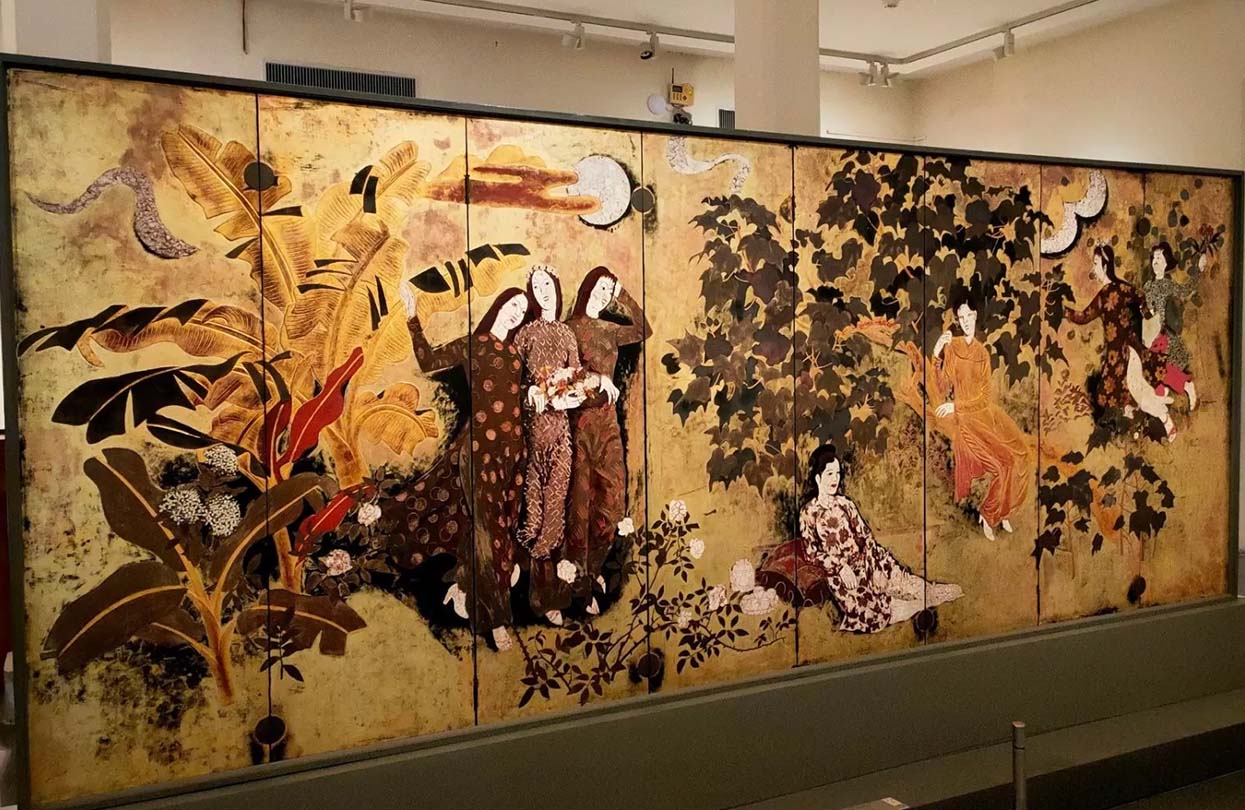
Fine Laque painting in Vietnam
In Hanoi’s Old Quarter, my guide walked me past the racket of scooters into rooms that never appear on public itineraries. The first door led to a lacquer workshop that smelled faintly of pine smoke and resin. A master — the third generation in his family — laid out thin layers of sap, egg shell, and gold leaf on a cool stone tablet, then placed the brush in my palm.
There was nothing touristy about the hour; we worked in companionable silence, learning how patience creates depth, how tiny mistakes can be burnished into beauty. When we finally stepped back, my small piece glowed — imperfect, yes, but warm with effort. It felt like proof that time can be textured.
Nearby, I was ushered into a preserved tube house — narrow, elongated, with a green lung of sky in the middle. The resident host showed me the altar, the ancestral portraits, a brick worn smooth by a century of feet. Lunch unfolded in the inner courtyard: crab noodle soup bright with lime, young banana flower salad, and grilled pork wrapped in herbs I could not name but will never forget.
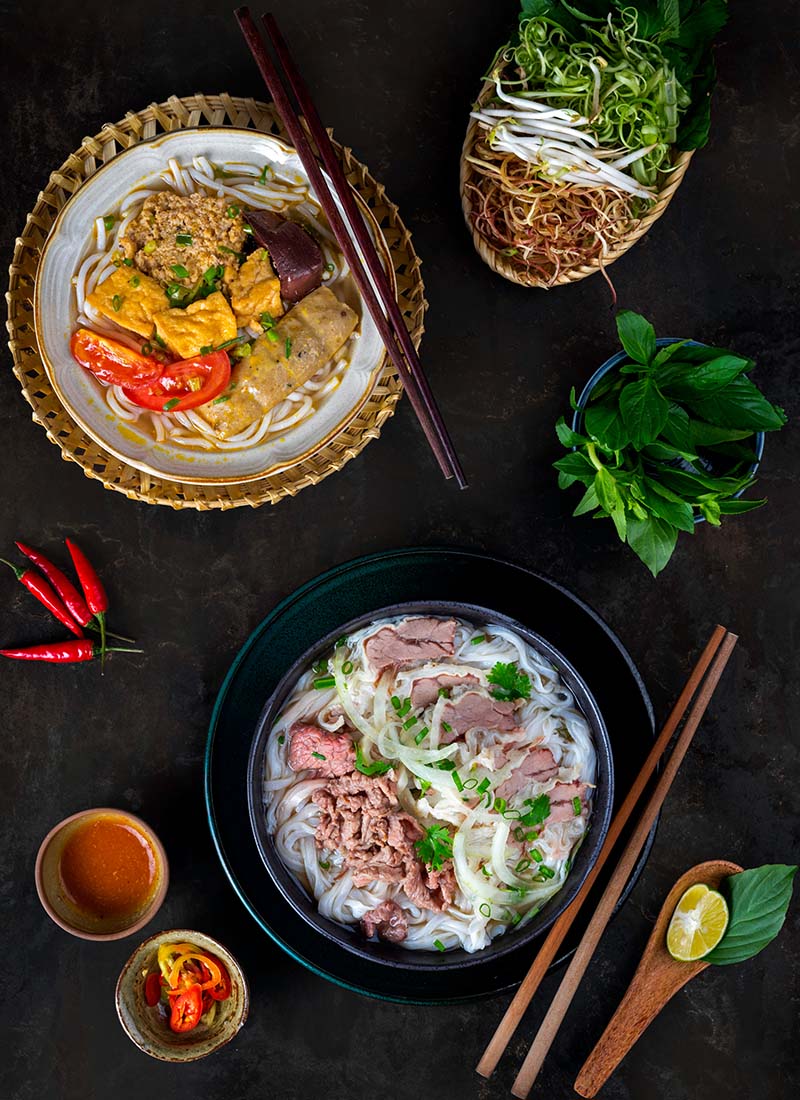
Crab soup and beef noodle (Bun rieu, Pho bo) serving with chili sauce, Image by ngoc tran, Shutterstock
Privacy changed everything; each dish arrived with an anecdote, each taste mapped to a family recipe. Later, in a tiny theatre, a private water-puppet performance began — the musicians so close I could see their fingers on the dan bau’s single string. In the intimacy of that room, the lake myths felt newly minted.
Hoi An asked me to slow further. I arrived at dusk, when the river held a thousand small lights and the streets smelled of star anise and rain. The luxury here was measured in permissions, not price tags. A guide arranged a visit to a merchant house kept quietly by a descendant. There were no ropes to keep me back; instead, I was invited to sit, to touch the grain of jackfruit wood, to look closely at mother-of-pearl inlay that once telegraphed status across oceans.
In a lantern workshop, a master artisan set out silk dyed in colors that looked almost edible — persimmon, lotus, green tea — and taught me how bamboo ribs find their geometry. My lantern left with a slight lean and my initials stitched into the hem. We took a private boat along the Thu Bon River afterward, a wooden craft moored away from the flotilla. A trio of musicians tuned up — monochord, moon lute, soft hand drum — and for half an hour Hoi An’s old songs rose and fell with the current. The boatman cut the engine; the city drifted by as a sequence of vignettes: a woman folding rice paper by a charcoal brazier, two boys rehearsing lion-dance steps, someone laughing in a courtyard lit like honey.
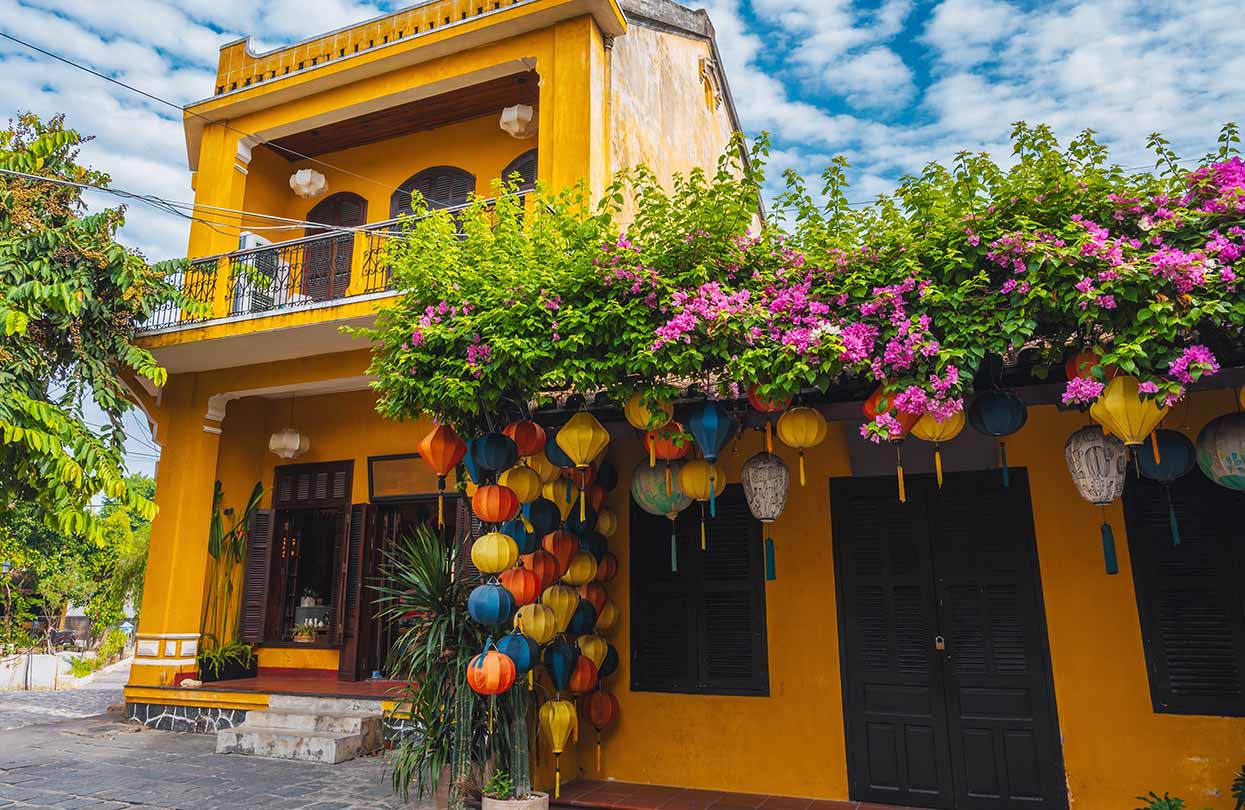
Lanterns in the old town in Hoi An, Image by alexkoral, Shutterstock
Huế, by contrast, carries quiet like an inheritance. It is the city I recommend most to travellers who want their luxury delivered as contemplation. With a historian beside me, I visited the mausoleum of Emperor Gia Long, a site that rarely features on standard loops. We had the grounds to ourselves. The historian spoke softly about the first Nguyễn emperor, about geomancy and river bends, about the way Huế aligns power with landscape. The tomb is spare, its beauty cumulative rather than immediate; the absence of crowds let its lines breathe.
Later, within the Imperial City, a short private concert of Nhã nhạc — the royal court music — unfolded in a quiet pavilion. Lanterns flickered on carved beams; silk sleeves moved like water. After the final note, the musicians spoke about their instruments: the hue of the wood, the reason a melody bends here and not there, the echo a particular room encourages. It was the opposite of performance; it felt like being invited into the workshop of sound itself.
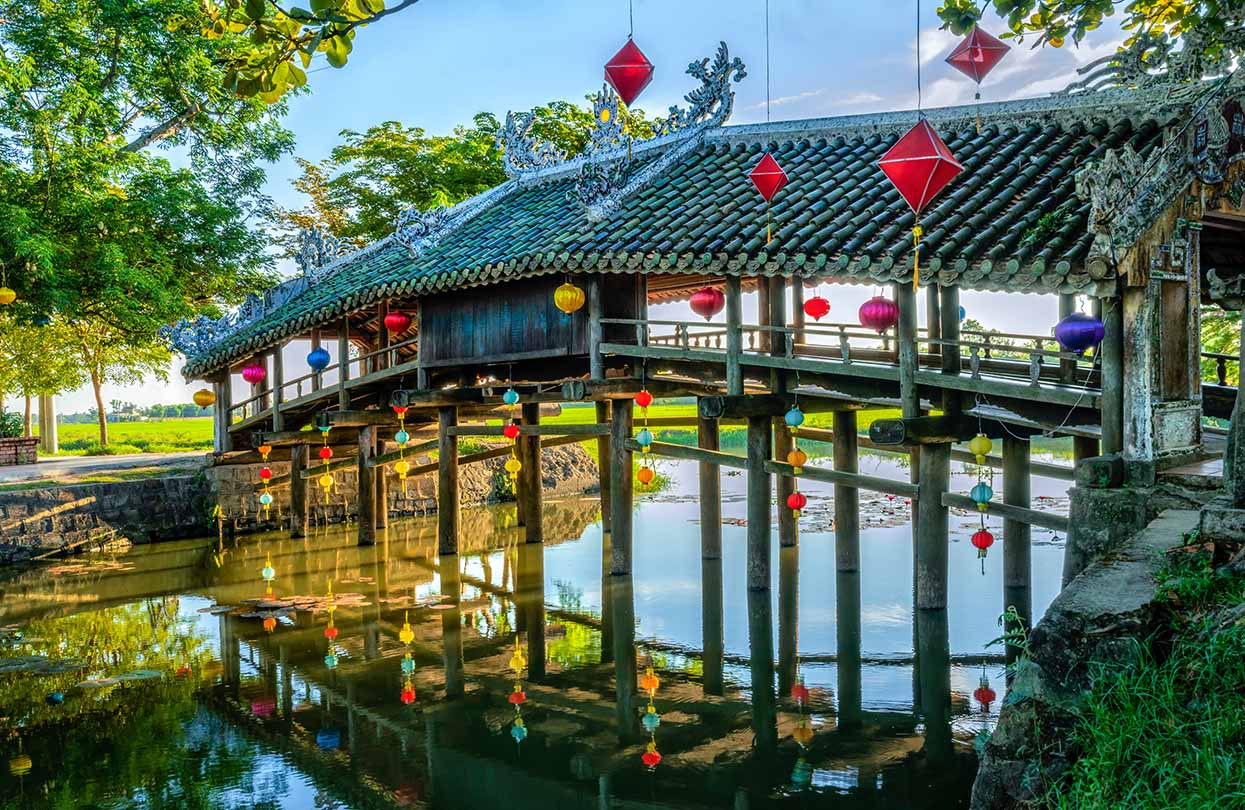
Thanh Toan tile bridge near Imperial City, Image by Nguyen Quang Ngoc Tonkin, Shutterstock
Everywhere I went, art provided a parallel itinerary — another way to understand place. In Ho Chi Minh City, I slipped into Green Palm Gallery, where contemporary canvases and lacquerware gave the city’s pace a visual grammar. Down the road, B/S Art Studio folded tradition into experiment; I left with a small piece of gilded paper that looked like sunlight caught in resin. In Hanoi, 54 Traditions Gallery displayed textiles and ritual objects from Vietnam’s many ethnic communities — not as curios, but as living practice.
It grounded everything I’d seen in Sapa: motifs, tools, a logic of color. In Hoi An, Réhahn’s Precious Heritage Art Gallery Museum lined a long room with portraits of Vietnam’s 54 groups; faces at once proud and unguarded, garments that read like archives. And in Huế, Lebadang Memory Space devoted itself to a single master, Lê Bá Đảng, whose work braids Vietnamese themes with Western form. A smaller Gakka Art Gallery, family-run, offered oils and lacquer pieces that felt made for homes rather than museums; buying directly from the maker made the transaction feel like a conversation.
If you are wondering where the “luxury” sits in all this — it’s here: in curation, in access, in the way time is handled. My days were edited so that I never queued, never rushed, never felt herded from spectacle to spectacle. Private doors opened not for bragging rights, but so stories could be told at human volume. Meals arrived in places where the air moved; workshops were sized to concentration; music happened at distances that favored tenderness over amplification. The cost was not just money; it was attention — and the yield was connection.
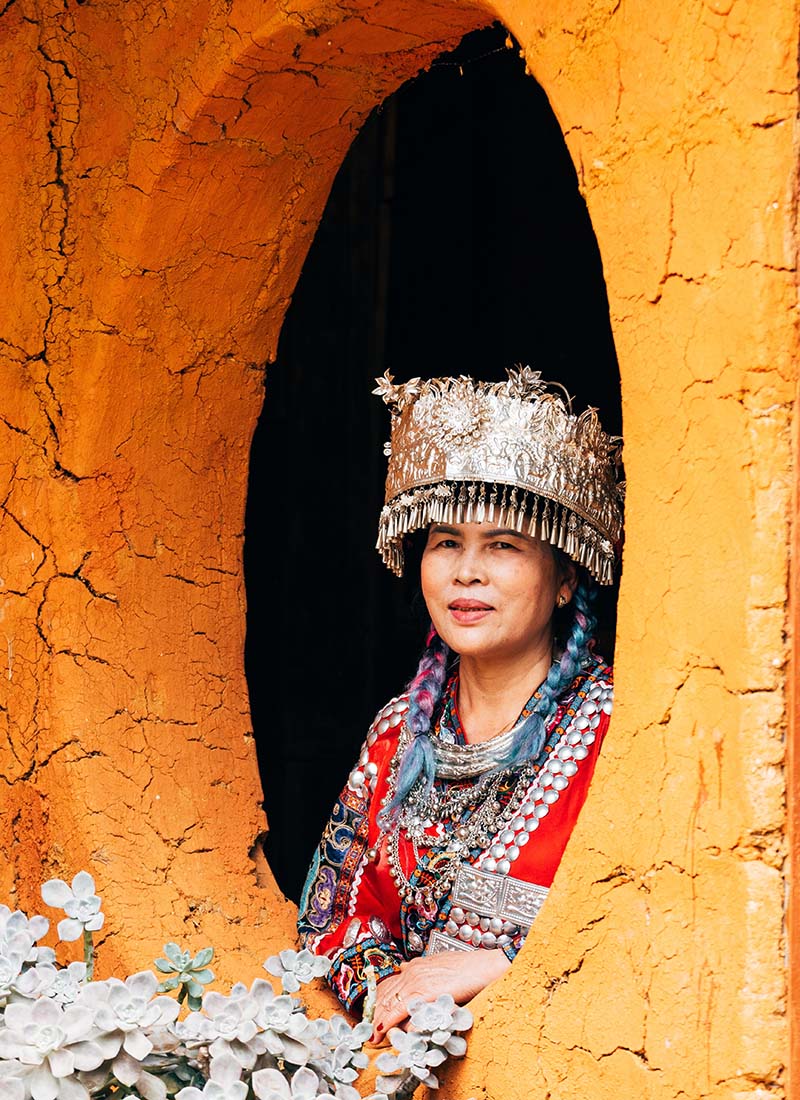
Traditional hmong dress in North Vietnam, Image by Jon Chica, Shutterstock
A practical note for those planning similarly: work with a specialist who understands both heritage and hospitality. In Hanoi, ask for hands-on time with a silk or lacquer master and specify that you want private access to a preserved tube house with a resident host; request a multi-course meal in the courtyard rather than a quick tasting. In Hoi An, reserve a one-on-one lantern class with access to premium silks and bamboo frames; pair it with a private river boat and a short traditional music set far from the tourist throng.
In Huế, seek permissioned entry to Gia Long’s mausoleum and a short private Nhã nhạc performance at the Royal Theatre (Duyet Thi Đường) or within a quiet pavilion; have a historian walk you through architecture and meaning. For art, let a curator or gallerist guide you: Green Palm and B/S in Saigon, 54 Traditions in Hanoi, Precious Heritage in Hoi An, Lebadang Memory Space and Gakka in Huế. Most can arrange shipping and certificates, so your suitcase stays light and your walls later tell the story.
What stayed with me wasn’t just what I saw; it was how I was seen. In each place, people made room for a stranger and then eliminated the strangeness: a master guiding my hand on lacquer, a host saving the crispiest shallots for my bowl, a musician answering my clumsy questions as if I were an old friend. This is the emotional logic of a luxurious escape — not excess, but ease; not spectacle, but sincerity. Vietnam gives it generously if you ask thoughtfully, if you enter softly, if you leave a little of yourself behind in thanks.
There is a line in my notebook that I underlined twice after Huế: Luxury is the right to listen. In the Old Quarter, that meant listening to brushes against lacquer, to histories whispered over noodles; in Hoi An, to silk being cut and the river singing against the hull; in Huế, to a scale ascending through centuries in a lantern-lit room.
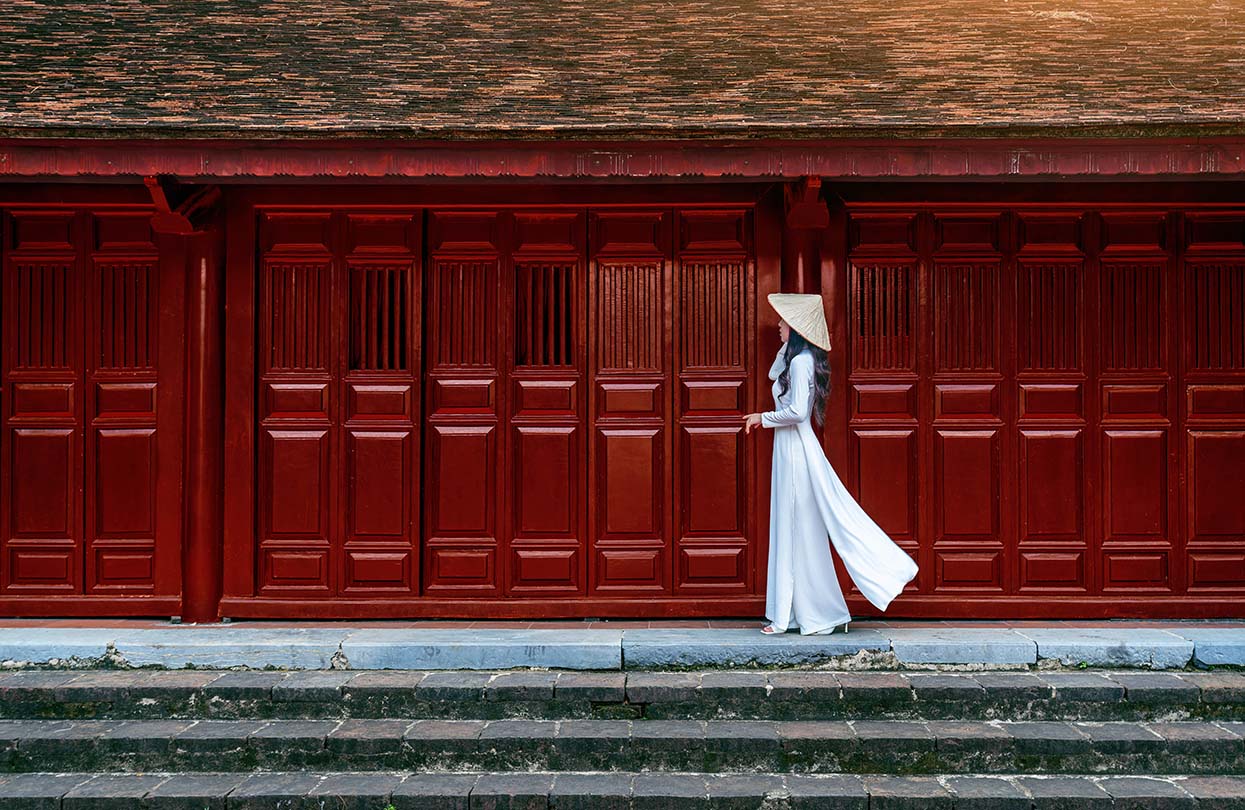
Hue, Image by Guitar photographer, Shutterstock
If your year has been loud and overlit, come here. Let the country retune you through its craftspeople, its guardians of memory, its quiet rooms. You will return with objects, yes — a lantern, perhaps a painting — but more importantly, with a new pace for your days and a respect for how beautifully tradition can hold modern life without breaking.