Resting in Akita, one of Japan’s northernmost prefectures, Semboku City invites you to discover a sparkling winter landscape where captivating scenery and snow sports mingle with traditional heritage and seasonal cuisine. Everyone can find something they enjoy! As a base to explore it all, Kamenoi Hotel Tazawako serves as both a conveniently located accommodation and an embodiment of the area’s charms—weaving cozy amenities, rejuvenating hot springs, and local eats into your stay.
Embrace the season with an off-the-beaten-path getaway to this rural city and swap the tourist crowds for an authentic Japan winter experience.
What can I do in Semboku, Akita?
Admire nature and partake in snow sports
Semboku is located roughly at the center of Akita’s eastern border and is home to impressive displays of nature, most notably Lake Tazawa (Tazawako) and Mount Akita-Komagatake.

Perhaps one of the city’s most popular destinations is Tazawako Ski Resort. Located east of Lake Tazawa, this renowned resort boasts stunning mountainside slopes where you can admire the lake’s cobalt waters as you glide. The sense of openness, crisp winter air, and majestic nature will take your breath away. The 13 courses span the midsection of Mount Akita-Komagatake and are renowned for their high elevation and premium powder snow. In fact, it is widely regarded as one of the prefecture’s top ski resorts. The fluffy snow is akin to floating on clouds, and the diversity of courses means that everyone, from beginners to experts, can enjoy an unforgettable experience. For convenience, Kamenoi Hotel Tazawako offers a shuttle service between the hotel, Tazawako Ski Resort, and Tazawako Station. The shuttles bound for the ski resort depart daily from the hotel at 8am and 9am and offer a return service at 4:10pm. The travel time between the hotel and ski resort is only 10 minutes!
If you are looking for more Akita winter activities, check out TAZAWAKO WINTER BASE, a temporary recreational area located in Tazawako Lake Resort & Onsen. Open from January 10 to February 28, 2026 and only a 15-minute drive from Kamenoi Hotel Tazawako, this playful area features snow rafting tours, trekking tours, kamakura snow hut experiences, glamping, warm food and drinks, and so much more. Some of the activities require advance reservations, so be sure to visit the homepage for more details and create a snowy adventure that you will cherish no matter your age.

Lake Tazawa is also nearby, being just a 25-minute drive from the hotel. This famous lake is regarded as one of the three great folklore lakes of Akita and is Japan’s deepest lake at 423 meters. The lake’s allure stems from its lapis-blue waters that shift with the seasons, complementing spring and summer’s greenery, fiery autumn tones, and pristine snow in winter. The mirror-like waters, encircled by glowing snow banks, beautifully reflect the snow-touched peaks of Mount Akita-Komagatake. Here, you can enjoy walking trails, as well as sightseeing cruises.

Along the lake’s perimeter, the Statue of Tatsuko and Gozanoishi Shrine are its most renowned attractions. Starting with the golden statue, this artwork displays Princess Tatsuko, a legendary maiden who wished for eternal beauty. However, through a series of actions, she instead transformed into a dragon and to this day, remains the guardian dragon of the lake. The statue, set against the icy whites and blues of Lake Tazawa, is one of the area’s most recognizable symbols.

About an eight-minute drive from the Statue of Tatsuko, Gozanoishi Shrine is dedicated to the princess and is a frequented spot for beauty, good relationships, and good fortune. Undoubtedly, the shrine’s most eye-catching characteristic is its red torii (gate) overlooking the lake. It is an especially popular photo spot during winter, when the vermilion torii pops vibrantly against the white and cobalt landscape. Nearby, you can also explore Nana-irogi (seven trees sprouting from a single trunk), Katagashira Spring (the supposed spring that Tatsuko drank from before turning into a dragon), and Kagami-ishi (the mirror stone where Tatsuko is said to have seen her reflection, prompting her pursuit of eternal beauty). While in Semboku, Lake Tazawa sightseeing is a must.
Explore traditional culture and architecture

Amidst Akita’s snowy landscape is a plethora of cultural charm. Let’s start with Kakunodate’s samurai district, often dubbed the “Little Kyoto of the North.” This picturesque town, located in Semboku, preserves the historic streets of an Edo-period (1603–1868) castle town and is regarded as one of Japan’s best examples of samurai architecture. The traditional wooden facades, black wall-lined streets, and interspersed greenery transport you to a captivating snapshot of past Japan. You can even enter some of the homes to admire the masterful carpentry within.
While the scenery shines in all seasons—especially during spring with its weeping cherry trees—winter brings an especially atmospheric touch, blanketing the wooden streetscape in a shimmering layer of snow. Enjoy a pleasing rickshaw ride around the town or rent some colorful kimono to elegantly contrast the white landscape. You can also reserve guided tours of the inner and outer towns via Kamenoi Hotel Tazawako’s official website.

While you are in Kakunodate, stop by the Ando Brewery Main Store. Founded in 1853, this brewery continues to produce products following long-cultivated traditional techniques—preserving Akita flavors, while considering modern palates. The brewery sells a variety of seasonings, including soy sauce, dashi stock, and kan-koji (fermented rice seasoning). The facility’s brick warehouse, built during the Meiji period (1868–1912), is open to the public and offers an up-close experience of traditional Japanese architecture. If you are interested in a more intimate look into the brewery’s architecture and production processes, book a tour through Kamenoi Hotel Tazawako’s official website.

For more hands-on fun, visit the Kakunodate Cherry Bark Woodcraft Museum, a facility centered on Kabazaiku. This traditional craft is made from the bark of mountain cherry trees and is valued for its moisture resistance, dry resistance, and sturdiness. You can enjoy the natural glossy finish and durability in a variety of products, including storage cases and accessories. If you are interested in joining a two-hour, personalized coaster-making workshop led by a craftsman, please contact the Semboku Design Exchange Division (0187-43-3353, co-de@city.semboku.akita.jp). Multilingual support is available.

After all of the exploring, rest your mind and body at Nyuto Onsen Village, also located in Semboku. This over 350-year-old hot spring area boasts seven inns nestled in beech forests. The secluded and peaceful village has more than 10 unique natural hot springs, each owned independently by the different inns—a rarity in Japan. Regarded as a “dream hot spring destination,” this rural escape offers a truly unique experience of hot spring culture in Japan. All of the facilities allow day-trip bathing, so feel free to sample multiple hot springs in one day. A Nyuto Onsen day trip will leave you feeling thoroughly refreshed.
See: Reserve a small room for 4 hours! Relaxing dinner and hot spring plan

We cannot end our cultural recommendations without giving a quick shout-out to the prefecture’s renowned dog breed, Akita Inu—designated as a National Natural Treasure. These dogs are praised for their intelligence, loyalty, and protectiveness and are known for their large size and dense, fluffy coats. Hachiko is likely Japan’s most famous Akita Inu, beloved for his unwavering loyalty. In Akita City, about one hour by car from Lake Tazawa, you can learn more about and meet these special dogs at facilities like the Akita Dog Station (near JR Akita Station) and Akita Dog Visitor Center.
Dine on local specialties


If you are a foodie, Akita definitely has you covered. Listed below are some of the prefecture’s must-eat delicacies.
- Hinai Jidori Chicken: One of Japan’s most famous breeds of chicken. It is known for its rich flavor, tender meat, and high quality. It is used in several Akita dishes.
- Kiritanpo Hot Pot / Damako Hot Pot: A dish made by simmering kiritanpo—mashed rice that is shaped around sticks—and damako—round rice balls—in a rich broth made from Hinai Jidori chicken. You can purchase Kiritanpo Hot Pot Sets to enjoy these local flavors at home.
- Hatahata (Sailfin Sandfish): A representative winter delicacy in Akita that is officially designated as the prefectural fish. It is often used in Hatahata-zushi, a type of fermented sushi.
- Shottsuru Hot Pot: A classic winter dish made using shottsuru, a fermented fish sauce produced from Hatahata.
- Inaniwa Udon: One of the three great udon varieties of Akita. The hand-pulled noodles are known for their thinness, smoothness, and firmness.
- Iburigakko: A traditional smoked pickle made from daikon radish that originated in Akita’s heavy-snow regions. The name combines iburi (smoked) and gakko (pickles). It is loved for its smoky aroma and crunchy texture.
- Baba-hera Ice Cream: A local street-stall ice cream typically sold by older women (baba) who use a spatula (hera) to create rose-shaped treats. During winter, you can buy take-home versions or sweets inspired by its flavor at souvenir shops.
- Akita Inu-inspired goods: As the birthplace of the loyal Hachiko, Akita is known for sweets and merchandise featuring the beloved Akita Inu.
- Kinman: Castella-style steamed buns filled with sweet bean paste—a classic Akita confection.
Where should I stay in Semboku?

Immerse yourself in Akita’s winter wonderland at Kamenoi Hotel Tazawako. Resting 600 meters above sea level in a highland area on the slopes of Mount Akita-Komagatake, this hotel invites you to enjoy a cozy, yet intimate nature stay, featuring crisp highland air, open-air hot spring baths encircled by beech forests, and elevated views of Lake Tazawa. The sweeping Tazawako highland area offers a rich environment for outdoor adventures.
When you are looking to warm up, the hotel has several rental items for indoor fun, including koma spinning tops, shogi (Japanese chess), kendama (a traditional Japanese skill toy), ring toss, daruma otoshi (a traditional Japanese folk game similar to Jenga), marbles, beanbags, and card games. You can also choose from a selection of colorful yukata (a casual kimono) and enjoy a relaxed time at the self-serve amenities bar. In the lobby, admire a kanto, the pole lantern used in the Akita Kanto Festival, one of the three major festivals of Japan’s Tohoku region.

The hotel is also incredibly family-friendly, providing free diapers, kids’ meals, baby food, and various kids’ rental items. Guests of all ages can relax with peace of mind.
Learn more about this rejuvenating hotel below and start planning your Kamenoi Hotel winter stay.
Assorted guest rooms

Kamenoi Hotel Tazawako has various room types—including Japanese-style rooms, Japanese-Western rooms, and special suites—that are suitable for an array of guests, from solo travelers to large groups. The Japanese-style and Western-Japanese rooms come equipped with tatami spaces that allow you to unwind in a traditional atmosphere and offer you the choice between a Western-style bed or futon. Apart from the Eastern Wing’s Japanese-style single rooms, nearly all of the guest rooms come with a private bath, which is ideal for international visitors who may feel uncomfortable using a communal bath. The rooms’ varying degrees of Japanese and Western amenities allow you to choose a space that best suits your cultural curiosities, while still retaining your desired homey touches.

The gentle color palettes mimic the natural hues beyond the windows, and many of the guest rooms provide panoramic views that soothe your heart and mind.
Beautifying hot spring baths

Step into an utterly revitalizing experience, where steaming hot spring waters melt away winter’s chill. Kamenoi Hotel Tazawako sources its natural hot spring water directly from Mizusawa Onsen, a famous spring known for its distinctive sulfur scent and milky-white water with floating minerals, called yu-no-hana, which translates to “hot spring flowers.” The source temperature is about 59°C (138.2℉) and has a flow of approximately 1,000 liters per minute. Thanks to its sulfur components, it is celebrated as a beautifying hot spring that leaves your skin feeling refreshed.
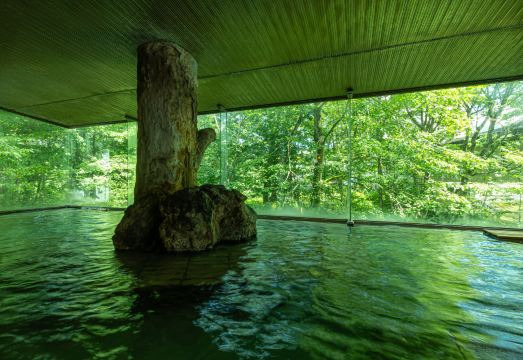
You can enjoy this healing water at the hotel’s large communal bath (Sennin no Yu) and open-air bath (Yuju no Yu). Although located indoors, the large communal bath still connects you to the outdoors with floor-to-ceiling windows that overlook nature.

However, during winter, the open-air bath is arguably the hotel’s most magical option. Surrounded by beech and broadleaf forests that stretch across the foothills of Mount Akita-Komagatake, this bath truly immerses you in the environment, mingling the snow-touched breeze and forest’s aroma with swirling hot spring steam. In the early morning, when fresh snow blankets the old path leading to the open-air bath, the area becomes a dreamlike yukimi rotenburo (snow-viewing bath). Admire the falling snow as hot spring water cradles your body. It is an unforgettable example of a scenic onsen Japan winter.
Afterwards, you can enjoy complimentary ice cream and beverages.
Local and international cuisine

Kamenoi Hotel Tazawako’s dining hall offers a delicious buffet stocked with around 60 Akita, Japanese, Western, and Chinese dishes for both breakfast and dinner. Create a mouthwatering plate filled with new and beloved eats and pair it with a tasty beverage, such as beer, wine, or locally produced Akita sake. At the live kitchen, you can even pick up a few slices of freshly grilled steak.
In terms of Akita cuisine, the buffet features numerous dishes made with regional and seasonal ingredients, including food seasoned with shio-koji, a Japanese fermented seasoning typically made from rice koji, salt, and water.
You will not want to miss these beloved Akita dishes:
- Akitakomachi Rice: You can enjoy this rice as is or as a component of Sanroku Sushi, which blends Akitakomachi rice with red vinegar crafted from sake lees and kombu-flavored white vinegar, creating a sushi rice that differs from typical vinegared rice.
- Kiritanpo Nabe, Akita: Kiritanpo is made by pounding freshly cooked rice, shaping it around a stick, and grilling it. The resulting food is often enjoyed with miso or cut and simmered with vegetables, chicken, and other ingredients in a hot pot. The hotel’s kiritanpo nabe includes premium Hinai Jidori chicken, which lends it a deep and traditional Akita flavor.
- Hinai Jidori: Hinai Jidori Chicken is known for its rich umami and firm yet tender texture. It is chewy, juicy, and full of flavor. Aside from the kiritanpo nabe, the buffet also offers gratin made with Hinai Jidori.
- Tazawako Pasture Pork Raw Ham Plate: This local cured ham is made from pasture-raised Tazawako pork. Chefs slice it to order, and it is known for its rich aroma and delicious balance of fat and meat. When paired with small portions of lettuce, cheese, tomatoes, or nuts, the pork’s taste is elevated even further. Please note that the hotel provides this ham irregularly (Check the official website for availability).
Additional onsite facilities
Enhance your winter getaway in Akita without even leaving the hotel.

Let’s start with Kogen Sauna, perfect for keeping warm during the snowy months. This mobile, wood-fired sauna is made with Akita cedar and is located apart from the hotel’s main facilities, providing a secluded retreat. The new nature perspectives and snowy views from the sauna’s window create a soothing experience for your mind and body. The sauna operates on Wednesdays, Saturdays, and Sundays and requires a reservation and an additional fee. You can book it through the hotel’s activity page.

The hotel also connects you to a range of outdoor activities. You can enter a large kamakura (snow hut) in front of the hotel (free of charge) and join winter tours, such as snow-shoeing and riding in a snowmobile-pulled raft.
For indoor entertainment, the hotel features a trick art museum, which displays 26 artworks based on Akita’s scenic spots and local specialties, as well as a gift shop, where you can explore a wide selection of Akita delicacies, including Inaniwa udon, kiritanpo hot pot, and local sake. If you are looking for more cozy moments inside, visit the Small Mountain Library, a free facility that stocks books related to Lake Tazawa and Mount Akita-Komagatake.
Experience winter like never before in Semboku, Akita
Winter is a magical time of year. Snow adds a charming touch to forests, lakes, and architecture, and mountains become glittering venues for snow sports. Heartwarming dishes, hot springs, and sweat-inducing saunas take on a deeper meaning when the temperature drops, embodying coziness. In the rural atmosphere of Semboku, you can enjoy winter your way, focusing on sightseeing and cultural exploration, relaxation, thrilling activities, or a combination of everything! After your stay, winter may just become your favorite season.

Access to Semboku
From Tokyo, and northern stations like Sendai, the best way to reach Tazawako Station is via the Akita Shinkansen. Tokyo to Tazawako Station is about a two-hour and 45-minute train ride, and Sendai to Tazawako Station is roughly a one-hour and 15-minute train ride. Many local trains also stop at Tazawako Station, so it is a fairly accessible place.
After arriving at the station, you can take a free shuttle bus to Kamenoi Hotel Tazawako. The shuttle typically has three round-trips a day. The pick-up times from Tazawako Station are 3:30pm, 4:30pm, and 5:30pm, and the departure times from the hotel to the station are 8am, 9am, and 10am. In winter, the bus also stops at Tazawako Ski Resort (8am and 9am only), making it a popular choice among guests.
While you are in the area, the local buses are helpful for traveling around Tazawako and Nyuto Onsen.