
Follow the Music to Rio de Janeiro
Few cities have inspired music quite like Rio de Janeiro. With its golden beaches, dramatic mountains, open-air cafés and leisurely seaside lifestyle, Brazil’s famous coastal city helped give birth to bossa nova, a musical style that captivated the world in the late 1950s and early 1960s.
At the heart of this musical revolution were composer Antônio Carlos Jobim, better known as Tom Jobim, and guitarist and singer João Gilberto. Their work helped shape a sound that blended samba rhythms with jazz harmonies, creating music that was simultaneously sophisticated, intimate and unmistakably Brazilian.
The international success of The Girl from Ipanema, particularly the English-language recording featuring Astrud Gilberto, introduced this distinctive sound to audiences far beyond Brazil. Decades later, Bebel Gilberto, João’s daughter, carried the family tradition into contemporary music, blending bossa nova with electronic sounds and modern pop.
For travellers who love music, Rio offers an opportunity to explore the landscapes, neighbourhoods and cultural settings associated with these artists. Rather than simply visiting the usual tourist attractions, you can follow a musical trail through the city that inspired some of the most enduring songs of the twentieth century.
How Jobim, João and Astrud Gilberto Came Together
The meeting of Antônio Carlos Jobim, João Gilberto and Astrud Gilberto brought together three remarkable talents who helped introduce bossa nova to the world. Jobim, already an accomplished composer and pianist in Rio de Janeiro, became acquainted with João Gilberto through Rio’s emerging music scene in the late 1950s.
João’s innovative guitar rhythms and understated singing perfectly complemented Jobim’s sophisticated melodies, and the two became key figures in the development of bossa nova.
Astrud, who was born in Salvador, Bahia, and grew up in Rio, entered the story through her marriage to João in 1959. Their most famous musical encounter took place in New York in 1963, when João and Jobim participated in recording sessions with American jazz saxophonist Stan Getz.
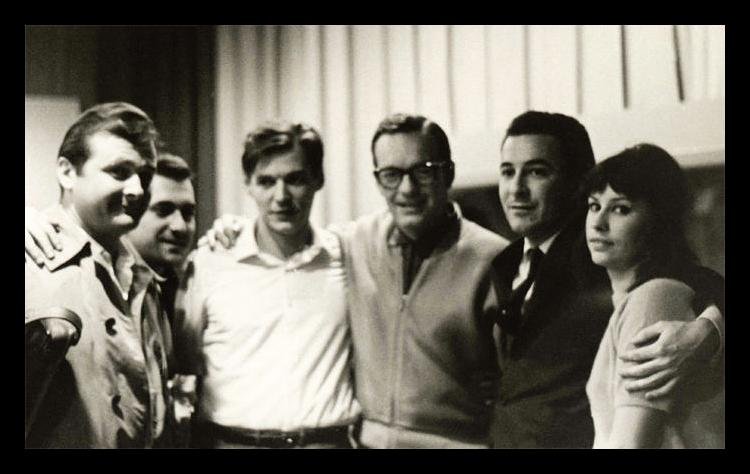
Astrud was present when the musicians decided to record an English-language version of The Girl from Ipanema. Although she had no established career as a professional singer, her natural, understated delivery made the English vocal an unexpected highlight of the 1964 album Getz/Gilberto. The recording became an international sensation, winning Grammy Awards and helping bring Brazilian bossa nova to audiences around the world.
For music lovers especially for those enchanted with bossa nova, here are 6 places of interest in and around Rio to relive the story of bossa nova – from the city’s beaches, seaside neighbourhoods, intimate music venues to the relaxed café culture.
See: Rio: Bossa Nova Walking Tour
1. Ipanema Beach: Where a Song Became a Legend
No bossa nova pilgrimage to Rio would be complete without a visit to Ipanema Beach.

The beach became internationally famous through The Girl from Ipanema, composed by Tom Jobim with lyrics by poet and diplomat Vinícius de Moraes. The song was inspired by the sight of a young woman walking past the musicians’ favourite local haunts on her way to the beach.
First recorded in Portuguese, the song reached an enormous international audience through the 1964 recording by João Gilberto and American saxophonist Stan Getz, with Astrud Gilberto singing the English lyrics. Her understated, almost conversational delivery became one of the defining sounds of bossa nova.
Today, Ipanema remains one of Rio’s most recognisable neighbourhoods. Walk along the promenade, watch surfers in the Atlantic waves, or find a spot on the sand to appreciate the same combination of sea, sunlight and relaxed urban life that helped inspire the music.
The experience is especially rewarding in the late afternoon, when locals and visitors gather to enjoy the beach and watch the changing colours of the sky.
For music lovers, this is more than a beautiful beach. It is a chance to experience the setting that helped turn a Brazilian song into an international classic.
2. Garota de Ipanema: Visit the Bar Behind the Song
A short walk from the beach brings you to one of Rio’s best-known musical landmarks: Garota de Ipanema, the bar and restaurant formerly known as Bar Veloso.

Located at Rua Vinícius de Moraes, 49, the establishment is closely associated with the story of Tom Jobim and Vinícius de Moraes, who reportedly watched the young woman who inspired their famous composition as she passed by.
The venue later adopted the song’s title, becoming a destination for visitors who want to connect the music with its original surroundings.
Stop for a Brazilian meal, a refreshing drink or a leisurely coffee. Even if you do not visit specifically for the food, the setting provides a tangible link to the cultural world of the bossa nova pioneers.
It is also a good place to begin exploring Ipanema on foot. Browse the surrounding streets, discover small cafés and shops, and take your time rather than treating the neighbourhood as just another sightseeing stop.
3. Arpoador: See Tom Jobim on the Rio Waterfront
At the eastern end of Ipanema, the rocky headland of Arpoador is another important stop for music enthusiasts.
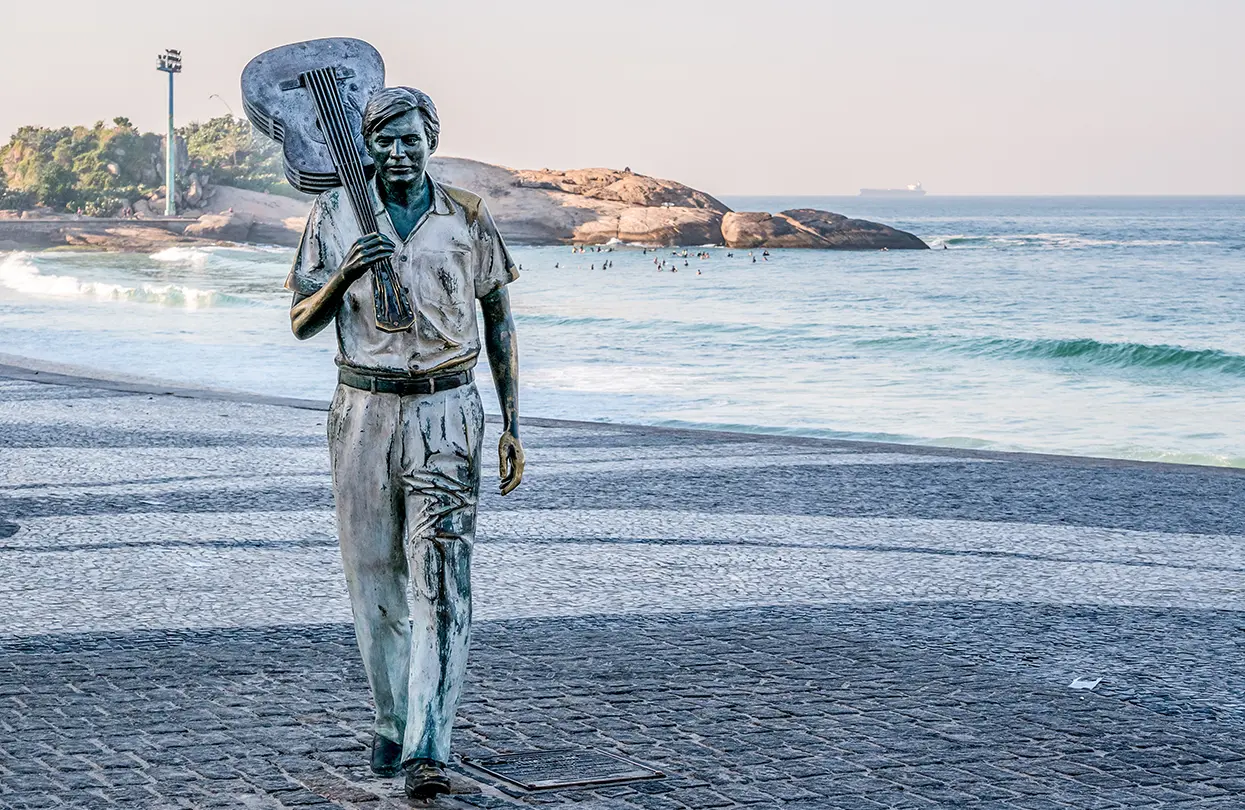
A life-size statue of Tom Jobim stands near the waterfront at Arpoador, depicting the composer with his guitar. Installed in 2014, it commemorates one of Brazil’s most influential musicians in a part of Rio he loved.
Jobim was born in Rio in 1927 and became one of the central figures in the development of bossa nova. His compositions, including The Girl from Ipanema, Desafinado and Corcovado, helped establish a musical language that travelled from Brazilian nightclubs and recording studios to concert halls around the world.
Arpoador is also a popular place to watch the sunset. Bring a camera, find a comfortable vantage point and listen to a Jobim playlist as the sun sinks towards the horizon.
It is a simple experience, but one that captures the atmosphere of Rio remarkably well: natural beauty, music and the pleasure of slowing down.
In Águas de Março (Waters of March) – written in 1972, Jobim strings together a stream of everyday images, including sticks, stones, rain and the end of a road, creating a poetic reflection on life’s continuous cycle of endings and beginnings. The inspiration is often associated with March, when heavy rains mark the end of summer in Rio and much of southeastern Brazil.
4. Discover the Musical World of João and Astrud Gilberto
While Tom Jobim supplied many of bossa nova’s most celebrated compositions, João Gilberto helped define its distinctive musical style.
Born in Juazeiro, in the northeastern state of Bahia, João eventually moved to Rio de Janeiro, where he became a central figure in the emerging bossa nova movement. His softly articulated vocals and intricate guitar rhythms transformed the way Brazilian popular music was performed.
In Desafinado – recorded it in 1958, João addressed the criticisms then that bossa nova singers were not singing properly, turning the accusations into a defence of a new musical style. Its sophisticated harmonies and relaxed rhythm also challenged conventional ideas about how Brazilian popular music could sound.
Astrud Gilberto, born in Salvador, Bahia, became internationally famous through her English-language performance on The Girl from Ipanema. She was married to João at the time of the recording and was not yet an established international singer. Her contribution, however, proved pivotal in introducing bossa nova to a much wider audience.
To appreciate their legacy, spend time in Ipanema and the surrounding South Zone, where the early bossa nova scene took shape. Explore local cafés, listen to live Brazilian music when available, and seek out intimate venues where singers and guitarists perform the genre’s classics.
Rather than expecting to find a museum devoted to every member of the Gilberto family, think of the neighbourhood itself as a living cultural landscape. The music continues to be performed and reinterpreted by Brazilian musicians today.
5. Visit the Instituto Antonio Carlos Jobim
For a deeper understanding of Jobim’s work, look into the Instituto Antonio Carlos Jobim in Rio’s Jardim Botânico neighbourhood.
The institute was established to preserve and make accessible the composer’s musical and poetic legacy. Its broader archival work has also included collections associated with other important Brazilian artists.
This is a particularly worthwhile stop for visitors who want to go beyond the familiar songs and learn about the composer, arranger and pianist behind them.
Before visiting, check the institute’s official website for current access arrangements, research facilities and any exhibitions or activities available to the public. An archival institution may not operate like a conventional walk-in museum.
The surrounding Jardim Botânico area also offers an opportunity to experience a quieter side of Rio, away from the busiest beach districts.
6. Follow Bossa Nova Beyond Rio: Bahia and Juazeiro
Although Rio is the natural starting point for a bossa nova journey, the Gilberto family’s story also leads north to Bahia.

Astrud Gilberto was born in Salvador in 1940. João Gilberto was born further inland, in Juazeiro, in 1931, before moving to Salvador as a young man and eventually making his way to Rio.
Salvador is one of Brazil’s most culturally distinctive cities, known for its Afro-Brazilian heritage, historic architecture, music, food and coastal scenery. The Pelourinho district, with its colourful colonial buildings and lively cultural life, makes an appealing destination in its own right.
Juazeiro, situated beside the São Francisco River, offers a different experience. It is far removed from the beaches and cosmopolitan atmosphere of Rio, allowing visitors to discover the northeastern Brazilian landscape associated with João’s childhood.
These places should not be presented as a single, easily connected sightseeing circuit. Bahia is a substantial distance from Rio, and Juazeiro is inland. Travellers wishing to explore both regions should plan separate travel arrangements and allow enough time for domestic transport.
Nevertheless, including Bahia in a longer Brazilian itinerary adds depth to the story. It shows that the music associated with Rio emerged from artists whose backgrounds and experiences extended across the country.
See: Rio de Janeiro: Bossa Nova Walking Tour with Guide
The Passing of Three Bossa Nova Legends
Although their music brought a sense of warmth, romance and tranquillity to millions of listeners, the lives of Tom Jobim, João Gilberto and Astrud Gilberto eventually came to an end, leaving an enduring legacy in Brazilian music. Antônio Carlos “Tom” Jobim died in New York on 8 December 1994, aged 67, following cardiac complications while undergoing treatment for health problems that included bladder cancer.
Nearly 25 years later, João Gilberto, whose distinctive guitar rhythms and understated vocals helped define bossa nova, died at his home in Rio de Janeiro on 6 July 2019, aged 88; his family did not publicly disclose the cause of death.
Astrud Gilberto, whose gentle English-language vocals on The Girl from Ipanema introduced the genre to countless listeners around the world, died at her home in Philadelphia on 5 June 2023, aged 83. Her cause of death was not publicly disclosed.
With their passing, an extraordinary chapter in the history of bossa nova came to a close. Yet their music remains very much alive, drifting through Rio’s cafés and beachside restaurants and finding new audiences across generations—a timeless reminder of the Brazilian city, its musical soul and the artists who helped share it with the world.
Bebel Gilberto: Bossa Nova for a New Generation
Thankfully, the musical journey does not end with the pioneers of the 1960s. It continues with Bebel Gilberto, daughter of João Gilberto and Brazilian singer Miúcha.
Born in New York in 1966, Bebel grew up within a musical family and developed her own international career. Her album Tanto Tempo, released in 2000, introduced many listeners to a contemporary interpretation of bossa nova, combining its familiar rhythms and melodies with electronic production.
Listening to Bebel alongside her father and Astrud offers an interesting perspective on how the genre has evolved. João’s guitar playing is intimate and rhythmically precise; Astrud’s best-known recordings have a light, understated vocal quality; Bebel’s music often incorporates modern textures and a more contemporary production style.
For travellers, this provides a soundtrack for exploring Rio beyond its landmarks. Put together a playlist featuring Tom Jobim, João Gilberto, Astrud Gilberto and Bebel Gilberto, then take it with you on a walk along Ipanema, through the streets of Leblon or beside the lagoon.
You will hear the musical connections across generations while experiencing the city at your own pace.
Where to Stay in Rio for a Bossa Nova-Inspired Trip
Choosing the right neighbourhood can make this music-themed trip more enjoyable.
Ipanema is an excellent base for travellers who want to be near the beach, the Garota de Ipanema restaurant, the Tom Jobim statue and many cafés and restaurants. It is particularly convenient for exploring the places most closely associated with The Girl from Ipanema.
Copacabana offers another classic Rio experience, with a long beachfront promenade, a wide choice of accommodation and convenient access to other parts of the city.
Leblon is worth considering if you prefer a more residential atmosphere with restaurants, cafés and access to the beach. It also makes a good base for exploring the southern coastal neighbourhoods.
For a trip built around music and local culture, consider a smaller hotel or boutique property within walking distance of cafés and restaurants rather than choosing accommodation solely for its views. The aim is to make it easy to step outside, explore the neighbourhood and experience Rio’s everyday rhythm.
Hotel Arpoador is an excellent choice for travellers who want to wake up beside the ocean and explore the waterfront landmarks connected with Tom Jobim and The Girl from Ipanema.
For a more contemporary alternative, Samba Bossa Nova Ipanema offers a convenient base for discovering the surrounding cafés, restaurants and beaches.
Both provide a practical starting point for exploring Rio through its music, from the famous Garota de Ipanema restaurant to sunset at Arpoador. Compare rates and availability before booking, particularly during Carnival and the busy summer holiday season.
Experience Rio Through Its Music
Rio de Janeiro offers far more than beautiful beaches and famous viewpoints. For admirers of Tom Jobim and the Gilberto family, the city is a place where music, landscape and everyday life come together.
You can stand on Ipanema Beach and imagine the scene behind The Girl from Ipanema, visit the restaurant associated with the song, see Jobim’s statue at Arpoador and explore the cultural institutions preserving Brazil’s musical heritage.
The story also reaches beyond Rio, from Astrud’s birthplace in Salvador to João’s childhood home region in Juazeiro, and forward through Bebel Gilberto’s modern interpretation of bossa nova.
Whether you are a lifelong jazz enthusiast or simply someone who loves the relaxed beauty of Brazilian music, following this musical trail offers a distinctive way to experience Brazil. Put on your favourite bossa nova playlist, take a leisurely walk beside the famed beach and let the music guide your discovery of Rio!
Photo Credits: VisitBrazil.com