In Japan, every season has its own beauty, but nothing compares to the glow of autumn. Mountains, gardens, and temple grounds ignite in shades of red, orange, and gold, and locals mark the season with festivals, riverside strolls, and steaming bowls of shabu-shabu and oden. You can join in by hiking remote national parks, wandering UNESCO villages, or simply sitting beneath ginkgo-lined boulevards in the heart of the city.

This year feels especially magical, with cultural events and new hotels welcoming visitors right in the thick of koyo (autumn leaves) season. Whether you’re after crisp mountain air and panoramic hikes, quiet temple gardens glowing at sunset, or a road trip through lesser-known countryside towns, these are our picks for the best places to see fall foliage in Japan.
Also, visit Japan Meteorological Corporation’s first autumn forecast for 2025, including region-wise viewing sites and dates.
Where to see fall colours in Japan
Rikugien Gardens, Tokyo
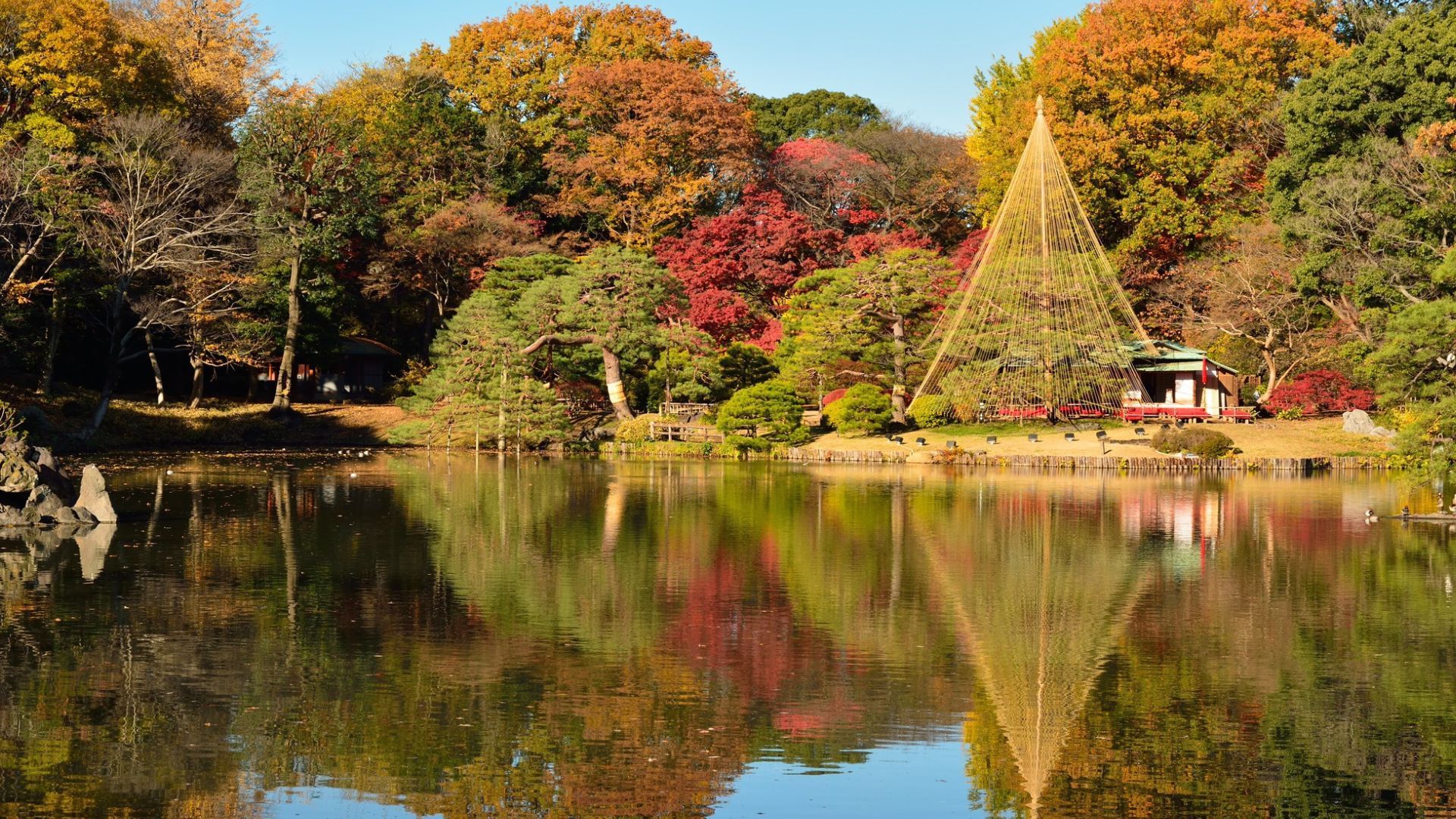
Rikugien is one of Tokyo’s most enchanting escapes, and it truly shines in autumn, when its landscaped grounds ignite in shades of crimson and gold. Created around 1700 at the request of shogun Tsunayoshi Tokugawa, the strolling garden was designed to capture 88 scenic views from classical poems and the coastal beauty of Kishu Wakanoura. Today, its central pond and winding paths feel like walking through a living painting.
Visitors pause in teahouses overlooking the water, forgetting for a moment that the Tokyo skyline is only a few streets away. From late November to early December, crowds flock here for momijigari, the traditional pastime of fall-leaf viewing, as the Someimon Gate opens for the season to welcome them in.
Kurobe Gorge, Toyama
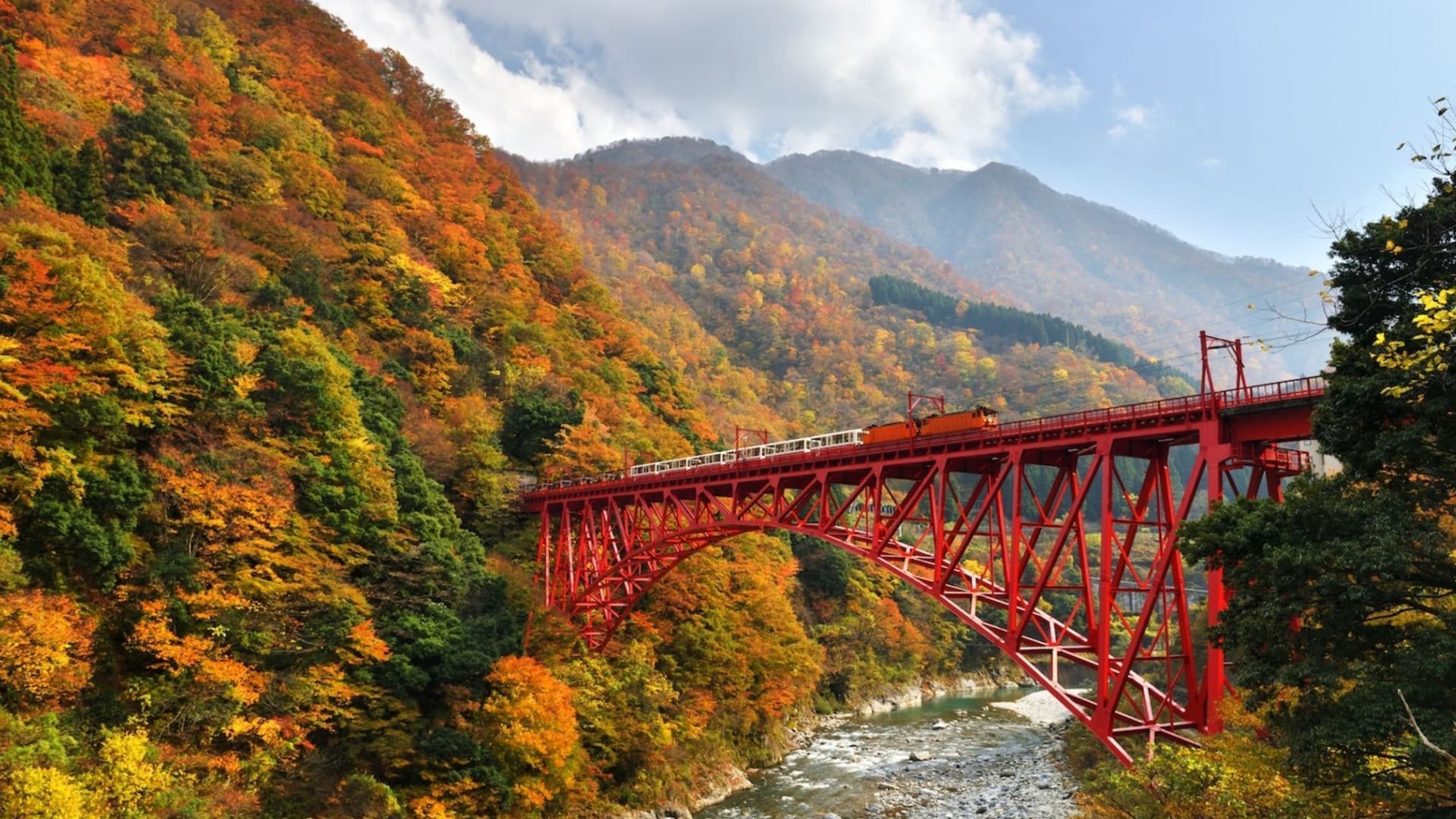
Combine a flashy river canyon, unapologetically fiery fall foliage and one of Japan’s most scenic train rides, and you’ve got Kurobe Gorge in autumn. From mid-October to mid-November, the emerald-green Kurobe River is framed by blazing reds and golds, creating those wallpaper-like views at every bend. The star attraction is the Kurobe Gorge Railway, a narrow-gauge sightseeing train that rattles across 20 bridges and dives through more than 40 tunnels on its 20-kilometre route between Unazuki and Keyakidaira.
During the 80-minute journey, you can hop off at stations along the way to stretch your legs, pull out your phone or camera for the most unreal-looking photos (except they are not AI) ever and soak up miles of nature before rolling on.
You can find more information about the Kurobe Gorge Railway tickets here.
Also, learn why the JR Pass, a train pass, is a smart choice for travelling across Japan.
Kiyomizu-dera, Kyoto
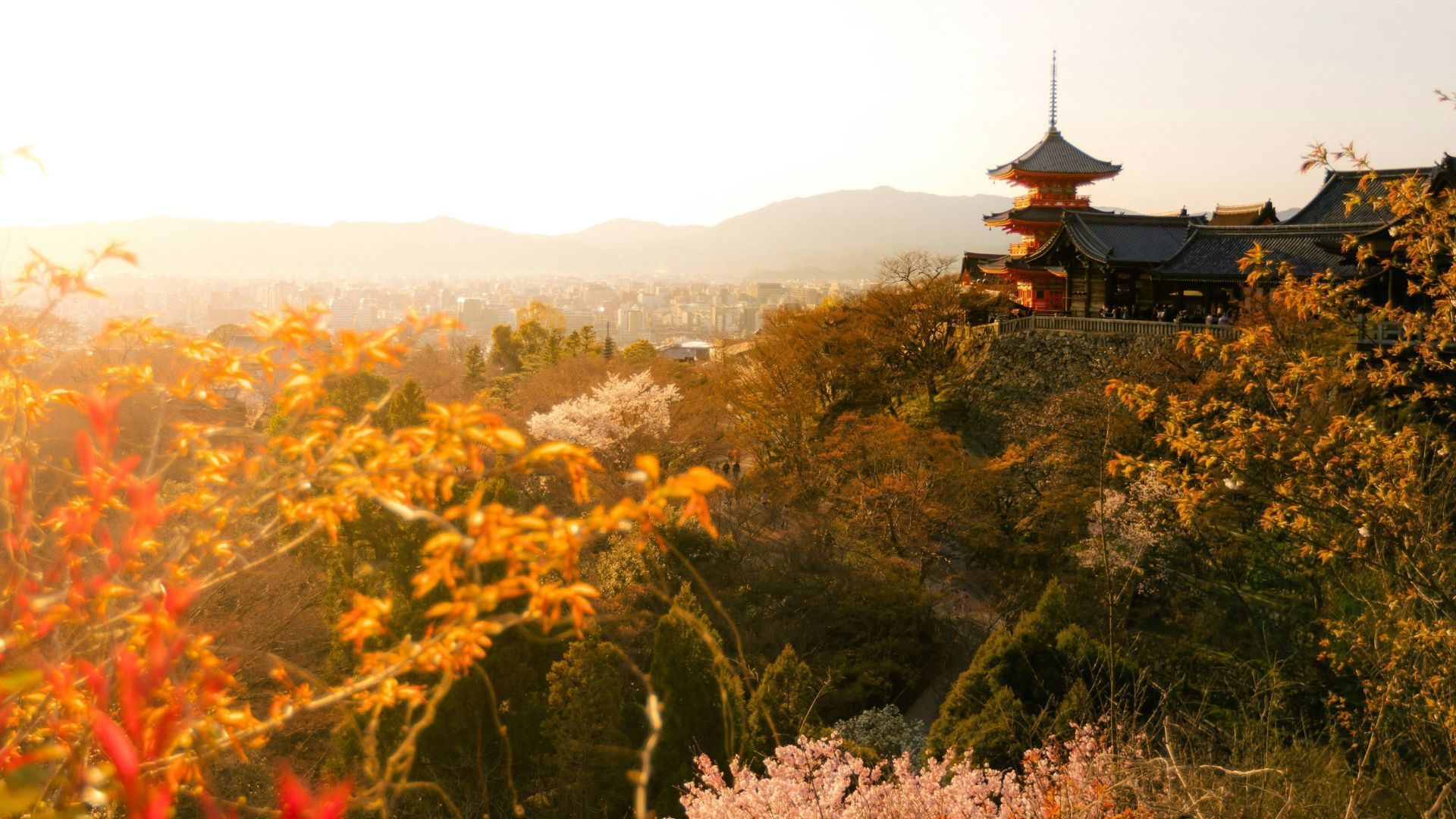
Kiyomizu-dera Temple, located on the eastern hills of Kyoto, is one of the city’s most visited landmarks. Its wooden stage rises 13 metres above the hillside, where most tourists gather to enjoy sweeping views of maple and cherry trees turning vibrant autumn colours, along with the distant cityscape.
From November 22 to December 7, 2025, the temple will also host its annual autumn illumination, when visitors can see the grounds and foliage lit up at night. The event is very popular, and you can expect large crowds pouring in as the sun sets.
Admission fee: JPY 500 (approximately MYR 14)
Timings
- Autumn season: November 22 to December 7, open until 9:30 pm (last entry at 9 pm)
- Spring season: March 25 to April 3, open until 9:30 pm (last entry at 9 pm)
- Summer season: August 14 to 16, open until 9:30 pm (last entry at 9 pm)
You can learn more about the night show by visiting Kiyomizu-dera Temple’s official website.
Matsumi Bridge, Mikuni Pass, Hokkaido
A fall foliage road trip to Japan’s Mikuni Pass is a must for both local and international travellers, and once you catch sight of it, you’ll see why it’s unforgettable. Perched at 1,139 metres above sea level, it is the highest point on any national road in Hokkaido, and one of the region’s most scenic drives.
Nestled within Daisetsuzan National Park, the surrounding forest transforms into a vivid mosaic of red and yellow leaves in autumn. After cherishing the scenery, you can head to the Mikuni Pass Observatory, from where you can admire the 30-metre-high, 330-metre-long Matsumi Ohashi Bridge stretching across the hillside, framed by the seasonal foliage below.
Also, plan a visit to Fukuyama, the place that makes the world’s best denim.
Lake Kawaguchi, Yamanashi
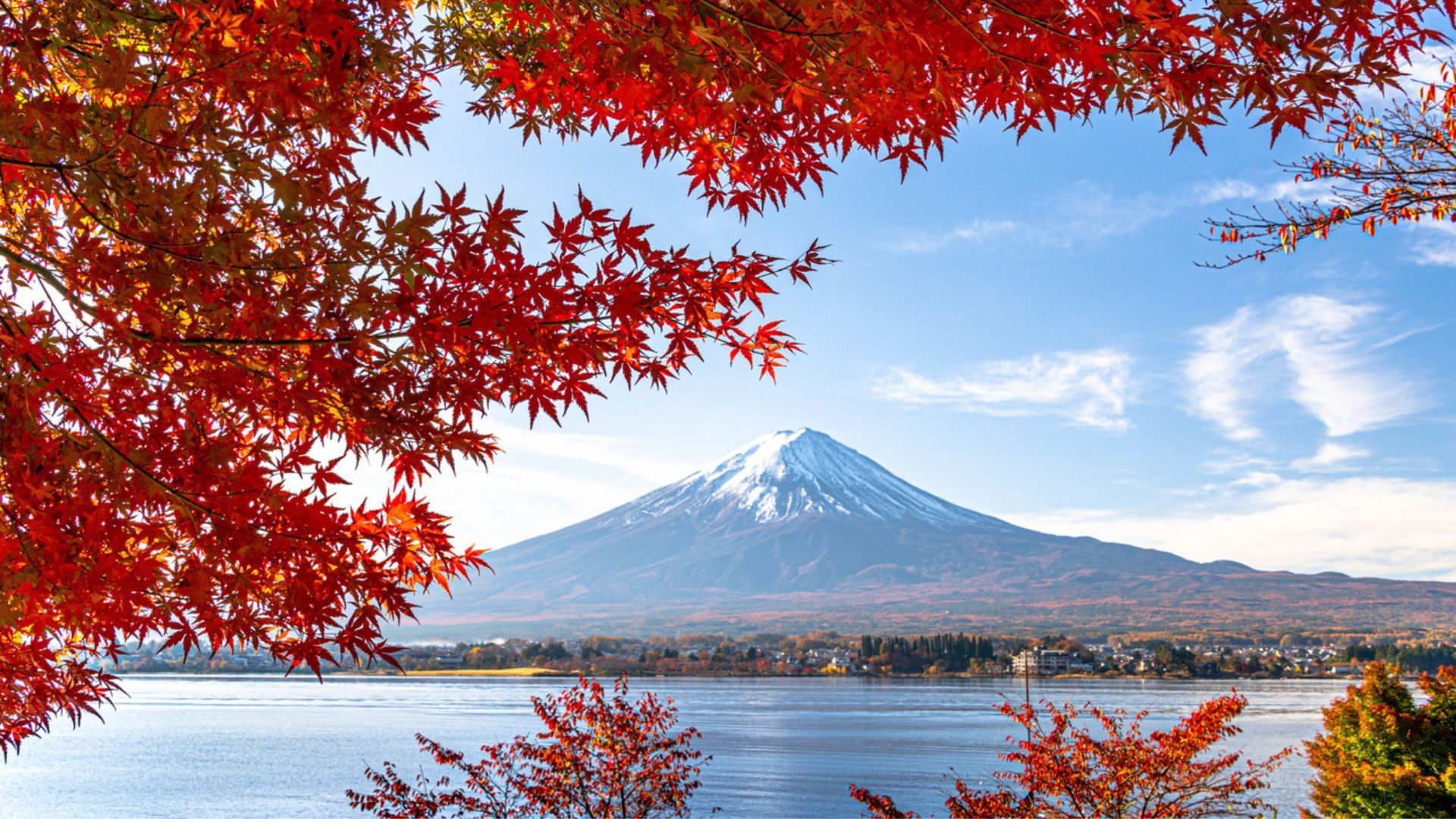
A year-after-year favourite for autumn aficionados, Lake Kawaguchi transforms into a straight-out-of-anime landscape during momiji season, with Mt Fuji providing an iconic backdrop. Stroll along the northern shore, walk through the canopies of Japanese maples, and for a truly monumental experience, stay at a hotel beside the lake in Yamanashi Prefecture.
Request a room overlooking the momiji corridor and explore the surrounding areas, including nearby Lake Yamanaka. Art lovers must visit the Itchiku Kubota Art Museum at the end of the tunnel for an elegant cultural stop.
Nakajima Park, Sapporo, Hokkaido
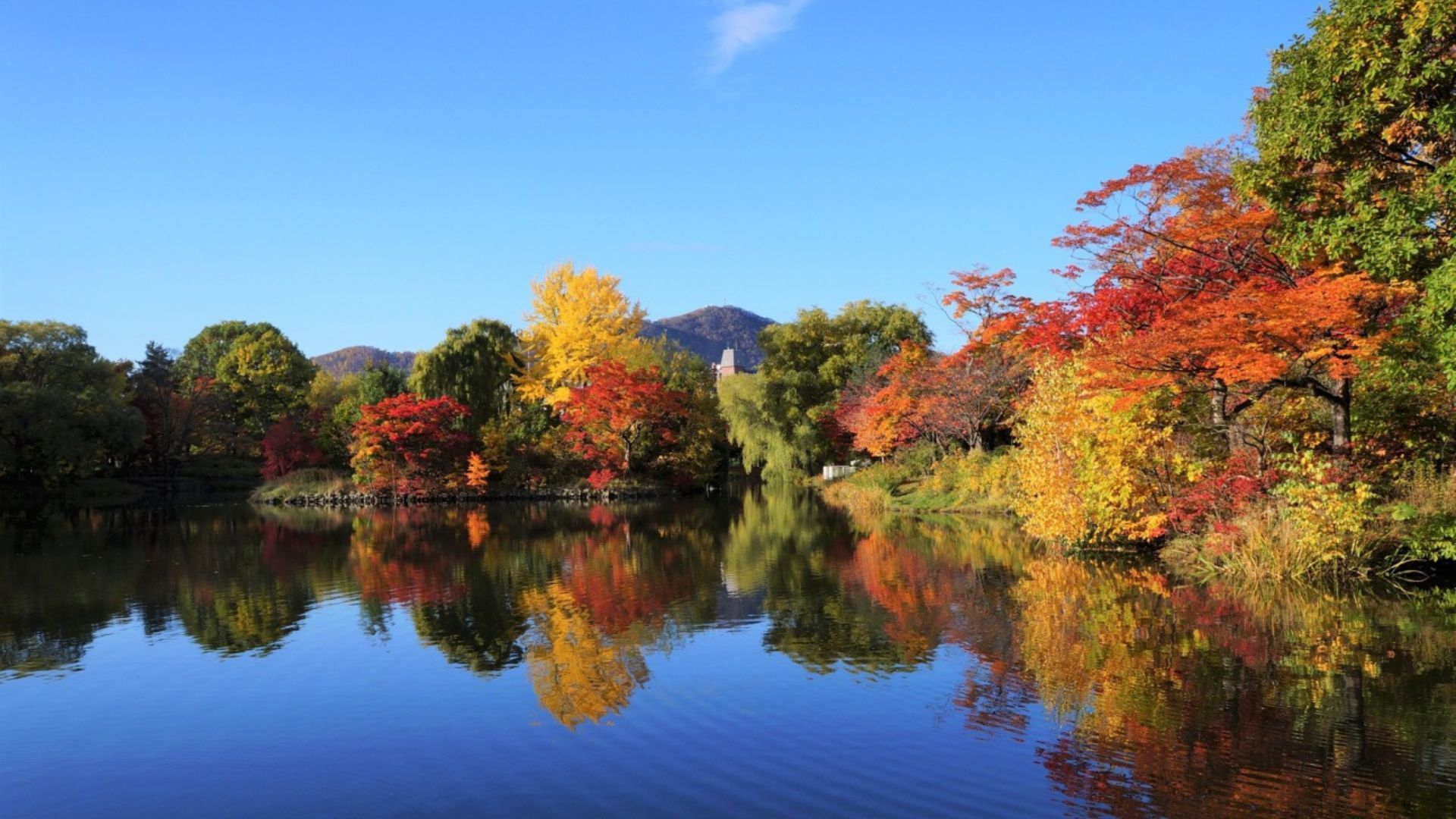
While many visitors to Sapporo may not immediately think of Nakajima Park for fall foliage, it’s actually considered one of Japan’s top 100 municipal parks and is a must-visit during autumn. Located in the heart of downtown next to the bustling Susukino shopping district, Nakajima Park offers a mix of nature and culture, from the serene Shobu-ike Pond and historical structures like Hoheikan and Hassoukan to Concert Hall Kitara and an astronomical observatory.
In the fall, hundreds of old trees turn vibrant shades of red, while the golden leaves of towering Ginkgo trees create a breathtaking reflection on the pond.
T+L tip
For photographers, the pathway from Nakajima Park Station is particularly iconic, carpeted in bright yellow leaves from the 10-metre-tall Ginkgos. The peak time for autumn colours runs from mid to late October, with the Japanese garden and Shobu-ike Pond at their photogenic best.
Tōfuku-ji Temple, Kyoto, for witnessing stunning fall foliage in Japan
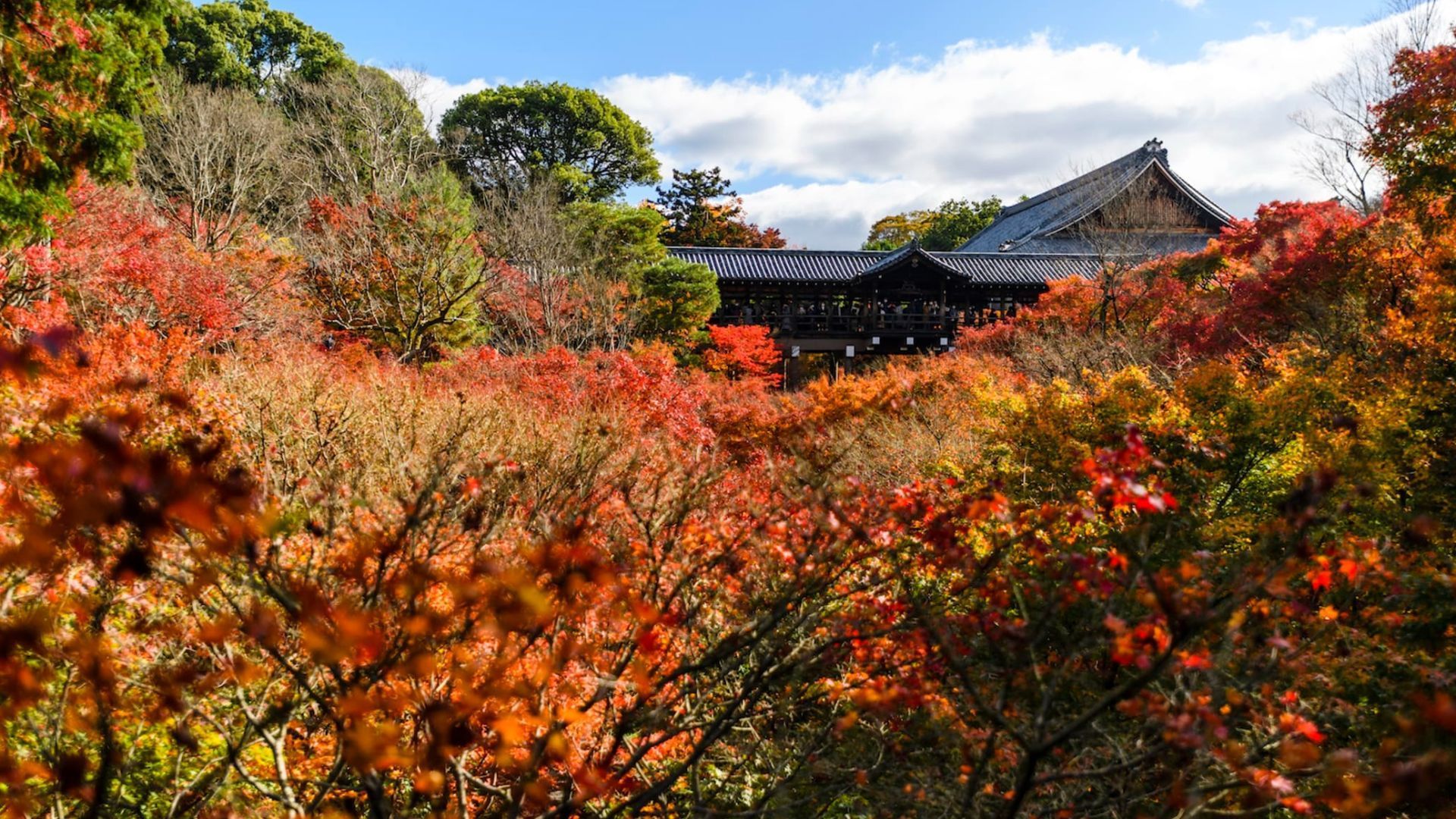
Tōfukuji in southeastern Kyoto is an autumnal hotspot, but it is actually the temple’s Tsutenkyo Bridge from where you can experience the best scenes of the valley with lush maple trees, and the 100-metre covered walkway. Colours usually peak from mid to late November, and after taking in the fiery reds and golds, we recommend wandering the temple grounds at leisure, or stopping at a nearby teahouse for matcha and traditional sweets.
For an immersive stay, book a room at a ryokan in southeastern Kyoto, or choose a boutique hotel nearby for modern comfort while keeping Tōfukuji’s autumn spectacle just a short walk away.
You can find more about the temple, events and latest updates here.
Daisetsuzan National Park, Hokkaido
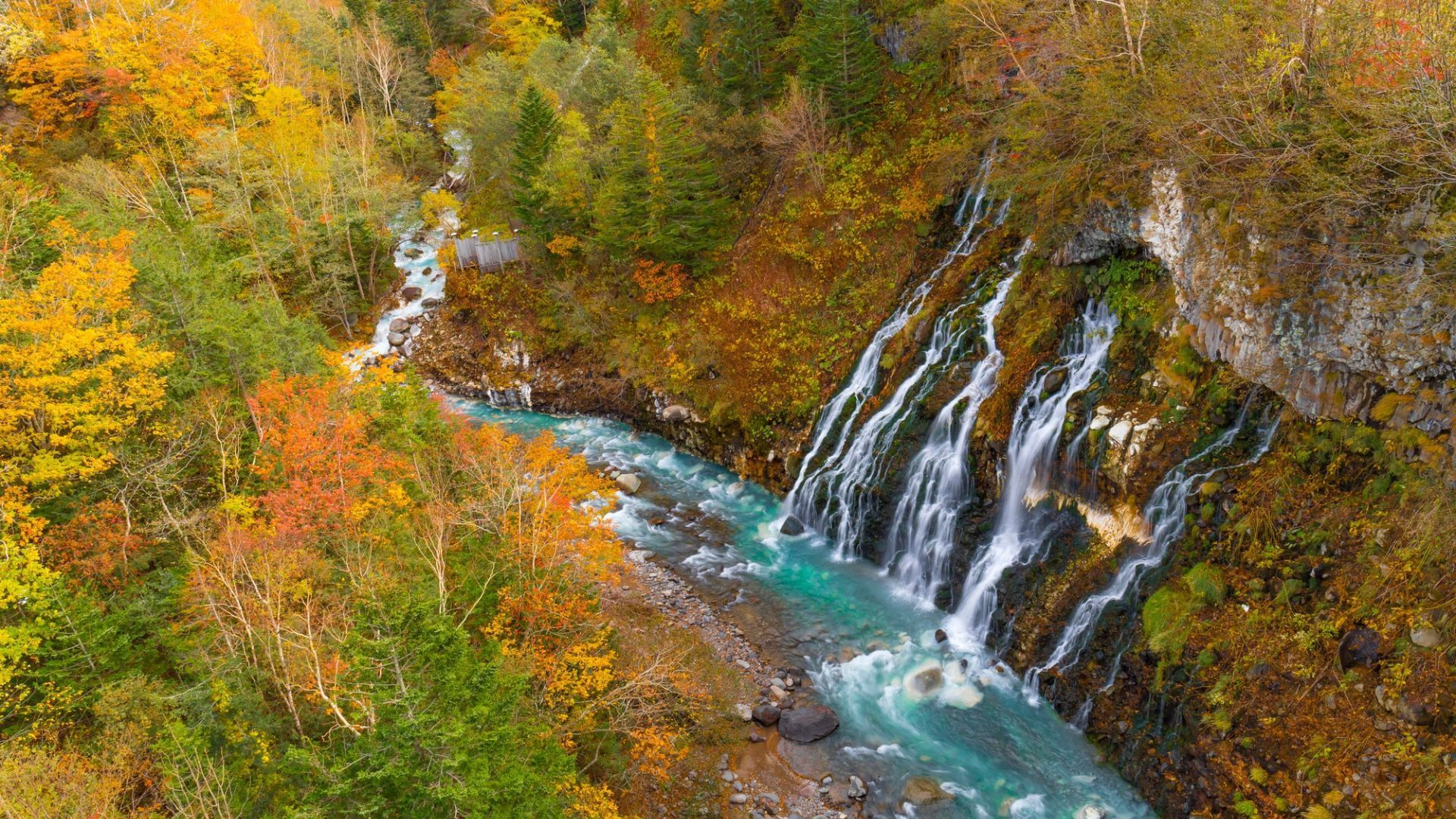
From late August to mid-September, Hokkaido’s Daisetsuzan National Park bursts into Japan’s earliest and most breathtaking autumn colours, with fiery reds and golden hues stretching across the volcanic peaks. Lace up your hiking boots and tackle the Ginsendai trailhead, winding via Mount Akadake through the park’s interior to Mount Kurodake before descending to Sounkyo.
Along the upper slopes of Mount Kurodake, the foliage reaches its peak, while the higher volcanic interiors offer dramatic scenery. For those seeking to experience this without the rigours of a multi-day hike, consider scenic drives or shorter trails near the base. After a day in the park, warm up with local cuisine in nearby Sounkyo, or rest your head at one of the region’s mountain lodges to wake up to crisp autumn mornings against Daisetsuzan’s fiery backdrop.
You can learn more about the Daisetsuzan National Park on the Japan National Tourism Organization website.
Naruko Gorge, Osaki, for witnessing fiery fall foliage in Japan
One of northeastern Miyagi Prefecture’s most visited locations for fall foliage in Japan, Naruko Gorge is at its fiery best from mid-October to early November, and the main character of the entire landscape is the Ofukazawa Bridge. While many visitors point long lenses from the observation platforms at the visitor centre, the gorge feels even more majestic up close.
See: Naruko Gorge Autumn Leaves & Ginzan Onsen One Day Bus Tour
Lace up your boots and hike the paved Naruko Gorge Walking Trail along the river, flanked by steep, rocky walls on either side. After exploring the gorge, warm up in nearby Naruko-Onsen or Nakayamadaira Onsen, famed for their hot springs and traditional kokeshi dolls.
(Feature image credit: Paulino Acosta Santana/Pexels)
Note:
The information in this article is accurate as of the date of publication.
We may earn an affiliate commission when you shop through links on our site.
FAQs (Frequently Asked Questions)
What are the top regions in Japan for viewing autumn leaves?
Japan’s autumn leaves can be spotted in a wide stretch from north to south, starting in Hokkaido in September and peaking across Tokyo, Kyoto, and beyond from October through December.
Where can I see fall foliage in Kyoto?
In Kyoto, you can catch stunning fall foliage at places like Kiyomizu-dera, Tofuku-ji, Eikando, Philosopher’s Path, Arashiyama, Kodaiji, and Nanzenji.
Are there good fall foliage spots in Tokyo?
Rikugien Gardens, Koishikawa Korakuen Garden, Icho Namiki (Ginkgo Avenue) in Meiji Jingu Gaien, Shinjuku Gyoen, Showa Memorial Park, Hibiya Park, and Mount Takao are some of the best spots in Tokyo.
What are the best national parks in Japan for autumn colours?
Some of the national parks include Chubusangaku National Park, Daisetsuzan National Park, Oze National Park, Nikko National Park, Aso-Kuju National Park, and Minami Alps National Park.
Can I see autumn leaves at Mount Fuji?
Yes, you can spot them around the Fuji Five Lakes, which are Kawaguchiko, Yamanakako, Saiko, Shojiko, Motosuko, and the Chureito Pagoda.
What are the top fall foliage spots in Hokkaido?
Top spots for autumn leaves in Hokkaido include Noboribetsu (Hell Valley and Onyuama Pond), Jozankei Onsen, Shiretoko Peninsula, Biei Blue Pond, and Daisetsuzan National Park.
What are some lesser-known spots for autumn leaves in Japan?
You can bet on Onyuama Pond, Jozankei, Mount Iwate, Hachimantai, Mount Mitake, Yahiko Park and Kamikochi for a tourist-free leaf-peeping experience.
Written By Sneha Chakraborty