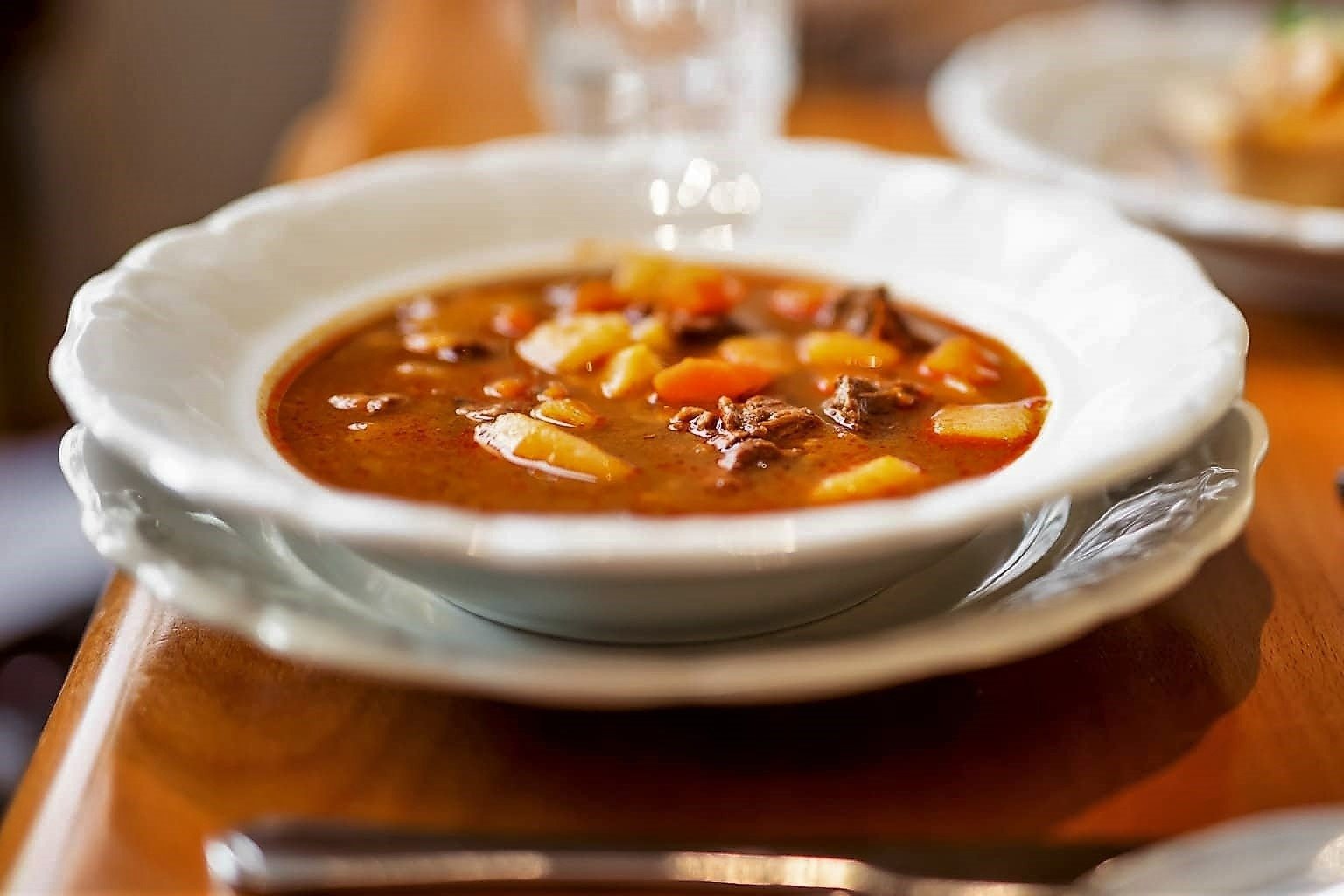
Guangzhou is famously hailed across China as the absolute capital of Cantonese cuisine (Yue cuisine), anchoring the old Chinese proverb, “Shi zai Guangzhou” (Eating in Guangzhou). The city’s food culture is globally celebrated for its extreme focus on freshness, natural flavors, and intricate preparation styles, avoiding heavy spices or grease to let the premium ingredients shine.
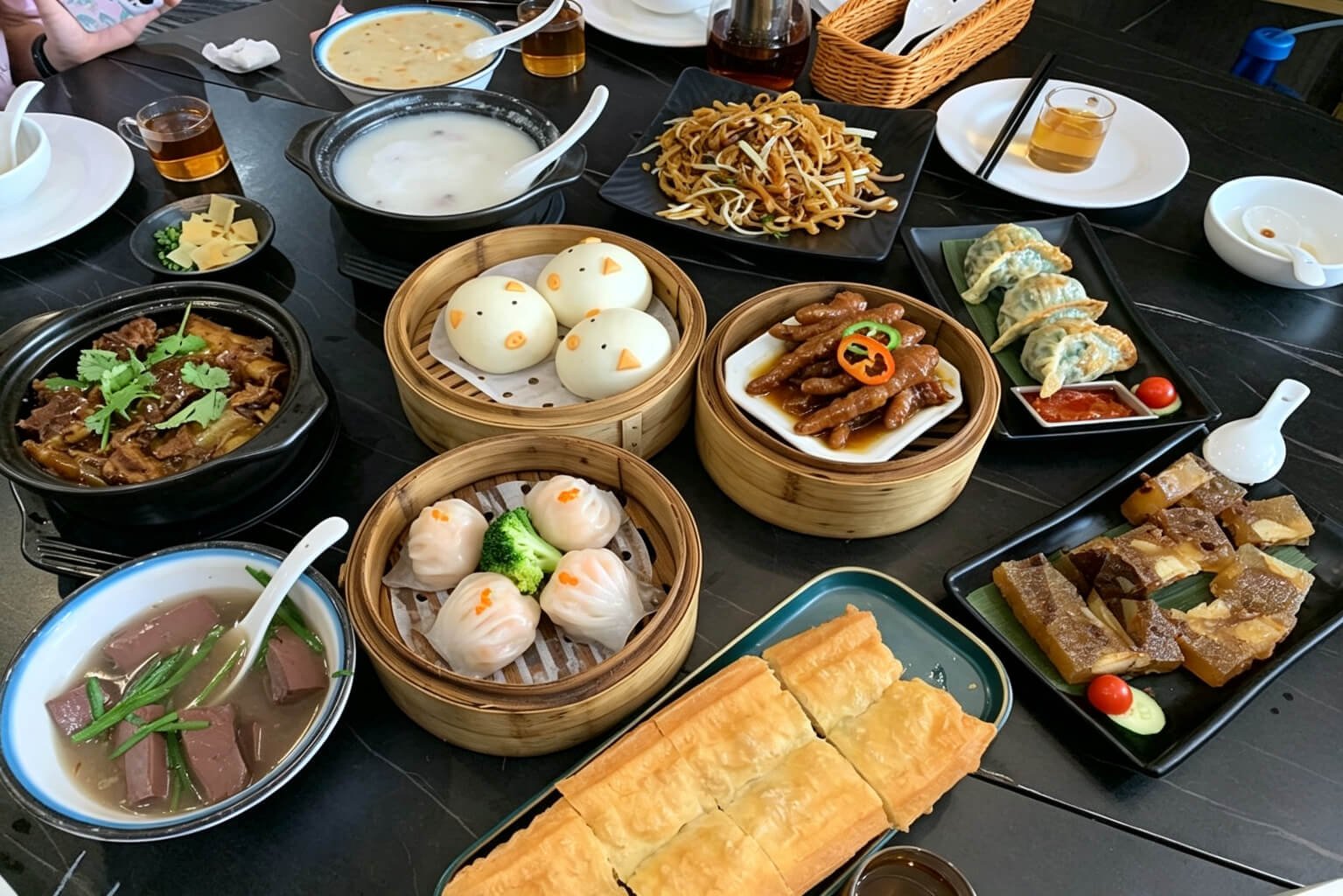
What to order
A quick lunch:
- Roast goose / 烧鹅
- Rich meat, crisp skin, and bones
A shared lunch or dinner
- Char siu / 叉烧
- Sweet and savory glazed pork
Rice plate or shared meal
- White-cut chicken / 白切鸡
- Gently poached, bone-in chicken
A shared dinner
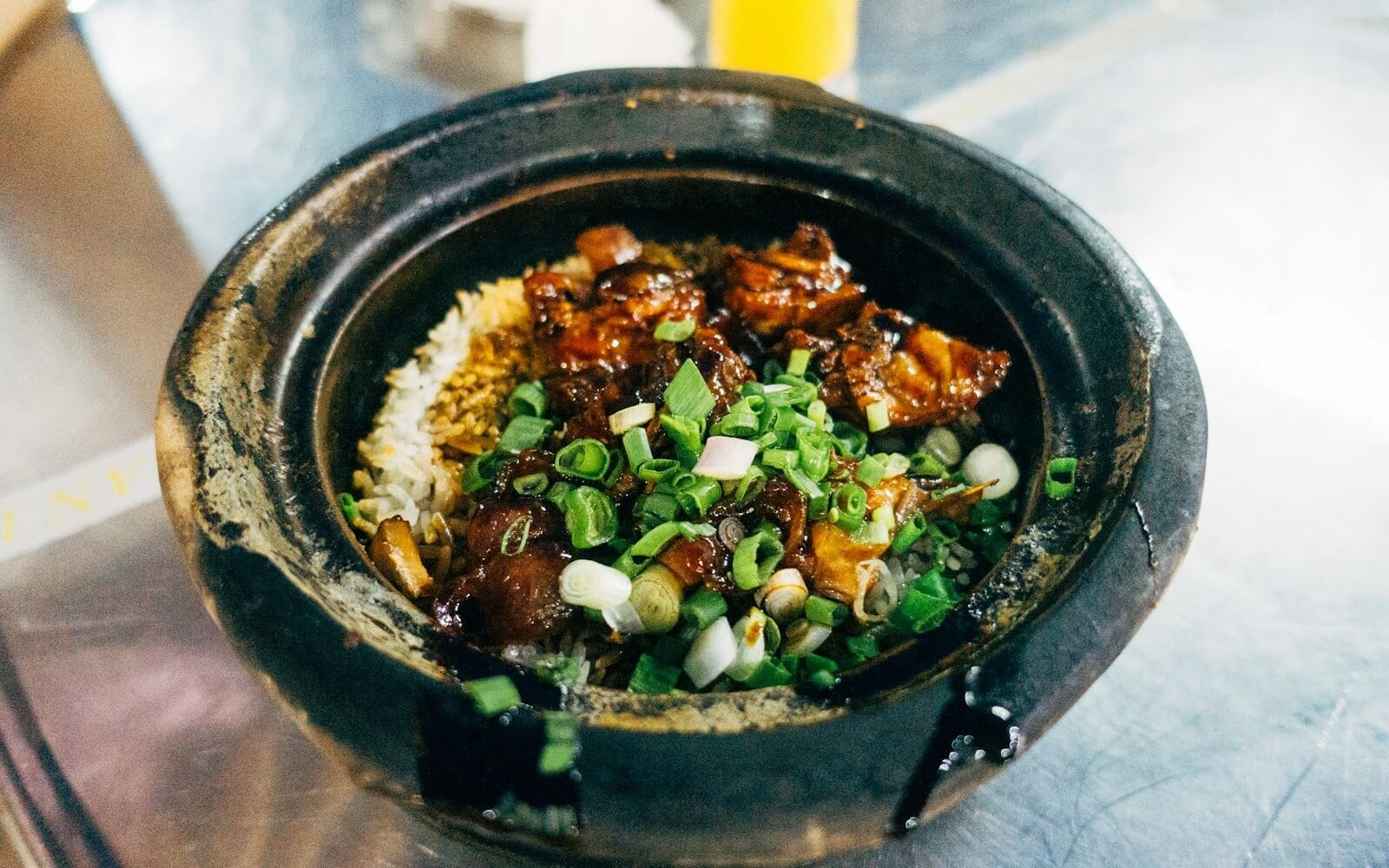
- Claypot rice / 煲仔饭
- Rice, toppings, and a crisp bottom layer
A filling lunch or dinner
- Beef chow fun / 干炒牛河
- Wide rice noodles stir-fried with beef
Lunch or dinner
- Cantonese soup / 老火汤 or 炖汤
- Slow-simmered or gently double-boiled soup
With a meal
- Double-skin milk / 双皮奶
- Soft milk and egg-white custard
An afternoon break
- Black sesame sweet soup / 芝麻糊
- Smooth, nutty dessert served in a bowl
- Dessert
Har gow: the shrimp dumpling to order first
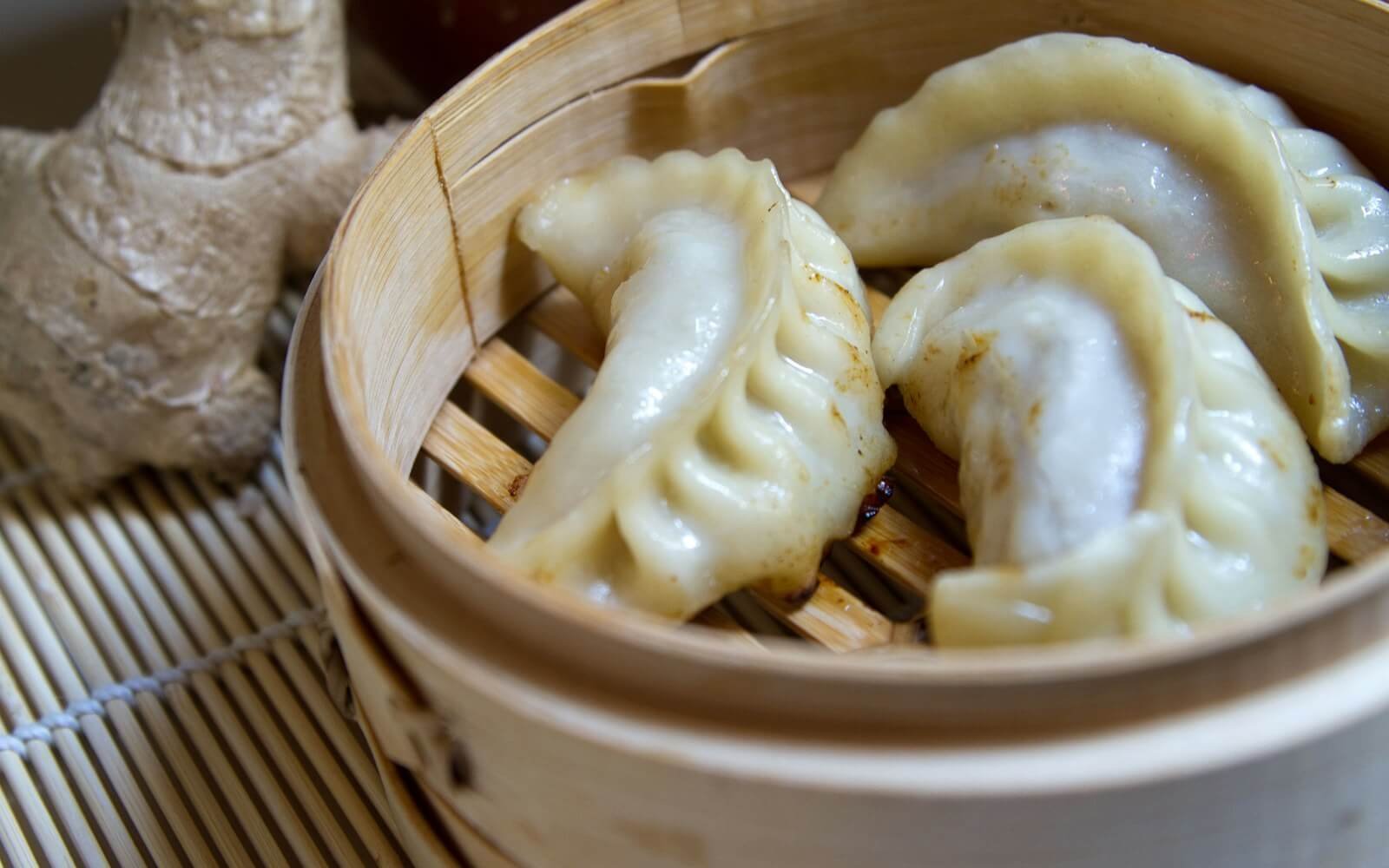
Har gow — crystal shrimp dumplings — is a signature Cantonese dim sum, born in the city of Guangzhou. Each one wraps one or two whole shrimp in a sheer wheat-starch skin, sized for a single bite. The classic har gow is crescent-shaped with a “spider belly” of twelve pleats, filled with shrimp, pork, and bamboo shoots — though the single-shrimp version is what most people know today. The best har gow is defined by its wrapper: thin, soft, and ideally translucent enough to glimpse the filling inside. The shrimp should be plump and springy, with a little juice trapped within, and the whole dumpling should reach your table piping hot.
When you order, confirm the portion size first — a serving of har gow usually doesn’t go very far. And keep in mind that the name “shrimp dumpling” doesn’t mean it’s all seafood: pork is typically in the mix too. If you have a seafood allergy, let the restaurant know in advance. And some recipes use pork fat. Michelin’s dim sum guide describes that ingredient in one restaurant’s har gow, so ask if you avoid pork.
Siu mai: a fuller bite with pork and shrimp
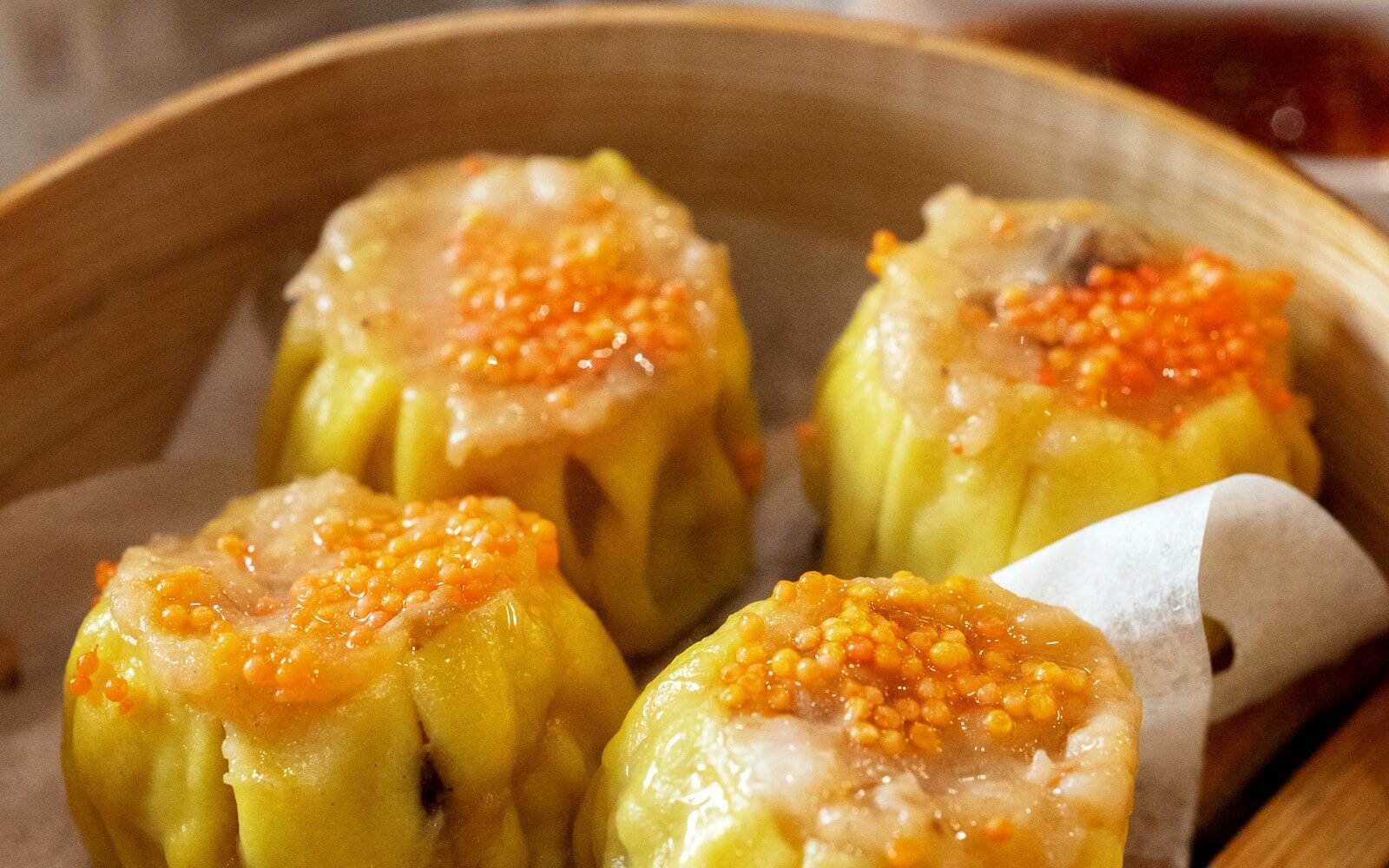
Morning tea is a romance etched into the DNA of every Cantonese. Dawn barely breaks before the tea houses are already humming with chatter, as aunties wheel their dim sum carts between the tables. The moment a steamer lid lifts, a rush of hot steam carries the scent of pork straight to your face — and siu mai is always the star of the cart.
Plump and round, each siu mai shows off its pink filling at the top, dotted with specks of crab roe. Lift one up gently: the wrapper is springy, with just a hint of tacky chew. One bite and sweet pork and bouncy shrimp burst on your tongue, rich juices slipping down your throat. That single mouthful — it’s the most comforting way to start a Guangzhou morning.
Rice noodle rolls: soft sheets steamed to order
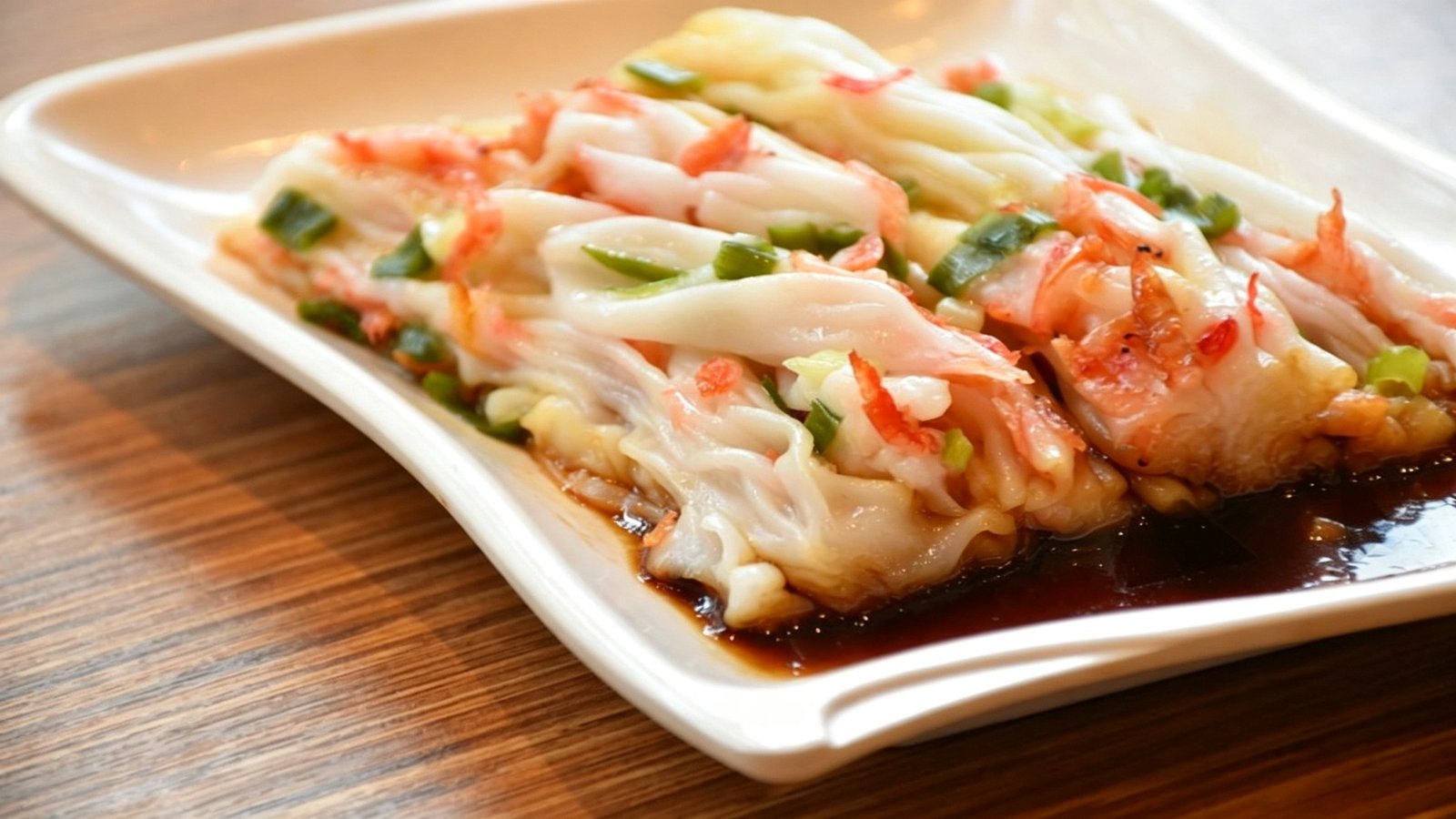
Cheung fun— steamed rice noodle rolls — is one of Guangdong’s most iconic traditional rice-based snacks and a proud member of the Cantonese canon. White as snow and thin as a cicada’s wing, it owes its name to the way it’s rolled up, which resembles pig intestines. Cheung fun dates back to the Qing Dynasty, first appearing in Guangzhou’s Xiguan district before spreading across the province and into overseas Chinese communities. Today it’s a non-negotiable classic of Cantonese morning tea culture.
Rice noodle rolls, also called cheung fun or changfen, wrap a thin rice sheet around a filling. Shrimp, beef, pork, and egg are familiar choices. A little sauce brings the mild rice flavor to life. Authentic Cantonese rice noodle rolls are paper-thin, smooth, soft, and tender—virtually melting in the mouth; once drizzled with sauce, they quickly absorb the flavors, making for a truly exquisite taste.
Wonton noodles: a compact, savory lunch
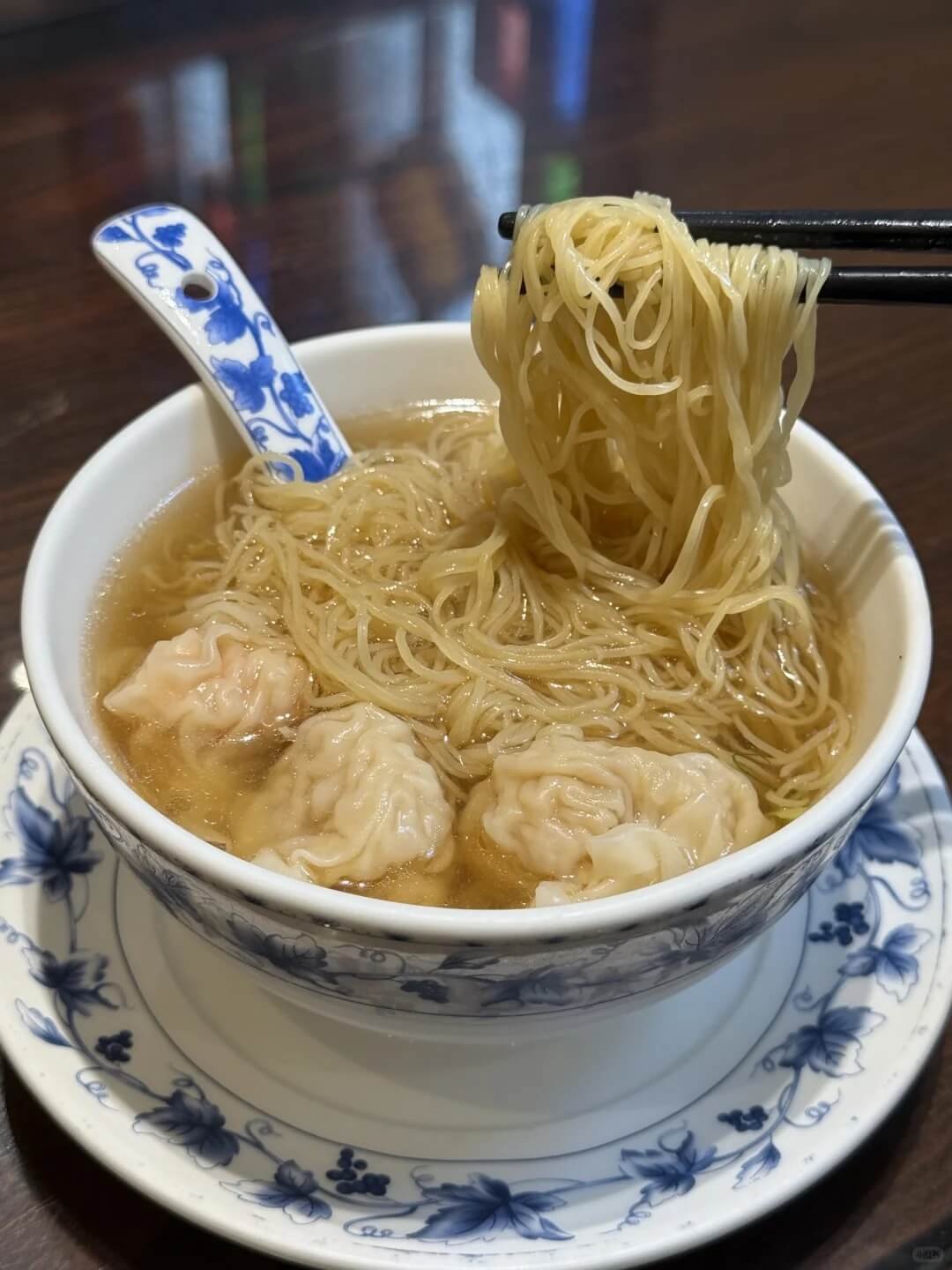
If you enjoy noodle dishes, I highly recommend the Cantonese fresh shrimp wonton noodles. The broth is clear yet rich in flavor, and the “silver-thread” noodles are incredibly fine, springy, and firm—offering a superb texture. It comes with four wontons featuring thin, silky wrappers and a filling of crisp, delicious shrimp.
Wonton noodles combine fine noodles, filled dumplings, and broth in one bowl. At Enning Liu Fu Ji on Donghua East Road, Michelin describes shrimp wontons and broth flavored with dried fish and shrimp. This is a useful reminder that clear soup can contain seafood.
Choose 1 small bowl when you want room for an afternoon snack. If you mainly want dumplings, ask for wontons without noodles. Taste the broth before adding chili oil or vinegar; a large splash can cover its quieter flavors.
Roast goose: crisp skin and rich meat
Roast goose suits diners who enjoy duck but want a richer bite. Shops chop the bird into pieces, usually with the bones still inside. Take small bites and keep a side plate for bones.
Traditional Guangzhou roast goose is roasted over an open flame and served fresh from the oven. The skin boasts a glossy, reddish-brown hue; it is crisp and flaky, releasing a rich, savory aroma of rendered fat. The meat remains succulent and firm—never dry—and carries a subtle hint of fruitwood smoke. Pair it with sour plum sauce to cut through the richness and enhance the flavor!
For 2 people, ask about a small serving before ordering a half bird. Add rice and greens to balance the meal. If you order a mixed roast platter, confirm which meats it includes and whether the listed price covers the whole plate.
Char siu: Cantonese barbecue pork
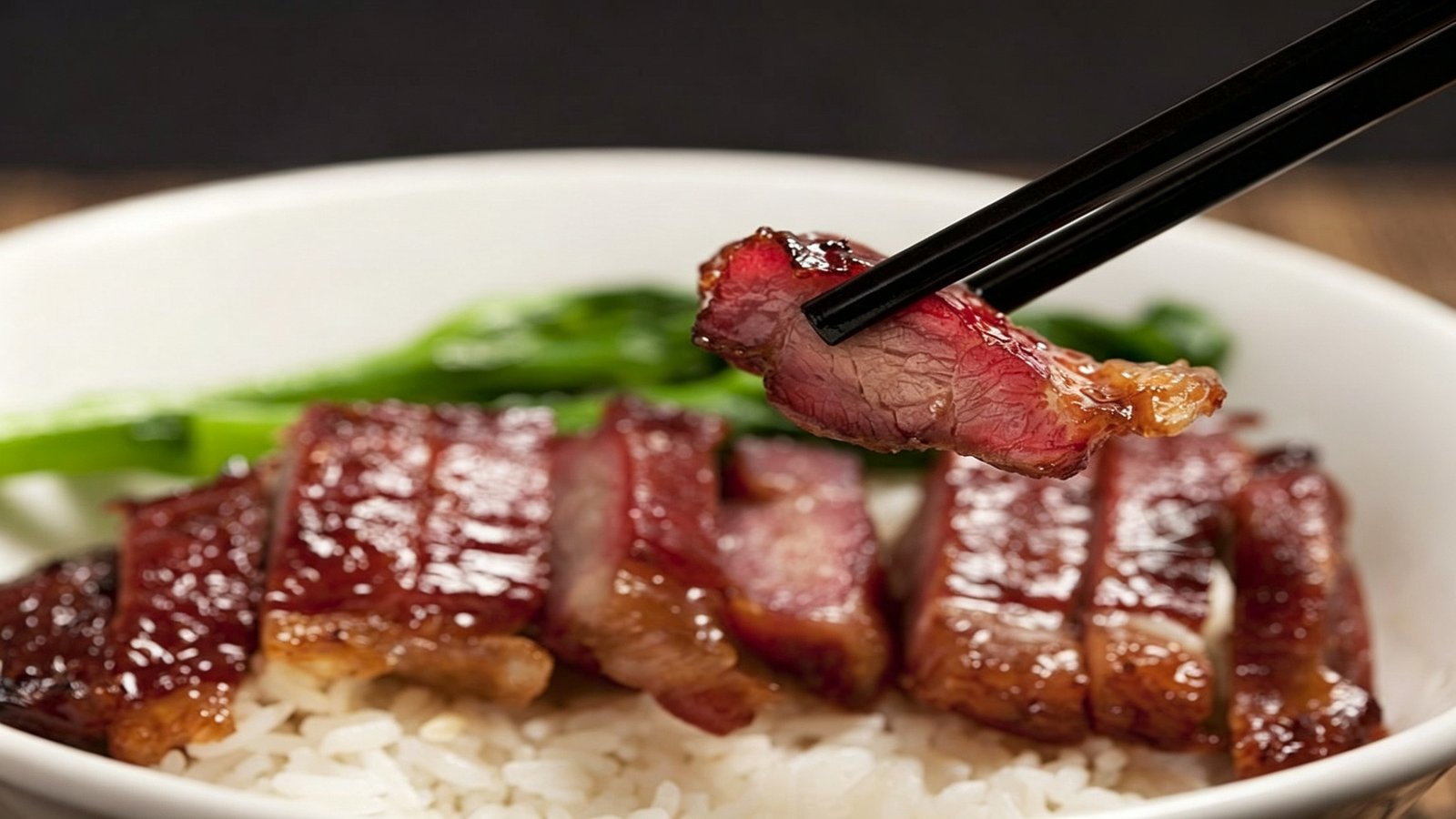
Char siu — honey-glazed roast pork — is one of the most iconic dishes in Cantonese siu mei. The story most often told goes like this: Cantonese roast masters would cut pork into long strips, marinate them in sauce, and hang them beside the oven to roast. Because the meat was skewered and roasted — 叉 (char) means “to skewer,” 烧 (siu) means “to roast” — the dish earned its name.
Char siu is glazed roast pork with a sweet, savory edge. Cuts differ: some lean toward firm, lean slices, while others include more fat. Ask the server which option the shop uses if texture matters to you.
Order 1 rice plate for a simple solo lunch. At a shared dinner, a small portion lets everyone taste it without crowding the table. BingSheng Pin Wei’s Dongxiao Road branch offers a distinct crisp version that Michelin describes as pork belly with a breadcrumb and sugar crust.
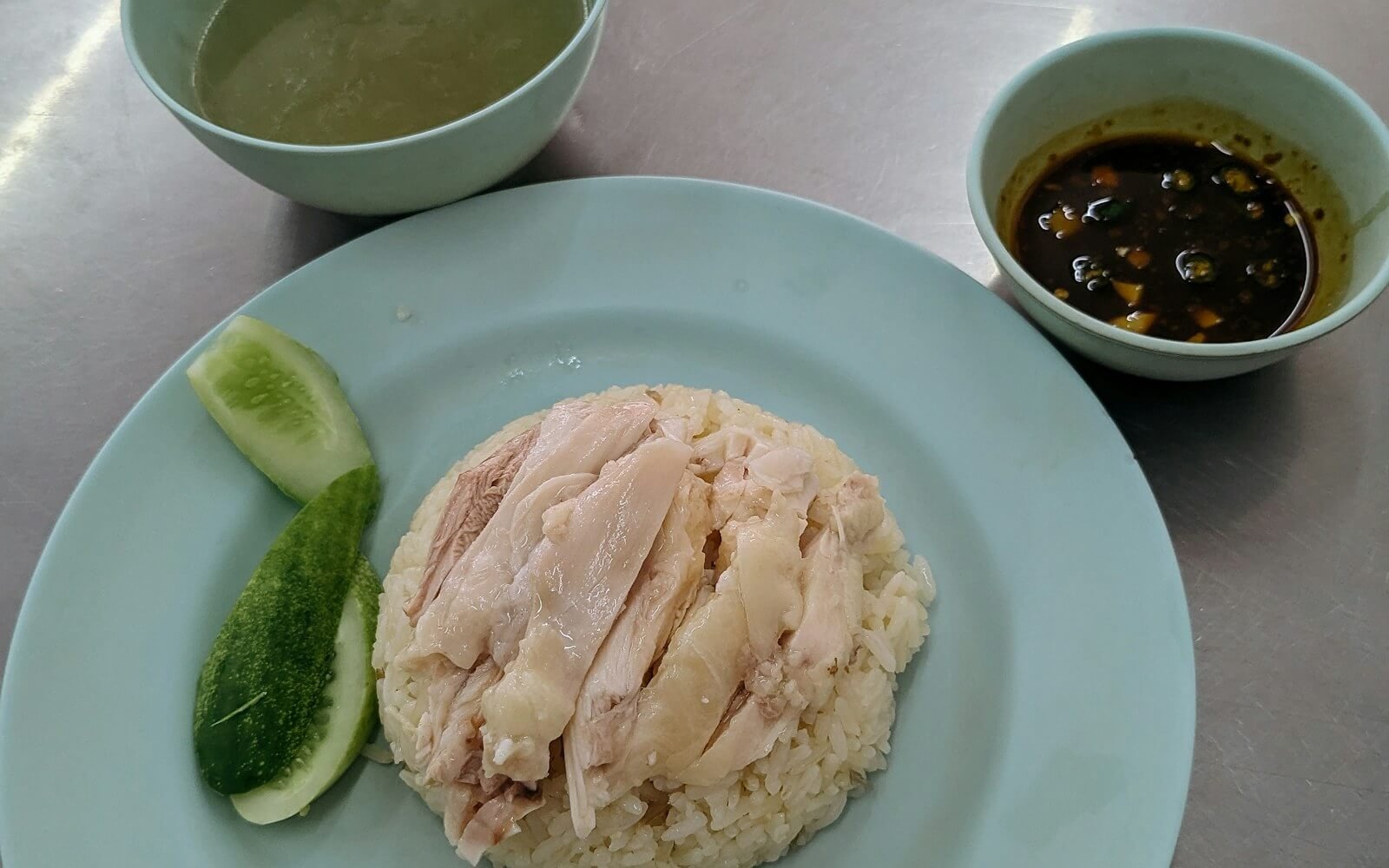
White-cut chicken: gentle cooking with a sharp dip
Yum cha means drinking tea and commonly refers to the meal built around tea and dim sum. Dim sum names the small dishes themselves. Book 60–90 minutes in your schedule so you can order in stages and enjoy the table.
For two adults, 4–6 small plates make a sensible starting order, depending on piece counts and appetite. Choose a mix of steamed dumplings, rice rolls, a bun or pastry, and greens or congee. Add more once you see the portions.

Dim sum meal checklist
In order to have a perfect meal
- Choose tea and check whether the charge is per person or per pot.
- Check how many pieces come with each plate.
- Confirm fillings and sauces before sending the order.
- Leave one dish for a second round so you can adjust.
Not every restaurant opens early. Jiang by Chef Fei‘s official page lists weekday lunch from 11:30 a.m. to 2:30 p.m., with an earlier weekend start when checked for this guide. Verify your branch’s hours before making breakfast plans.
Tea is part of the meal, but you do not need to memorize a ceremony. Ask the server which tea pairs with your order and how to request a refill. If caffeine is a concern, ask about the actual leaves or flowers used in the pot.
Where should you look for Guangzhou street food?
Choose 1 neighborhood per food walk and leave space between stops. Guangzhou street food often comes from small shops with counters and stools, rather than carts in the road. A simple bowl eaten at a table can be just as much part of the experience. Consider the following:
Area | Good fit for | How to plan the visit
Liwan and Xiguan
- Rice rolls, noodles, congee, and traditional shops
- Pair a meal with old-street sightseeing
- Yongqing Fang and nearby Enning Road
- A relaxed walk with food breaks
- Choose a few stops; leave time for the neighborhood
Beijing Road and Wenming Road
- Shopping, soup, and casual meals
- Select a specific shop before joining a line
Tianhe and Zhujiang New Town
- Reserved dinners and refined Cantonese meals
- Pick a restaurant near your hotel or evening plans
In Liwan, start with one cooked savory dish, then walk before choosing dessert. In Yuexiu, soup and noodles can make a lighter outing if you already had a large dim sum breakfast. Do not assume every shop on a popular street serves local food.
For an easy 3-stop tasting plan, choose rice rolls, a small noodle bowl, and a dessert. Share portions when practical and skip a stop if you are full. If you want a full roast-meat dinner, reduce the afternoon tasting to one snack.
When Guangzhou forms part of a longer journey, browse our private multi-city China tours. Build food time into the route early, rather than squeezing each meal between transfers.
Which Guangzhou restaurants are useful starting points?
Choose a restaurant for the meal you want, then check the exact branch. A noodle shop, a dim sum dining room, and a hotel restaurant serve different needs. These 5 starting points have public listings or official pages you can review before booking.
Restaurant and location | Why consider it? | What to check first
Enning Liu Fu Ji – Donghua East Road, 547 Donghua East Road, Yuexiu
- Shrimp wonton noodles; a compact meal
- Broth ingredients and current hours
Dayang – Wenming Road, 160-1 Wenming Road, Yuexiu
- Double-boiled soup; Michelin notes its coconut silkie chicken soup
- Which soups are available that day
BingSheng Pin Wei – Dongxiao Road, 33 Dongxiao Road, Haizhu
- Shared Cantonese dishes and its crisp char siu variation
- Portion sizes and table availability
Tao Tao Ju · Ya Yuan, 6F, Central Tower, 5 Xiancun Road, Tianhe
- Freshly made dim sum in a more formal setting
- Dim sum service times at this specific branch
Jiang by Chef Fei – Mandarin Oriental, 389 Tianhe Road
- A planned Cantonese lunch or special dinner
- Current menu, total bill, and reservations
Treat these as options, not a ranking of the city’s best meals. Michelin stars, Bib Gourmand awards, and a general guide listing mean different things. An award for one branch also does not apply automatically to every restaurant with a similar name.
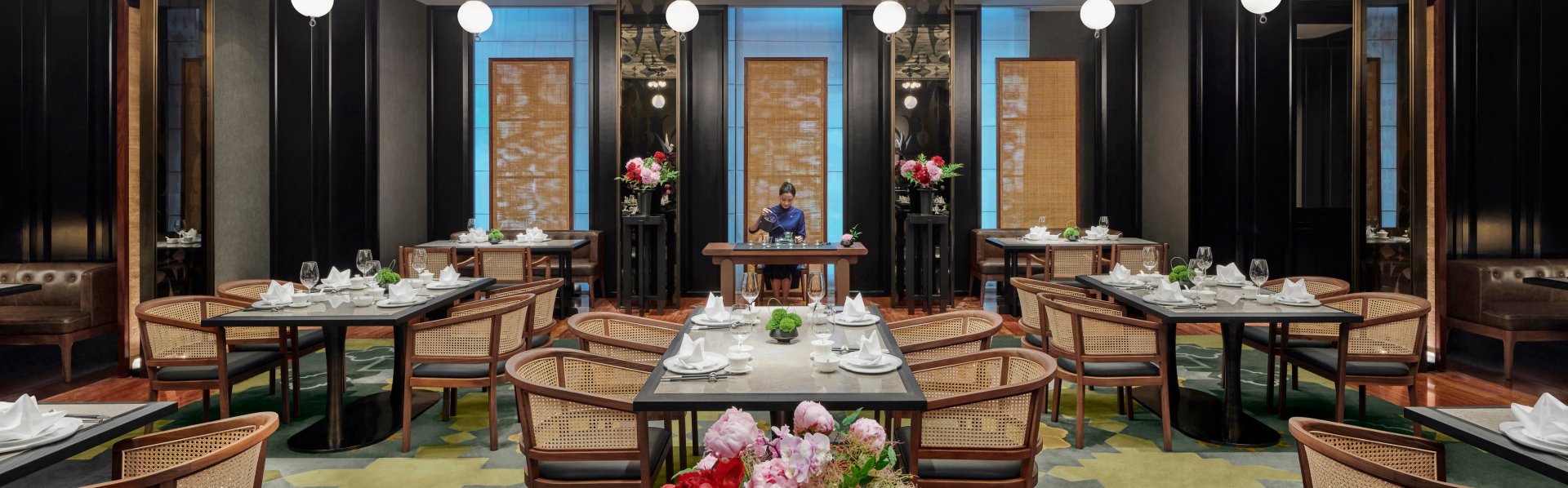
The Mandarin Oriental example shows how to plan a higher-end meal with less guesswork. Its restaurant page links a dim sum menu and a separate children’s menu. When checked, the dim sum PDF listed 4 har gow at 58 and 4 siu mai at 68 in local menu pricing; confirm RMB billing and any added charges with the restaurant. See the official dim sum menu.
Related: Rosewood Guangzhou – World’s Tallest 5 Star Hotel Deal

How much should you budget for food in Guangzhou?
For a comfortable food-focused day, set aside about RMB 250–450 per adult, excluding alcohol, transport, guides, and fine dining. You can spend less with simple meals, or much more on premium seafood and hotel restaurants. The ranges below are planning allowances, not surveyed averages or fixed menu prices.
Meal or day style | Suggested allowance per adult | Planning notes
Casual noodle, rice-roll, or rice-plate meal
- RMB 25–60
- A simple meal; extras increase the bill
Shared dim sum meal with tea
- RMB 80–160
- Check piece counts and tea charges
Shared Cantonese restaurant dinner
- RMB 120–250
- Assumes ordinary dishes and modest seafood
Comfortable day of meals and snacks
- RMB 250–450
- Mix casual meals with one relaxed restaurant meal
Fine dining or premium seafood
- Check the current menu; allow RMB 500+
- This is a starting reserve, not an upper limit
A sample allocation is RMB 110 for dim sum, 45 for lunch, 35 for dessert and drinks, and 160 for dinner. That totals RMB 350 per person. This is an example budget you can adjust, not a quote for the restaurants listed above.
Before ordering seafood, ask whether the price is per dish or by weight. Confirm the weight, cooking fee, and final total before the kitchen starts. For dim sum, check tea charges and any service fee separately from the food subtotal.
If your trip includes trade shows, our Canton Fair tours can help you frame the wider visit. Plan dinner near your day’s final stop so the evening does not become another long commute.

How can you plan one day around food in Guangzhou?
Build the day around 3 meals and 1 optional dessert stop. Use Liwan for a morning of old streets, then either stay nearby or make one planned move for dinner. You do not need to cross the city for every famous dish.
Suggested time | Food plan | Keep it manageable
9:00–10:30 a.m.
- Dim sum at a teahouse that confirms morning service
- Share a few dishes before adding more
10:30 a.m.–12:30 p.m.
- Walk around your chosen Liwan area
- Leave a gap between meals
12:30–1:30 p.m.
- A small noodle bowl or rice rolls
- Choose whichever you skipped at breakfast
3:00–4:00 p.m.
- Optional milk pudding or sesame dessert
- Skip it if lunch ran late
6:00–7:30 p.m.
- Shared Cantonese dinner
- Order roast meat or chicken, greens, and rice
These are suggested time blocks, not opening hours or a guided tour schedule. Check the actual branches, travel time, and reservation rules. If you want dinner in Tianhe, make that the day’s main transfer.
Sample planning scenario: Imagine you have 1 full day and want to try food in Guangzhou without feeling stuffed. You and a friend share dim sum, split an afternoon dessert, and choose roast goose at dinner. You leave claypot rice for another visit because you already had noodles at lunch.
That choice gives the day room to breathe. A good food plan includes walking, rest, and the freedom to skip a dish. If you continue into Guangxi, our Guilin tours offer ideas for the next part of your trip.
Can vegetarians and travelers with dietary restrictions eat well?
Yes, but ask about the full recipe rather than choosing by appearance. A vegetable dish may use oyster sauce, a soup may contain meat stock, and a pastry may use lard. Check 3 things each time: the main ingredients, the sauce or broth, and how the kitchen prepares the dish.
For vegetarian meals, a dedicated restaurant can make the conversation easier. Michelin lists Soodle in Tianhe as vegetarian and describes a vegetable-focused menu with Western influences. It is an alternative dining option, rather than a traditional dim sum substitute; vegans should still confirm dairy and eggs.