If you are planning a trip to the islands, booking a lu‘au is probably at the very top of your bucket list. But what actually happens at one? Is it just an expensive tourist trap, or is it a legit cultural experience? (Spoiler alert: Done right, it’s an absolute blast and a delicious history lesson).
So here is the casual, no-gatekeeping breakdown of what a lu‘au actually is, what you’ll eat, and how to survive your first one.
The Quick Backstory: It Used to Be a Rebel Party
Historically, ancient Hawaiian feasts were called ‘aha‘aina. Back then, men and women weren’t allowed to eat together due to strict religious laws (kapu), and women were banned from eating delicacies like pork and bananas.
That all changed in 1819 when King Kamehameha II abolished these old laws. To celebrate this massive cultural shift, he hosted a massive feast where he sat down and ate directly with women. The party featured a dish called lū‘au (taro leaves baked in coconut milk), and over time, the word stuck as the name for the entire celebration!
Today, a lu‘au is a big, joyful gathering to celebrate major milestones—like a baby’s first birthday, a wedding, or welcoming visitors to the islands.
What Actually Happens at a Lu‘au?
Most commercial lu‘aus follow a fun, standard timeline that spans about 2 to 3 hours around sunset. Here is the usual game plan:
1. The Welcome & Cultural Activities
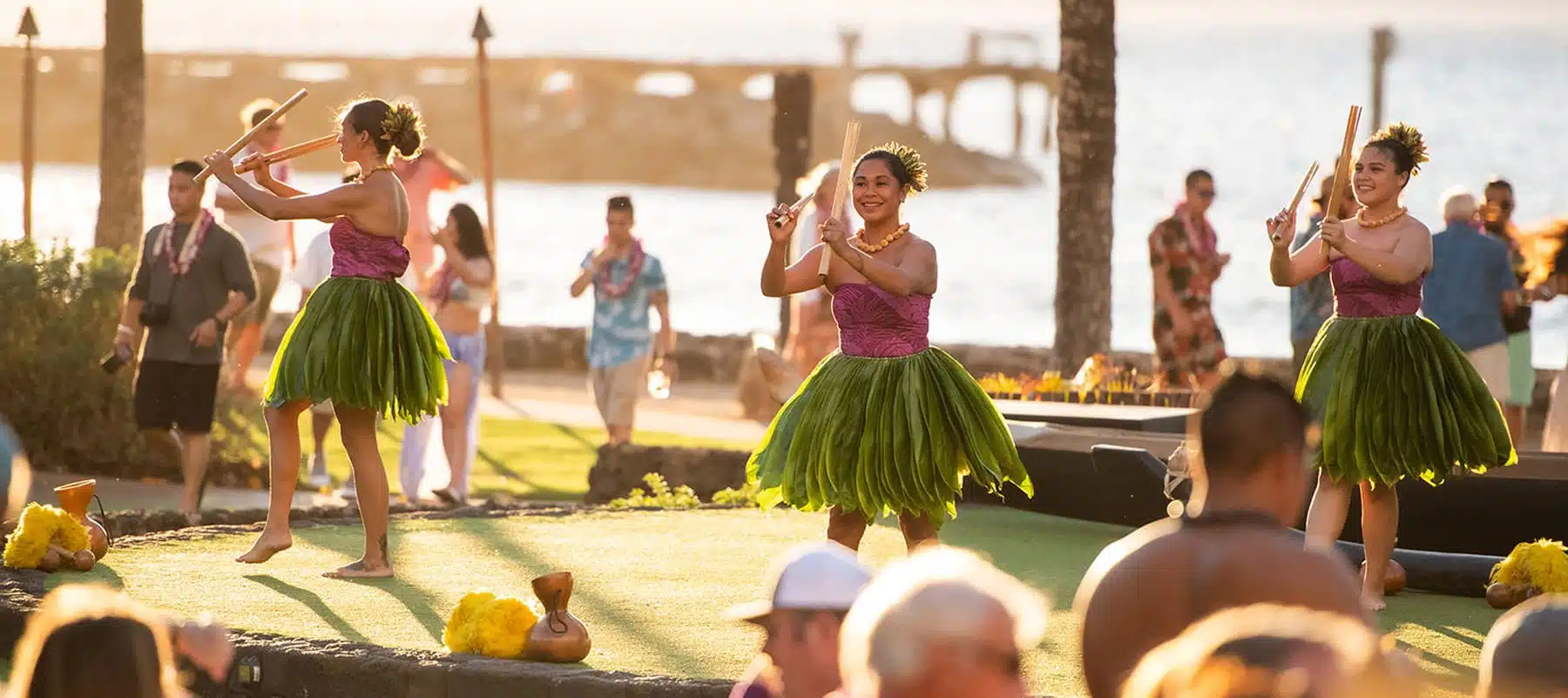
You’ll arrive, get draped in a fresh flower lei, and probably be handed a tropical drink (yes, usually a Mai Tai). Before the food drops, there are usually interactive stations scattered around the grounds. You can try your hand at:
- Hula lessons
- Temporary Polynesian tattoos
- Lei-making or headband weaving
- Traditional games
2. The Imu Ceremony (The Main Event)
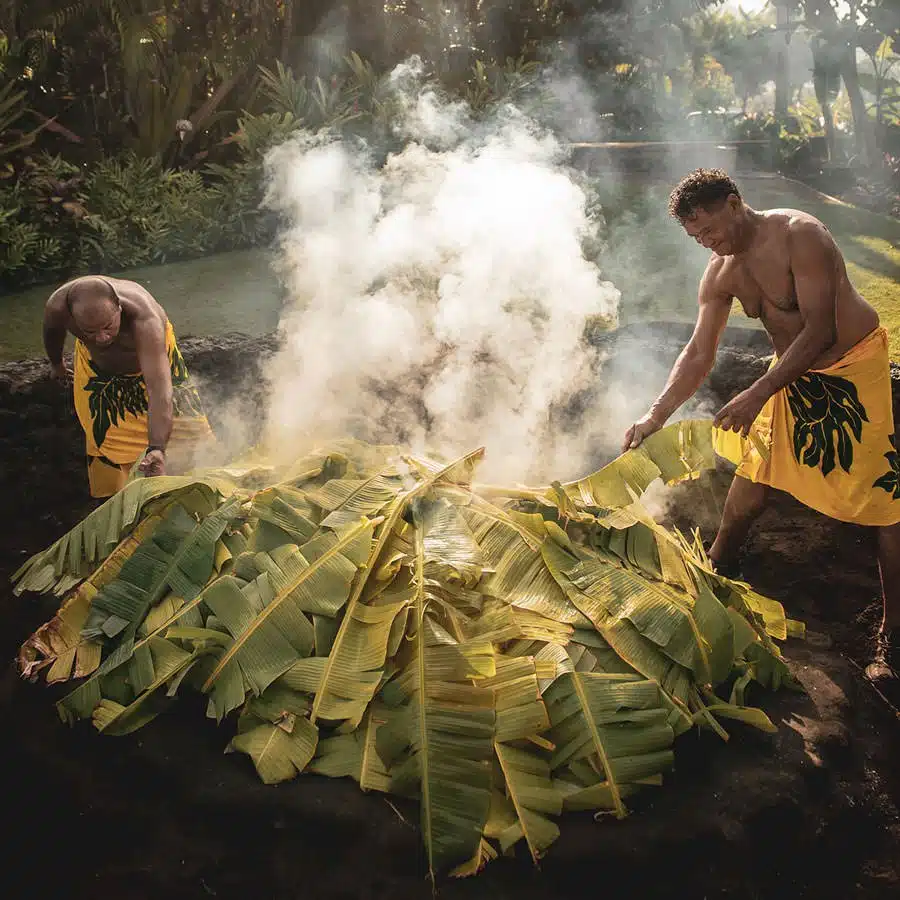
This is the highlight of the night. The hosts will gather everyone around a giant pit in the ground called an imu (an underground earth oven). They will unearth the dinner—a whole pig that has been slow-roasting for hours over volcanic rocks, wrapped in banana and ti leaves. The smell is unbelievable, and the meat comes out so tender it literally falls off the bone.
3. The Buffet Feast
Once the pig is dug up, it’s time to eat! Most lu‘aus serve food buffet-style. You’ll get to load up your plate with massive portions of traditional Hawaiian and local comfort foods. (See our cheat sheet below on what to grab!)
4. The Spectacular Show
As the sun sets and you slip into a blissful food coma, the stage lights up. A great lu‘au doesn’t just show you the hula; it takes you on a journey through Polynesia, featuring traditional dances and music from Tahiti, Samoa, Aotearoa (New Zealand), and Hawaii. The grand finale is almost always the jaw-dropping Samoan Fire-Knife dance.
The Lu‘au Food Cheat Sheet: What’s on the Menu?
Don’t be intimidated by the buffet line. Here are the absolute must-haves to pile onto your plate:
- Kālua Pork: The star of the show. Shredded, smoky, salty, and incredibly juicy pig from the imu.
- Lomi Salmon: A refreshing side salad made of diced raw salmon, tomatoes, and sweet onions. It’s light, crisp, and pairs perfectly with the rich pork.
- Poi: A smooth paste made from pounded taro root. Warning: It tastes a bit sour and earthy on its own. The local secret? Do not eat it by the spoonful. Use it as a condiment—dip a piece of salty kālua pork right into it. The combo is magic.
- Chicken Long Rice: Comfort food at its finest. Clear cellophane noodles cooked in a savory chicken broth with ginger and green onions.
- Haupia: A firm, gelatinous coconut pudding. It’s sweet, refreshing, and the perfect way to cleanse your palate at the end of the night.
Pro-Tips for Your First Lu‘au
- Book early: The best, most authentic lu‘aus sell out weeks (sometimes months) in advance. Don’t wait until you land in Hawaii.
- Dress the part: This is your green light to wear that loud Hawaiian print shirt or tropical maxi dress you’ve been eyeing. Dress code is strictly “resort casual.” Leave the heels at home; you’ll be walking on grass and sand.
- Pace yourself on the drinks: Those tropical punch cocktails are delicious, but they are sweet and sneak up on you fast under the island sun!
The Top 3 Lu‘aus in Hawaii: Which One is Right for You?
Not all lu‘aus are created equal. Some focus heavily on luxury food, some on historical accuracy, and others on theatrical showmanship. Depending on what your readers are looking for, these three top-tier experiences deliver the absolute best value in the islands.
1. For Cultural Authenticity: Old Lahaina Lūʻau (Maui)
Widely regarded by travel experts as the gold standard for cultural integrity, the Old Lahaina Lūʻau is an absolute masterpiece. Located right on the oceanfront in Lahaina, this lu‘au strictly focuses on the history of Hawaii. Guests can even choose traditional mat seating on the ground to dine the way ancient Hawaiians did.

- The Vibe: Intimate, deeply respectful, and highly authentic.
- The Food: Exceptional traditional grinds, including sweet potato beer brewed exclusively for the event.
- Know Before You Go: There is no fire-knife dancing here. Because fire-knife dancing originates from Samoa—not Hawaii—they omit it to stay 100% true to Hawaiian history. It sells out 3 to 6 months in advance, so booking early is mandatory.
Book here
2. For the Mega-Production Show: Polynesian Cultural Center Aliʻi Lūʻau (Oahu)
If your readers want a massive, Broadway-caliber theatrical experience, the Polynesian Cultural Center on Oahu’s North Shore is unmatched. This is a full-day commitment where you explore six different Pacific Island village replicas before the dinner. The night ends with HĀ: Breath of Life, a world-class show featuring over 100 performers and an incredible fire finale.

- The Vibe: Educational, massive in scale, and family-friendly.
- The Food: A massive island buffet featuring classic lu‘au favorites.
- Know Before You Go: The PCC is run by a religious organization, meaning no alcohol is served anywhere on the grounds. It’s a fantastic option for families, but cocktail lovers should skip it.
Book here
3. For the Adventure & Foodie Blend: Toa Luau at Waimea Valley (Oahu)
For a beautifully balanced, small-scale alternative, Toa Luau is a massive hit among modern travelers. Tucked into the lush, tropical rainforest of Waimea Valley on Oahu’s North Shore, a ticket to this lu‘au automatically includes free daytime admission to the botanical gardens and a waterfall you can actually swim under.

- The Vibe: Up-close, high-engagement, and surrounded by wild nature.
- The Food: Unlike massive stadium buffets, the food here is consistently praised by reviewers for tasting like a high-quality, authentic home-cooked Hawaiian feast.
- Know Before You Go: They include rare traditional elements like a full kava drinking ceremony and an incredibly high-intensity fire-knife show. Because it is a smaller venue, it feels far less commercial than the big resort shows.
Book here
The Reality Check: What Does a Lu‘au Cost?
A quality lu‘au is an investment. In 2026, standard ticket prices generally range from $130 to $250+ per adult depending on the island and the seating tier (General vs. VIP). Premium luxury resort options can climb past $300. Remind your readers that this price isn’t just for dinner; it covers entry fees, an open bar (usually), hours of interactive activities, and a massive theatrical production.
Also read: The Top 20 Hawaii Lu’au in 2026
Photo Credits: GoHawaii.com